wayground logo

Free Printable Worksheets

NEW

Font size

S
M
L
XL
Worksheets

CFE M/F Comp Review 2022 Part 1

Total questions: 62

Worksheet time: 42mins

Name
Class
Date
1.
When experimenting with the growth of a plant, a scientist uses three (of the same type of) plants, two different fertilizers, equal light, and equal water. What type of variable is the fertilizer?
a)
Dependent
b)
Independent
c)
Control
d)
Compound
2.
Research Question: Does the type of gasoline put in a car effect how fast the car can drive. What is the independent variable?
a)
Type of gasoline
b)
which car the gas is put into
c)
how fast the car can drive
d)
how much gas is put into the car
3.
Ms. S set up an experiment to see how the mass of a ball affects the distance it rolls off a ramp. What is the dependent variable?
a)
Distance traveled by the ball
b)
Height of the ramp
c)
Mass of the ball
d)
Where the experiment took place.
4.
Mr. S normally uses praise as a reward to train his dog. He wants to know the best way to train his dog, so he sets up an experiment to find out if there is a better way to get his dog to respond to commands. What is his dependent variable?
a)
Type of reward
b)
Praise
c)
Type of dog
d)
Amount of time the dog follows commands
5.
The independent variable is the ONE thing you _____.
a)
change
b)
keep the same
c)
experiment with
d)
investigate
6.
The measurable factor in an experiment is known as the: 
a)
Control
b)
Independent Variable
c)
Constant
d)
Dependent Variable
7.
Scientists frequently repeat the experiments of others scientists. Why is this important in science?
a)
Scientists often ask each other for help in performing experiments.
b)
Replication of experiments helps to confirm and verify results.
c)
Scientists frequently perform other scientists’ experiments in order to practice their technique.
d)
Repeating experiments is an effective way to make sure a laboratory is in optimal condition.
8.
An environmental group contacts Nina to get her procedures so that they can check her results.
a)
repetition
b)
replication
9.
Ms. Spiers has taught Mini Bear to run a maze. She thinks that the hamster will go faster if she puts its favorite treat at the end. She has the hamster run the maze ten times with the favorite treat and ten times with a regular food pellet. She uses a stopwatch to measure how long it takes for the hamster to get to the reward.
a)
repetition
b)
replication
10.
Anthony was given a set of 5 metal cubes. He calculated the densities of each to determine the type of metal in each. The densities were really close to each other, so he asked his friend Robert to do the same experiment and see if he gets the same results.
a)
repetition
b)
replication
11.

Joe tells Gabby his theory about why sea turtles nest on the beach instead of in the ocean. He says, “The turtle eggs would sink to the bottom of the ocean, and the baby turtle would drown. I know this because my uncle is a fisherman, and he told me this information. Gabby tells Joe that his theory is not scientific. Why does Joe’s idea not meet the requirements to be a scientific theory?

a)

Joe’s idea is already a scientific law.

b)

Joe’s idea is not supported by scientific evidence.

c)

Joe’s idea is a good guess that can be tested by experiments.

d)

Joe and his uncle are not scientists.

12.

Lilly was trying to explain to her friend the difference between a theory and a law in science. She used the theory of plate tectonics and the law of superposition as examples. Lilli explained the difference by using non-scientific language. Which statement could Lilly use to correctly describe the difference between a theory and a law in science?

a)

A theory describes a natural event, while a law explains it.

b)

A theory explains a natural event, while a law predicts it.

c)

A theory explains a natural event, while a law describes it.

d)

A theory predicts a natural event, while a law explains it.

13.
Scientific theories are based on
a)
general assumptions of how systems work.
b)
mathematical principles that can be proven true.
c)
large amounts of data collected over time.
d)
observations from within only one scientific discipline.
14.
Scientific theories do not change once they have been written down.
a)
True
b)
False
15.

Which of these can be represented mathematically and provide no explanation why a phenomenon occurs?

a)

theory

b)

law

16.

Scientists create both scientific theories and scientific laws as they make observations and conduct experiments about the natural world. Which of the following statements most accurately compares the difference between scientific theories and scientific laws

a)

science laws are based on evidence while science theories are not

b)

science theories involve only biology, while laws involve all types of science

c)

science theories involve mathematical equations, while science laws are based on observations

d)

science theories are ideas that explain natural events, while science laws predict what will happen in a natural event.

17.

The process by which water, wind, ice, and changes in temperature BREAK DOWN rock into fragments called sediments.

a)

Deposition

b)

Erosion

c)

Weathering

d)

Igneous Rock

18.
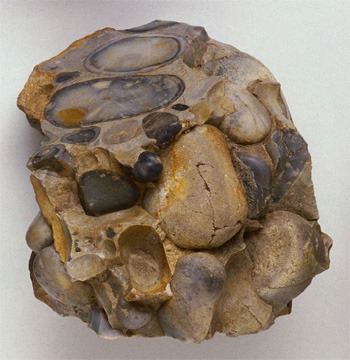
This rock was formed by smaller pieces of rock that settled at the bottom of a lake millions of years ago. What type of rock is this?
a)
Sedimentary
b)
Igneous
c)
Metamorphic
19.
Fossils are only found in
a)
Sedimentary rocks
b)
Foliated Metamorphic rocks
c)
Igneous Rocks
d)
Nonfoliated Metamorphic rocks
20.
rock that has been changed by heat and pressure, or squeezing
a)
sedimentary
b)
metamorphic
c)
igneous
d)
fuels
21.
___________________ rock means FIRE and is formed from melted rock either from magma below Earth's crust or from lava above it
a)
sedmetary
b)
igneous
c)
metamorphic
d)
magma
22.
This rock was formed when magma cooled very slowly inside the Earth. What specific type of rock is it?
a)
Intrusive Igneous Rock
b)
Extrusive Igneous Rock
c)
Foliated Metamorphic Rock
d)
Clastic Sedimentary Rock
23.
What is process in which water, wind, and heat break down rock?
a)
weathering
b)
exfoliation
c)
cementation
d)
composition
24.
Magma turns into igneous rock.
a)
cooling and crystalization
b)
melting
c)
deposition
d)
weathering and erosion
25.
Igneous rock turns into sediment.
a)
cooling and crystalization
b)
melting
c)
deposition and cementation
d)
weathering and erosion
26.
Which type of rock can be weathered and eroded into sediment?
a)
Igenous
b)
Sedimentary
c)
Metamorphic
d)
All of the rocks can
27.
Which gets deposited?  (I am being picky about the answer)
a)
Igneous rock
b)
Sediment
c)
Metamorphic rock
d)
Sedimentary rock
28.

Identify #1

a)

Cools

b)

Melts

c)

Compaction and Cementation

d)

Heat and Pressure

29.

Identify #2

a)

Cools

b)

Melts

c)

Compaction and Cementation

d)

Heat and Pressure

30.

Identify #3

a)

Weathering and Erosion

b)

Melts

c)

Compaction and Cementation

d)

Heat and Pressure

31.

Identify #5

a)

Weathering and Erosion

b)

Melts

c)

Compaction and Cementation

d)

Heat and Pressure

32.

Identify #6

a)

Weathering and Erosion

b)

Melts

c)

Compaction and Cementation

d)

Heat and Pressure

33.
Which activity demonstrates chemical weathering?
a)
freezing of water in the cracks of a sandstone sidewalk
b)
abrasion of a streambed by tumbling rocks
c)
grinding of talc into a powder
d)
dissolving of limestone by acid rain
34.
What is the most common cause of waves?
a)
underwater earthquakes
b)
variations in ocean-water density
c)
the gravitational effect of the Moon
d)
winds at the ocean surface
35.

Which of these is an example of chemical weathering?

a)

Burrowing

b)

Abrasion

c)

Oxidation

d)

Ice wedging

36.

Which of these is chemical weathering?

a)

A plant sprouting through and splitting a rock

b)

A rock containing iron rusting

c)

Ice freezing and expanding a rock

d)

Waves crashing into a rock formation

37.

The chemical and physical breakdown of rocks into sediment is known as

a)

Weathering

b)

Erosion

c)

Deposition

d)

None of these

38.

Which erosional agent most likely caused this landform?

a)

Gravity

b)

Ice

c)

Wind

d)

Running water

39.

This picture shows

a)

Weathering (burrowing)

b)

Erosion (burrowing)

c)

Weathering (abrasion)

d)

Erosion (abrasion)

40.

How are caves formed?

a)

Acidic ground water dissolved the rock

b)

fast moving ground water carries the rock away

c)

the top of the cave collapses

d)

stalagmites fill in the cave

41.

what is chemical weathering

a)

when rock changes into a different substance

b)

when rock physically breaks down

c)

when granite is formed

d)

abrasion

42.
What do waves make when they break rock into smaller pieces?
a)
sand
b)
rocks
c)
shells
d)
boulders
43.
What is the geological process by which sediment and soil builds up in an area?
a)
Erosion
b)
Weathering
c)
Deposition
44.
The tallest mountains on Earth are formed by _______________.
a)
oceanic to continental convergence
b)
ocean to ocean convergence
c)
continental to continental convergence
d)
hot spots
45.
What type of mountain results from oceanic to oceanic convergence?
a)
spreading ridges
b)
uplifted mountains
c)
island arc complexes
d)
super volcano
46.
What occurs during folding?
a)
When the rocks change color. 
b)
When the rocks form and create a landslide. 
c)
When the rock layers combine to create a mountain.
d)
When rock layer bend under stress. 
47.
The Mid-Atlantic Ridge is ______________.
a)
a long chain of mountains
b)
single small mountains
c)
mountains extremely steep slopes
d)
made of granite
48.
What is theregion of very broad uplift at a divergent plate boundary on the ocean floor
a)
pillow basalts
b)
ocean ridge
c)
uplifted mountains
d)
Mauna Kea, Hawaii
49.

Acquifers are formed due to

a)

solar heat

b)

infiltration

c)

pollution

50.
What is an underground layer of rock or soil filled with water called?
a)
Aquifer
b)
Spring
c)
Well
d)
Reservoir
51.
Water stored below the Earth's surface is called:
a)
Groundwater
b)
Bogs
c)
Water in the ground
52.

Caves and sinkholes occur because

a)

acid rain weathers rock over time

b)

magma pushes its way through the rock forming holes

c)

Water wears away the rock forming caves

53.

Permeability means a rock or soil that

a)

allows water to seep through it

b)

does not allow water to seep through it

54.

Porosity refers to rocks that have lots of pores like sandstone. These rocks with high porosity and high permeability can store and supply water for communities. These are called

a)

deltas

b)

alluvial fans

c)

aquifers

d)

flood plains

55.
A plate boundary where two plates move away from each other is called
a)
Divergent Boundary
b)
Convergent Boundary
c)
Transform Boundary
d)
Subduction
56.
A Plate Boundary where two plates move toward each other is called
a)
Convergent Boundary
b)
Divergent Boundary
c)
Transform Boundary
d)
Subduction
57.
What is the difference between the lithosphere and asthenosphere that makes up the mantle?
a)
The lithosphere is ismade of dense solid meal whle the asthenosphere is made of liquid molten metal
b)
The lithosphere is a mixture of gasses while the asthenosphere is made of solid rock
c)
The lithosphere is molten rock that moves while the asthenosphere is ridid and thin
d)
The lithosphere is made of solid rock while the asthenosphere is more flexible hot rock that moves.
58.
Convergent Plate Movement can create
a)
Rifts
b)
Mountains
c)
Ocean Ridges
d)
Radiation
59.
Divergent Plate movement can create
a)
Convection Currents
b)
Conduction
c)
Mountains
d)
Rifts and ocean ridges
60.

These are land forms created at or near the mouths of rivers. They are caused by sediment, typically silt, that is eroded into a river and carried to its mouth, where the sediment is deposited.

a)

dunes

b)

deltas

c)

coastlines

d)

sinkholes

61.

A ________________ is a mound of sand formed by the wind, usually along the beach or in a desert.

a)

coastline

b)

glacier

c)

mountain

d)

dune

62.

When the land surface above collapses or sinks into the cavities or when surface material is carried downward into the voids; drought, along with resulting high groundwater withdrawals, can make conditions favorable for this to form

a)

deltas

b)

mountains

c)

caves

d)

sinkholes