
Font size
 Worksheets
Semester 1 Final 2024-25
Total questions: 55
Worksheet time: 55mins
Covalent bonds form when two elements share electrons to make a complete outer shell of electrons. Ionic bonds form when one element donates one or more electrons to another element to make a complete outer shell of electrons. Which statement BEST explains the type of bond that will form between two elements from group 6A in the model?
The two elements will form a covalent bond because both elements will share a single electron in order to have full outer shells
The two elements will form an ionic bond because one of the elements will donate one electron to the other element in order to have full outer shells.
The two elements will form a covalent bond because both elements will share a pair of electrons in order to have full outer shells
The two elements will form an ionic bond because one of the elements will donate two electrons to the other element in order to have full outer shells.
Unlike most other elements, hydrogen has a full outer electron shell with only 2 electrons. This gives hydrogen some unique properties, making it difficult to classify. Some models of the periodic table choose to show hydrogen as part of Group 7A, to the left of helium. Choose the TWO facts about hydrogen that support this type of model.
Hydrogen has half of the electrons it needs for a stable electron configuration.
Adding a single electron to hydrogen results in a stable electron configuration
Losing a single electron from hydrogen results in a stable electron configuration.
Hydrogen is lightweight, similar to helium, which is on the right side of the periodic table.
Hydrogen is a nonmetal, similar to the other elements on the right side of the periodic table.
The complete electron configuration for gallium, element 31, is
1s2 2s2 2p1 03s2 3p1 04s2 3d3
1s2 2s2 2p6 3s2 3p6 4s2 3d1 04p1
1s4 2s4 2p6 3s4 3p6 4s4 3d3
1s2 2s4 2p8 3s4 3p8 4s3
The chemist is required to find an element that has the same number of valence electrons as sulfur. Select
the element that the chemist chose and an explanation for that choice. Select all that apply.
It is in the same group as sulfur.
Magnesium
Oxygen
It is in the same period as sulfur.

The diagram shows how the sizes of atoms change across
a period.
What phenomenon is shown in the diagram?
The greater the number of electron shells, the larger
the atomic radius.
The greater the number of electron shells, the
smaller the atomic radius
The greater the number of electrons in the outer
electron shell, the larger the atomic radius.
The greater the number of electrons in the outer
electron shell, the smaller the atomic radius.

Which statement helps to explain the phenomenon shown in
the diagram?
The greater the number of valence electrons, the
more attraction they have with the atomic nucleus
The greater the number of valence electrons, the
less attraction they have with the atomic nucleus
The farther away the valence electrons are from the
nucleus, the weaker the attraction between the
valence electrons and the nucleus.
The farther away the valence electrons are from the
nucleus, the greater the attraction between the
valence electrons and the nucleus.

What does 'X' represent in the following symbol with atomic number 35 and average atomic mass 80?
Mercury
Bromine
Chlorine
Scandium
Calculate the average atomic mass of silver if silver has two naturally occurring isotopes with the following
masses and natural abundances:
Ag-107 106.90509 amu 51.84%
Ag-109 108.90476 amu 48.16%
107.87 amu
108.00 amu
108.32 amu
107.79 amu
Give the ground state electron configuration for Sr.
[Kr]5s2 4d2
[Kr]5s2 4d1 05p2
[Kr]5s2 5d1 05p2
[Kr]5s2
A cation of 2+ indicates that an atom has
lost two electrons
lost two protons
lost two neutrons
gained two electrons
Identify the description of an atom.
neutrons and electrons in the nucleus; protons in the orbitals
neutrons in the nucleus; protons and electrons in the orbitals
neutrons and protons in the nucleus; electrons in the orbitals
protons and electrons in the nucleus; neutrons in the orbitals

The model shows an oxygen atom, which consists of 8
protons, 8 neutrons, and 8 electrons.
Choose THREE statements that describe two electrons
being added to the oxygen atom.
The atom becomes more stable as all the electron
shells are filled
An oxygen ion (Oxide) is formed.
There is an increase in the atomic number.
There is a change in the chemical properties of the
oxygen atom.
To help finalize her decision, the scientist places the elements in order of greatest to least electronegativity.
She knows she needs an element with a strong electronegativity.
Which answer correctly lists the element with the smallest electronegativity first and the element with the
greatest electronegativity last?
oxygen → fluorine → calcium → magnesium → rubidium
fluorine → oxygen → magnesium → calcium → rubidium
rubidium → magnesium → calcium → fluorine → oxygen
rubidium → calcium → magnesium → oxygen → fluorine

[Xe] 6s2 4f14 5d9
Beryllium (Be) has an atomic number of 4 & Magnesium (Mg) has an atomic number of 12. They behave the same in a chemical reaction.How should they be placed on the periodic table?
They should be placed in the same group with Mg on the top and Be below.
They should be placed in the same group with Be on the top and Mg below.
They should be placed in the same period with Mg on the top and Be below.
They should be placed in the same period with Be on the top and Mg below.

The diagram shows an atom of a neutral element from the periodic table. The atom in the diagram represents which element?
beryllium
magnesium
sodium
neon
Select all that apply to the proton
located in the nucleus
around the nucleus
has an electric charge of postive
has an electric charge of negative
does not have an electric charge
Calcium has the atomic number 20. If it has a mass number of 46, how many neutrons are present?
46
20
26
We cannot tell
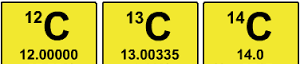

What isotope is shown here? (Red = protons, gray = neutrons, blue = electrons)
Beryllium-5
Beryllium-9
Boron-4
Boron-9

Which element has the highest electronegativity?
Name the following binary molecular compound
S2F10
disulfur decafluoride
decasulfur difluoride
disulfide decafluoride
BaF2
Barium (II) Fluoride
Barium Fluorine
Barium Fluoride
Barium difluoride
The first step in naming an ionic compound is always...
Naming the anion (non-metal)
Changing the ending to -ide
Naming the cation (metal)
Writing the cation charge

Zn + H2S → ZnS + H2
FeS + HCl → H2S + FeCl2

Identify the type of chemical reaction
Synthesis
Decomposition
Single replacement
Double replacement
Combustion
Predict the products for the this Single Replacement reaction:
K + HCl →
KCl + H2
KHCl
KH + Cl2
HCl + K2
Predict the products for the this Double Replacement reaction:
AgNO3 + KCl →
AgCl + KNO3
AgK + ClNO3
KAg + NO3Cl
AgCl + 3 KNO
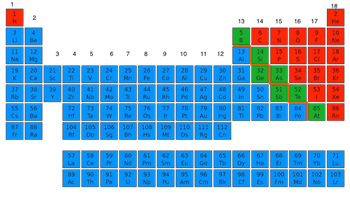
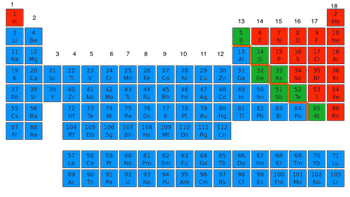

What is the correct Lewis Structure and chemical formula for an ionic bond between Aluminum and Oxygen?
A
B
C
D
Which substance would have the weakest intermolecular forces of attraction?
CH4
NaCl
H2O
MgF2

