Worksheets
BIO310 Nervous System
Total questions: 25
Worksheet time: 25mins
Select the part of the brain that is responsible in maintaining body balance.
Hypothalamus
Medulla oblongata
Cerebrum
Cerebellum
Determine the correct flow of the reflex arcs.
Effector, afferent neuron, integration center, efferent neuron, receptor
Receptor, afferent neuron, integration center, efferent neuron, effector
Effector, efferent neuron, integration center, afferent neuron, receptor
Receptor, efferent neuron, integration center, afferent neuron, effector
Select the region of the brain that contains inspiratory and expiratory neurons for the rhythmic control of breathing.
Cerebral cortex
Medulla oblongata
Apneustic center of the pons
Pneumotaxic center of the pons
Identify the function of hypothalamus.
It controls body temperature
It controls RAAS
It controls acid-base balance
It regulates respiratory rate
Indicate the components which belong to the central nervous system.
Sympathetic nerve and parasympathetic nerve
Spinal cord and brain
Spinal nerve and cranial nerve
Sensory neuron, interneuron and motor neuron
Identify the part of our brain that ensures our muscles to work together to produce smooth coordinated voluntary movement.
Cerebrum
Cerebellum
Medulla oblongata
Hypothalamus
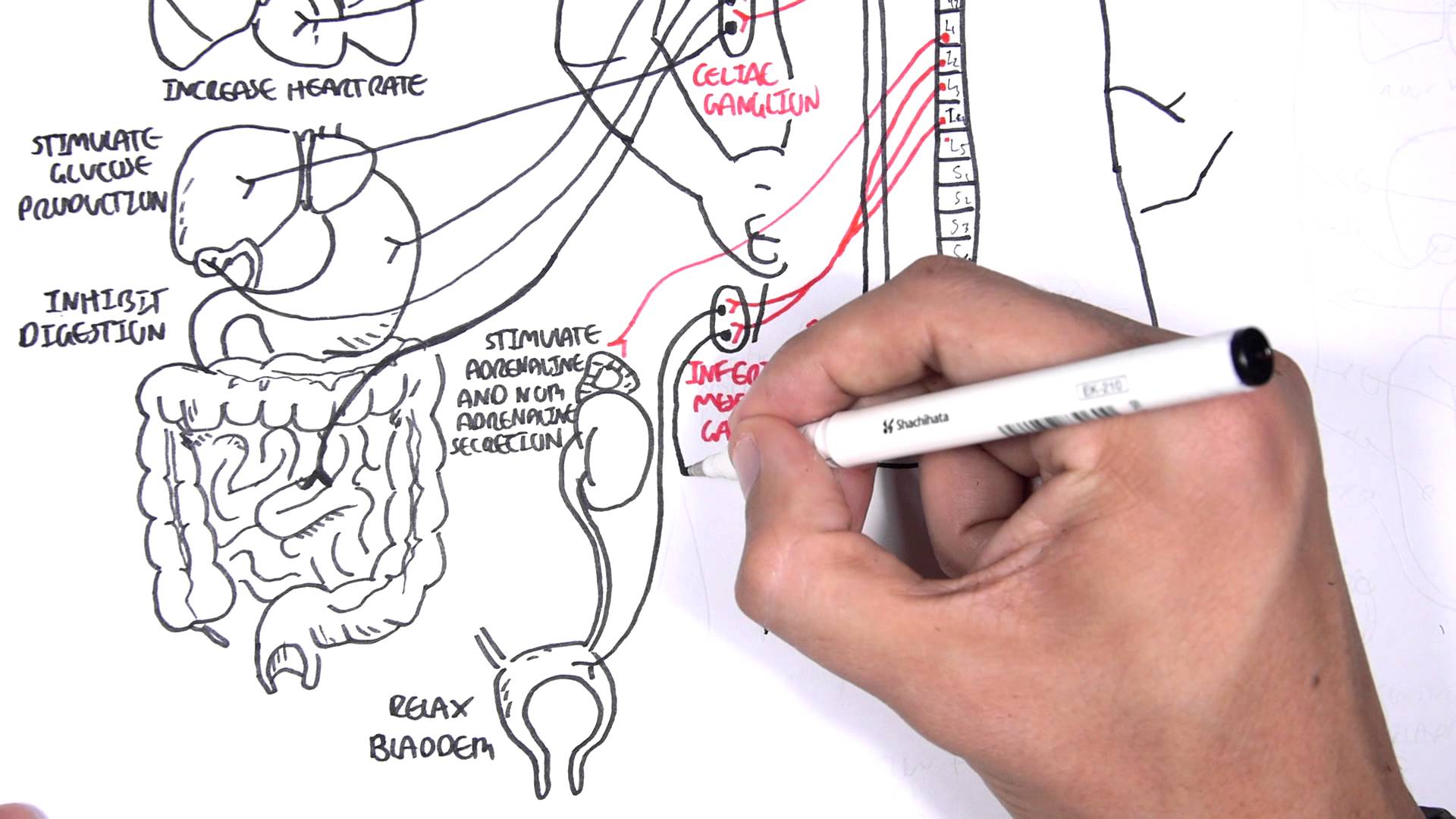
Determine the functions of parasympathetic nerve.
Dilates pupil, increases heart rate and stimulates salivation
Constricts blood vessels, decreases heart rate and inhibits salivation
Stimulates salivation, decreases heart rate and constrict pupils
Inhibits urination, dilates blood vessels and constricts pupils


Contains the medulla oblongata, pons and midbrain.
diencephalon
brain stem
cerebrum
cerebellum
protects the brain
skull
meninges
cerebrum
cerebrospinal fluid
The Autonomic Nervous System is part of the___________.
Somatic Nervous System
Peripheral Nervous System
Central Nervous System
Sensory Nervous System
controls the "rest and digest" response
Sympathetic
Parasympathetic
responds to stress and/ or danger
Sympathetic
Parasympathetic