wayground logo

Free Printable Worksheets

NEW

Font size

S
M
L
XL
Worksheets

Midterm Practice

Total questions: 53

Worksheet time: 1hrs 29mins

Name
Class
Date
1.
Which of these contains steps in the right order?
a)
Ask a question, state your hypothesis, research, experiment, analyze, make a conclusion
b)
State your hypothesis, ask a question, research, experiment, analyze, make a conclusion
c)
Ask a question, research, state your hypothesis, experiment, analyze, make a conclusion
d)
State your hypothesis, ask a question, research, make a conclusion, experiment, analyze
2.
A scientist performs an experiment to see if acids have an effect on the health of a particular type of plant. Three sets of plants were treated with acidic solutions of known pH while the control set was treated with a solution of neutral pH 7.Which is the best conclusion for this experiment?
a)
Acid has no effect on the health of this type of plant.
b)
B. High acidity is helpful to this type of plant.
c)
C. Low acidity is harmful to this type of plant.
d)
High acidity is harmful to this type of plant.
3.
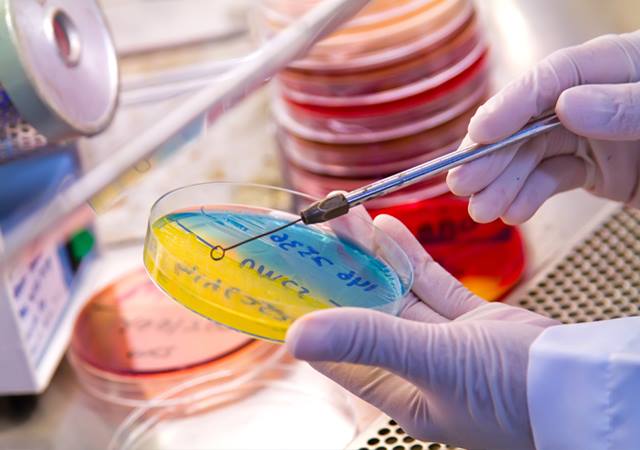
Rene grew bacteria from the mouth on special plates in the laboratory.  She placed drops of different mouthwashes on bacteria on each plate.
a)
recognize a problem
b)
test the hypothesis with an experiment
c)
form a hypothesis   
d)
draw conclusions
4.
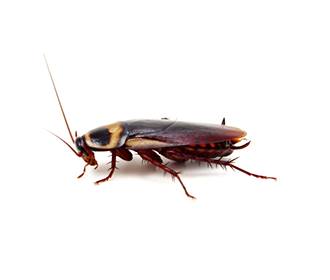
Johathan’s data showed that household cockroaches moved away from raw cucumber slices.
a)
recognize a problem
b)
test the hypothesis with an experiment
c)
form a hypothesis
d)
draw conclusions
5.
Susan said, “If I fertilize my geranium plants, they will blossom.”
a)
recognize a problem
b)
test the hypothesis with an experiment
c)
form a hypothesis   
d)
draw conclusions
6.
Group in an experiment that is missing the independent variable but is the same as the experimental group in every other way.
a)
Scientific Method
b)
Single Variable
c)
Control
d)
Hyopthesis
7.

If I add sliced garlic to my aquarium water, then my fish will eat a lot. The independent variable (IV) in this hypothesis is:

a)

Adding garlic to the aquarium

b)

The fish eating a lot

8.

If I feed Puff Puff McGuff mole crabs, then his teeth will wear down. The responding(dependent) variable in this hypothesis is:

a)

Mole crabs as food

b)

Wearing down puffs teeth

9.
An experiment is performed on plants to see how different liquids affect plant growth. Each plant in the experiment is given a different liquid: water, apple juice, or milk. What variables should be kept constant/controlled? 
a)
type of plant, flower pot,  soil, and amount of sunlight
b)
water, apple juice, milk
c)
only the amount of sunlight
d)
type of plant only
10.

7,000 g = ____ kg

a)

70

b)

700

c)

7

d)

0.07

11.

648 g = ____ mg

a)

6,480

b)

64,800

c)

648,000

d)

64.8

12.

240 cm = ___________ m

a)

2400

b)

24

c)

2.4

d)

0.24

13.

What is the basic unit of mass in the metric system?

a)

Liter

b)

Meter

c)

Gram

d)

Kilometer

14.
Which unit is a a measure of volume?
a)
meters
b)
grams
c)
inches
d)
liters
15.
You know that 12 inches = 1 foot.  Convert 60 inches to feet.
a)
720 feet
b)
5 feet
c)
5 inches
d)
72 feet
16.

Convert 3.5 gallons into cups. (1gal = 16cups)

a)

56 cups

b)

0.21875 cups

c)

19.5 cups

d)

48 cups

17.

How many kilograms of calcium are there in 173 pounds of calcium? (1 pound = 454 grams; 1 kg = 1000 g)

a)

1.10 kg

b)

78.5 kg

c)

110 kg

d)

78500 kg

18.

The farther away galaxies are from us, the _______________ it is that they moving away from us.

a)

more uncertain

b)

slower

c)

faster

d)

more unpredictable

19.

a force that is causing the expansion of the universe to accelerate

a)

dark energy

b)

the big bang

c)

planetesimals

d)

solar nebula

20.

leftover thermal energy from the big bang

a)

solar nebula

b)

cosmic background radiation

c)

planetesimal

d)

dark matter

21.

matter that does not give off electromagnetic radiation

a)

solar nebula

b)

big bang event

c)

dark matter

d)

planetary enbula

22.

a large cloud of gas and dust, such as the one that formed our solar system

a)

dark energy

b)

big bang

c)

dark matter

d)

solar nebula

23.

Select a possibility of what will happen to the universe in the future.

a)

The universe will be destroyed by aliens.

b)

The universe may expand forever, therefore galaxies will continue to get further away from each other.

c)

The universe will explode.

d)

We don't have any hypothesis.

24.
What type of galaxy is the Milky Way?
a)
Spiral
b)
Barred Spiral
c)
Irregular
d)
Elliptical
25.
What force holds the contents of galaxies together?
a)
The weak nuclear force
b)
The electromagnetic force
c)
Gravity
d)
The strong nuclear force
26.

Which type of galaxy is pictured?

a)

Elliptical

b)

Irregular

c)

Spiral

d)

Barred-Spiral

27.

Which type of galaxy is pictured?

a)

Elliptical

b)

Spiral

c)

Barred-Spiral

d)

Irregular

28.

An arrangement of stars in a specific spot in the night sky is called a...

a)

Constellation

b)

Solar System

c)

Galaxy

d)

Local Group

29.
Galaxies are composed of (best answer)
a)
stars
b)
stars and gas
c)
stars, dust, and gas
d)
stars, dust, and gas held together by gravity
30.

The super dense core left after a supergiant explodes as a supernova.

a)

Black hole

b)

Main sequence star

c)

Protostar

d)

Neutron star

31.

A star that is fusing hydrogen atoms to helium; a star in the main portion of its life.

a)

Neutron star

b)

Supernova

c)

Main sequence star

d)

Protostar

32.

Radio galaxies emit radiation mostly in the _____ portion of the light spectrum.

a)

infrared

b)

radio

c)

xray

d)

gamma

33.
Distance measurement used by astronomers for distant objects.
a)
Kilometers
b)
Light Years
c)
Miles
d)
Light Seconds
34.

Scientists theorize that the portion of the universe visible today expanded explosively from a hot, dense mass about 14 billion years ago. What is evidence for this “big bang”?

a)

tides on Earth caused by the big bang’s gravitational forces

b)

volcanoes on Venus, which erupt because of the force of the “big bang”

c)

cosmic background radiation, which is energy left over from the big bang

d)

the formation of black holes caused by the collapse of very hot dense massive stars

35.

Edwin Hubble was one of the most important scientists in our history.


What was his important discovery that provided evidence for the Big Bang Model?

a)

He observed redshift in the spectra of distant galaxies.

b)

He found evidence that the Milky Way is a spiral galaxy.

c)

He found evidence that the solar system formed from a nebula.

d)

He observed that the closer a galaxy is to our galaxy, the faster it is moving away.

36.

What is the atomic number?

a)

the number of protons in the nucleus

b)

the number of protons and neutrons in the nucleus

c)

the number of neutrons in the nucleus

d)

the number of protons in the energy levels

37.

What is the mass number?

a)

the number of protons in the nucleus

b)

the number of protons and neutrons in the nucleus

c)

the number of neutrons in the nucleus

d)

the number of protons and electrons in the atom
38.

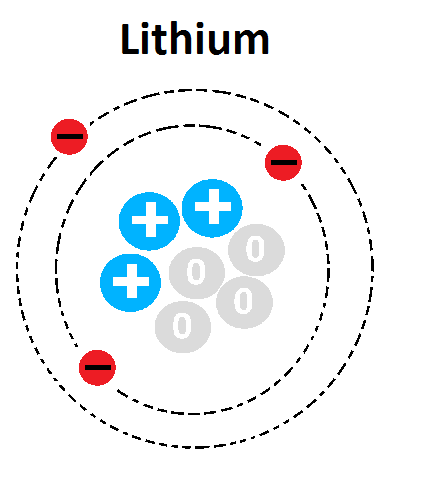
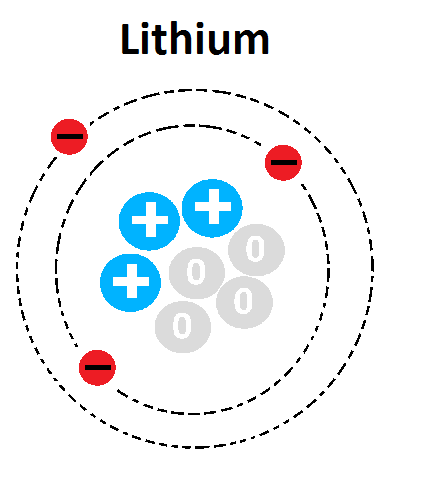
What is the atomic number of this atom?

a)

1

b)

3

c)

4

d)

7

39.

What is the mass number of this atom?

a)

1

b)

3

c)

4

d)

7

40.
Most of the mass in an atom is made up of _____________________?
a)
protons and electrons
b)
protons and neutrons
c)
neutrons and electrons
d)
electrons and quarks
41.
In order for an atom to be neutral what has to be true?
a)
The atom has more protons than neutrons
b)
The atom has more neutrons than protons
c)
The atom has the same number of protons and neutrons
d)
The atom has the same number of protons and electrons
42.
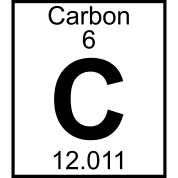
What does the C represent?
a)
atomic mass
b)
atomic number
c)
element name
d)
chemical symbol 
43.

What does the 6 represent?

a)

Atomic mass

b)

atomic number

c)

chemical symbol

d)

element name

44.
How is the number of neutrons in the nucleus of an atom calculated?
a)
Add the number of e- and p+ together
b)
Subtract the number of e- from p+
c)
Subtract the number of p+ from the mass number
d)
Add the mass number to the number of e-
45.
What subatomic particles would you find in the nucleus of an atom?
a)
Protons only
b)
Protons and Neutrons
c)
Neutrons and Electrons
d)
Protons and Electrons 
46.
If an atom has 12 positively charged subatomic particles, which of the following must it also have to be considered a neutral atom?
a)
12 neutrons
b)
12 electrons
c)
12 protons
d)
24 protons and neutrons
47.

An atom has 10 protons, 15 neutrons and 10 electrons what is its mass number.

a)

20

b)

10

c)

35

d)

25

48.

How many electrons does this atom have?

a)

2

b)

4

c)

6

d)

10

49.
The atomic number of an element that has 9 protons, 9 electrons, and 10 neutrons is _____.
a)
9
b)
10
c)
19
d)
28
50.
An element with a mass number of 11 and an atomic number of 5 has how many neutrons?
a)
11
b)
5
c)
6
d)
16
51.
Where is most of the mass in an atom located?
a)
in the nucleus
b)
in the protons
c)
in the neutrons
d)
in the electrons
52.
An atom has an atomic number of 15 and a mass number of 31. How many protons are there in the atom?
a)
15
b)
31
c)
16
d)
47
53.

Which of the following determines the identity of an element?

a)

number of protons

b)

atomic mass

c)

number of neutrons

d)

number of shells