Wayground logo

Free Printable Worksheets

Font size

S
M
L
XL
Worksheets

Nature of Science and Matter

Total questions: 58

Worksheet time: 51mins

Name
Class
Date
1.

Using one or more of your senses to gather information is called_______.

a)

observing

b)

inferring

c)

predicting

d)

classifying

2.

A possible explanation or testable prediction is called a _______.

a)

prediction

b)

hypothesis

c)

theory

d)

law

3.
Which of these contains steps in the right order?
a)
Ask a question, state your hypothesis, research, experiment, analyze, make a conclusion
b)
State your hypothesis, ask a question, research, experiment, analyze, make a conclusion
c)
Ask a question, research, state your hypothesis, experiment, analyze, make a conclusion
d)
State your hypothesis, ask a question, research, make a conclusion, experiment, analyze
4.

The variable that you may change in the experiment

a)

Independent Variable

b)

Dependent Variable

5.

Variable measured during the experiment

a)

Independent Variable

b)

Dependent Variable

6.

Your neighbor believes that the height of a person determines how much food they eat. He measured how many ounces of food people ate who were 4 feet tall, 5 feet tall, and six feet tall?


What is the independent variable?

a)

ounces of food

b)

height

7.
On a graph, which axis shows the independent variable?
a)
x-axis
b)
y-axis
c)
neither
d)
it changes
8.
A factor being tested, the one factor that is different from all others in an experiment.
a)
Scientific Method
b)
Independent Variable
c)
Control
d)
Hypothesis
9.

The parts of an investigation that remain the same so that the dependent variable can be measured.

a)

independent variable

b)

dependent variable

c)

hypothesis

d)

control variable

10.

What type of graph should be used to show the color car that gets the highest percentage of speeding tickets?

a)

bar graph

b)

scatterplot

c)

line

d)

pie chart

11.
Which is the more accurate piece of glassware for determining the volume of a liquid?
a)
graduated cylinder
b)
beaker
12.

What is the volume of the liquid in this graduated cylinder?

a)

36 mL

b)

30.6 mL

c)

42 mL

13.

What kind of change occurs if matter changes in amount, size, or shape?

a)

substance change

b)

chemical change

c)

physical change

d)

elemental change

14.
Which is the opposite of condensation?
a)
runoff
b)
evaporation
c)
precipitation
d)
transpiration
15.

At what temperature in degrees Celsius does water freeze?

a)

150

b)

0

c)

200

d)

32

16.
Is salt dissolving in water a physical or chemical change?
a)
Physical
b)
Chemical
17.
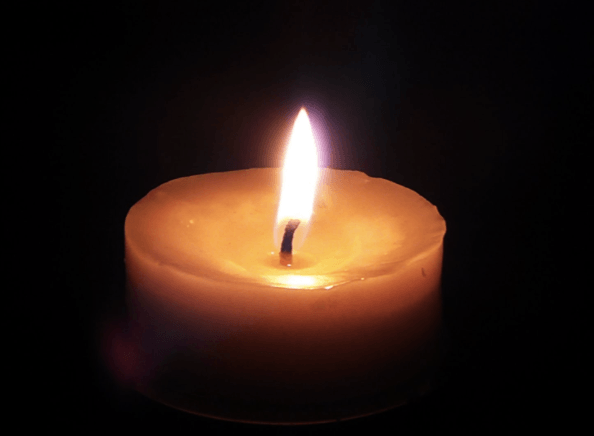
Is a burning candle a physical or chemical change?
a)
Physical
b)
Chemical
18.
Is sour milk a physical or chemical change?
a)
Physical
b)
Chemical
19.
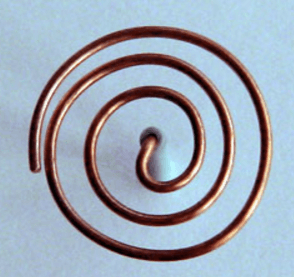
Is bending copper wire a physical or chemical change?
a)
Physical
b)
Chemical
20.
If a new substance is formed would this be a physical or chemical change?
a)
Physical
b)
Chemical
21.
Which of these is an example of a new substance being formed?
a)
a nail rusting
b)
a wall being painted
c)
water changing to steam
d)
paper being folded
22.
Which example best describes a physical change?
a)
iron rusting
b)
charcoal burning
c)
an ice cube melting
d)
a marshmallow burning
23.

Which contains only elements?

a)

A

b)

B

c)

C

d)

D

24.
Contains only one kind of atom.
a)
Element
b)
Compund
c)
Mixture
25.
Contains two or more atoms combined
a)
Elements
b)
Compounds
c)
Mixtures
26.
Is sugar (C12H22O11) an element or a compound?
a)
Element
b)
Compound
27.

diagram "a" is an example of a(n)

a)

element

b)

compound

c)

mixture

28.
Mixtures are __________ combined.
a)
Chemically
b)
Physically
c)
Magically
d)
Spontaneously
29.
A mixture that appears to be evenly mixed throughout:
a)
an atom
b)
a compound
c)
a homogeneous mixture
d)
a heterogeneous mixture
30.

A mixture that does NOT appear to be evenly mixed throughout is ______.

a)

an atom

b)

a compound

c)

a homogeneous mixture

d)

a heterogeneous mixture

31.

_______ is a mixture in which particles will settle out.

a)

suspension

b)

colloid

c)

compound

d)

solvent

32.
Sugar water is a 
a)
solution
b)
suspension
c)
colloid
33.
If an unknown substance CANNOT be broken down into simpler substances, it is 
a)
a compound
b)
an element
c)
a homogeneous mixture
d)
a heterogeneous mixture
34.

Which scientist created the periodic table of elements?

a)

Robert Hooke

b)

Dimitri Mendeleev

c)

Anton van Leeuwenhoek

d)

Issac Newton

35.

What is gold, Au?

a)

element

b)

compound

c)

mixture

36.

What is sugar, C12H22O11?

a)

element

b)

compound

c)

mixture

37.

What is water, H2O?

a)

element

b)

compound

c)

mixture

38.
A combination that can be separated by physical processes is a .....
a)
Pure Substance
b)
Glucose
c)
Element
d)
Mixture
39.
Which of the following would you use to separate sand from iron?
a)
a bar magnet
b)
paper
c)
hot plate
40.
Sand floating in water, but most of the sand is settled at the bottom this an example of which type of mixture?
a)
A solution
b)
A colloid
c)
A suspension
d)
A compound
41.

Which of the following is a chemical property?

a)

pink color

b)

reactivity

c)

melting point

d)

luster

42.

Which of the following is a physical change?

a)

mowing the lawn

b)

rotting egg

c)

acid rain

d)

car rusting

43.

Most matter ________ when heated and ________ when cooled.

a)

Contracts, expands

b)

Evaporates, freezes

c)

Expands, contracts

d)

None of the options

44.

When a substance evaporates, the particles are _____ energy.

a)

Gaining

b)

Losing

c)

Conserving

d)

Consolidating

45.

How do liquid water, ice, and water vapor differ from each other?

a)

They are different states of matter.

b)

They are different compounds.

c)

They are made of different kinds of molecules.

d)

They are made of different kinds of atoms.

46.

Chemical or Physical:

A characteristic of matter that can be observed with your 5 senses is a ____________ property.

a)

Chemical

b)

Physical

47.

What is the most common state of matter in the universe?

a)

solid

b)

liquid

c)

gas

d)

plasma

48.

During boiling the temperature of a liquid

a)

rises

b)

decreases

c)

stays constant

d)

depends on the heat source

49.

The motion of the particles in a solid can be described as

a)

constant, rapid, random motion

b)

free to flow past each other

c)

vibrate in place

d)

no motion

50.

what is a gas?

a)

a substance or matter in a state in which it will expand freely to fill the whole of a container

b)

the basic unit of a chemical element

c)

an atom or molecule with a net electric charge due to the loss or gain of one or more electrons.

51.

An uncovered pot of soup is simmering on a stove, and there are water droplets on the wall above the back of the stove. What sequence can in infer has occurred?

a)

melting, then boiling

b)

freezing, then thawing

c)

vaporization, then condensation

d)

condensation, then vaporization

52.

The state of matter of a sample of matter depends on its _______.

a)

shape

b)

density

c)

volume

d)

temperature

53.
What two types of measurements make up DENSITY? 
a)
Mass and Volume
b)
Temperature and Mass
c)
Grams and Centimeters
d)
Volume and Weight
54.
If an object has a density of .6 g/mL and you put it into water, will it sink or float?  
a)
sink
b)
float
55.
Frank has an eraser. It has a mass of 4g, and a volume of 2cm3. What is its density?
a)
8 g/cm3
b)
2 g/cm3
c)
1/2 g/cm3
d)
24 g/cm3
56.
Archimedes used density to discover if the crown of gold was real because
a)
Substances have their own unique densities
b)
Substances can change densities depending on their size
c)
Substances can change densities depending on their mass
d)
Substances can change densities depending on their volume
57.

Which of the following explain why dry ice does not leave moisture behind?

a)

sublimation

b)

evaporation

c)

vaporization

d)

melting

58.

What is the theory called that explains how particles behave in matter?

a)

kinetic movement theory

b)

kinetic theory of matter

c)

state of matter theory

d)

none of the options