Wayground logo

Free Printable Worksheets

Font size

S
M
L
XL
Worksheets

Atoms. Ions and isotopes

Total questions: 30

Worksheet time: 24mins

Name
Class
Date
1.

What is the meaning of atomic number?

a)

proton number

b)

electron number

2.

The fluorine atom has an atomic number of

a)

19

b)

9

3.

What is the mass number and atomic number ?

a)

Mass number = 7, atomic number = 14

b)

Mass number = 14, atomic number = 7

4.

How many neutrons are there in one atom of magnesium?

a)

12

b)

6

c)

24

5.

ALL atoms of the same element have:

a)

same number of proton

b)

same number of nucleon

c)

different number of neutron

d)

different number of electron

6.

An element has the mass number 12 and atomic number 6. The number of neutrons in it is:

a)

6

b)

10

c)

4

d)

8

7.

Isotopes have different numbers of

a)

protons

b)

neutrons

c)

electron

d)

properties

8.

If an atom has 10 electrons, how many protons does it have?

a)

0

b)

1

c)

10

d)

5

9.
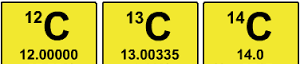
What do these isotopes of carbon all have in common?
a)
neutrons & mass number
b)
atomic number and neutrons
c)
atomic number and electrons
d)
protons, atomic number, and mass number
10.
Negative ions are called
a)
Cations
b)
Electrons
c)
Anions
d)
Neutrons
11.
What charge does an atom have if it LOSES an electron? 
a)
Positive (+)
b)
Negative (-)
12.
Ions are: 
a)
atoms with a positive or negative charge
b)
atoms with no charge
c)
atoms with ONLY a positive charge
d)
atoms with ONLY a negative charge
13.
What charge does an atom have if it GAINS an electrons?
a)
Positive (+)
b)
Negative (-)
14.
What is the number of protons?
a)
34
b)
16
c)
18
d)
S
15.

If an atom has 9 protons and 10 electrons it has a charge of ____.

a)

0

b)

-1

c)

+1

d)

-2

16.

To figure out the mass of an atom based on its subatomic particles you would add ______ & ________.

a)

Protons & Electrons

b)

Protons & Neutrons

c)

Neutron & Electrons

17.
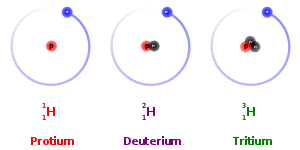
Different isotopes have...
a)
different masses
b)
different atomic numbers
c)
different electrons
d)
different protons
18.
In what part of an atom can protons be found?
a)
inside the electron
b)
inside the neutron
c)
inside the atomic nucleus
d)
inside the electron shells
19.
An atom of fluorine has an atomic mass of 19 u. Keeping in mind that its atomic number is 9, what can you infer about this atom?
a)
it has 9 neutrons
b)
it has 10 electrons
c)
it has 10 neutrons
d)
it has 10 protons
20.
If a sulfur atom has 16 protons, 16 electrons, and 16 neutrons, its atomic mass is:
a)
16
b)
32
c)
48
d)
64
21.
How is carbon-12 different from carbon-14?
a)
They have a different number of protons
b)
they have a different number of electrons
c)
they have a different number of neutrons
d)
they are different elements
22.

What particles determine the mass number?

a)

Protons and electrons

b)

Electrons and neutrons

c)

Protons and neutrons

d)

Protons, neutrons, and electrons

23.

What is the mass number of bromine?

a)

35

b)

45

c)

80

d)

79.904

24.

What is the charge on a lithium atom that loses 1 electron?

a)

+1

b)

0

c)

-1

d)

-2

25.
A positively charged ion is formed when
a)
A neutron is lost
b)
An electron is lost
c)
A neutron is gained
d)
An electron is gained
26.

What is a cation's charge?

a)

positive

b)

negative

c)

neutral

d)

depends on the element

27.

The positive particles of an atom are

a)

electrons

b)

positrons

c)

neutrons

d)

protons

28.

The central region of an atom where its neutrons and protons are is its

a)

nucleus

b)

electron cloud

c)

core

d)

center

29.

Particles in an atom that are neutral and have no charge are

a)

negatrons

b)

electrons

c)

neutrons

d)

protons

30.
A particle that moves around the nucleus is a(n)...
a)
Proton
b)
Neutron
c)
Electron
d)
Quark