wayground logo

Free Printable Worksheets

Font size

S
M
L
XL
Worksheets

Chemisty '21 Midterm Study Guide

Total questions: 220

Worksheet time: 5hrs 8mins
Name
Class
Date
1.
Particles in an atom's nucleus that are neutral and have no charge are 
a)
megatrons. 
b)
electrons.
c)
neutrons.
d)
protons. 
2.
An atom with atomic number 6 would have how many protons?
a)
6
b)
12
c)
3
d)
cannot be determined 
3.
What is the atomic number for an element with three protons?
a)
2
b)
1
c)
3
d)
6
4.
A negatively charged particle that moves around the nucleus is a(n)
a)
proton
b)
neutron
c)
electron
d)
quark
5.
Most of an atom's mass is found in the
a)
electrons.
b)
nucleus.
6.
A neutral atom of the element sodium has 11 protons and ____ electrons.
a)
22
b)
23
c)
8
d)
11
7.
How many electrons should Helium have around its Lewis dot model?
a)
1
b)
2
c)
7
d)
8
8.
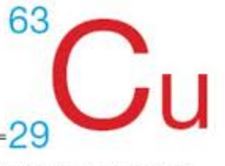
How many electrons does a Copper atom have?
a)
63
b)
29
c)
92
d)
34
9.
How many neutrons does a Hydrogen atom have?
a)
1
b)
2
c)
3
d)
0
10.
How many electrons does an atom of Krypton have?
a)
36
b)
83.80
c)
47.80
d)
119.80
11.
What is the atomic number for an element with 41 neutrons and a mass number of 80?
a)
39
b)
41
c)
80
d)
121
12.
How many protons are present in phosphorus-31
a)
15
b)
16
c)
31
d)
46
13.
Found in the nucleus of the atom
a)
electrons only
b)
protons only
c)
neutrons and protons
d)
neutrons and electrons
14.
An element is defined by its number of 
a)
protons
b)
electrons
c)
neutrons
d)
protons + electrons
15.
Protons and neutrons are found in the....
a)
energy levels
b)
nucleus 
c)
space 
d)
Bohr Model 
16.
Which of the subatomic particles is the lightest
a)
all have the same mass
b)
protons 
c)
neutrons 
d)
electrons
17.
The relative mass of an electron is...
a)
1
b)
2
c)
0
d)
3
18.
The relative mass of a proton/neutron is.....
a)
0
b)
1
c)
2
d)
3
19.
Where are electrons of an atom found?
a)
Nucleus
b)
Electron Cloud
c)
Some are in the nucleus and some in the electron cloud.
d)
They are moving everywhere.
20.
How many electrons does Si contain? (click to see image)
a)
14
b)
28
c)
2
d)
4
21.
Identify this atom: 
a)
Lithium
b)
Chlorine
c)
Phosphorus 
d)
Fluorine
22.
How many energy levels does Hafnium have?
a)
4
b)
72
c)
6
d)
cannot determine
23.
How many valence electrons are represented here?
a)
7
b)
5
c)
2
d)
8
24.
How many valence electrons does phosphorus have?
a)
5
b)
2
c)
8
d)
15
25.
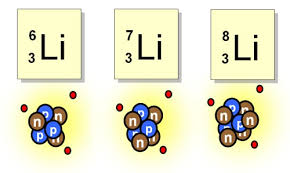
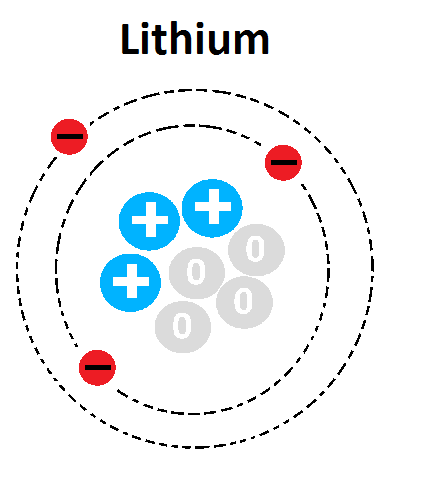
How many neutrons does this isotope of lithium have?
a)
8
b)
3
c)
4
d)
5
26.
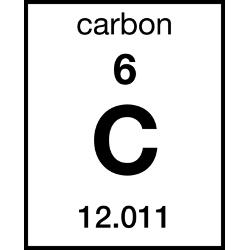
What does the 6 represent above the C
a)
Symbol 
b)
Name 
c)
Mass Number 
d)
Atomic Number 
27.
This is a correct dot diagram for fluorine (F)
a)
true
b)
false
28.
This is a correct dot diagram for oxygen (O)
a)
true
b)
false
29.
This is the correct dot diagram for sodium (Na)
a)
true
b)
false
30.

Which of the elements in the picture has correct electron dot notation?

a)

1

b)

2

c)

3

d)

4

31.

What is the octet rule?

a)

Elements can only have 8 electrons in its outermost shell

b)

The elements must form an octopus like structure

32.

An atom is neutral if

a)

the number of protons equals the number of electrons

b)

the number of neutrons equals the number of protons

c)

the number of electrons equals the number of neutrons

d)

it has gained or lost electrons

33.

If an atom GAINS or LOSES electrons it is called an

a)

isotope

b)

ion

c)

neutral atom

d)

electron cloud

34.

If an atom has a charge of +2 it has

a)

gained 2 electrons

b)

lost 2 electrons

c)

gained 2 protons

d)

lost 2 protons

35.

If an atom has a charge of -3 it has

a)

gained 3 electrons

b)

lost 3 electrons

c)

gained 3 protons

d)

lost 3 protons

36.

Atoms of Potassium like to lose one electron to become more stable. What will the charge of this new potassium ion be?

a)

+1

b)

+2

c)

-1

d)

-2

37.

Fluorine atoms like to GAIN 1 electron to become more stable. What will the charge be of this new fluorine ion?

a)

-1

b)

+1

c)

0

d)

-2

38.

Which of the following ionic notations is correct for an atom of Sulfur that has gained 2 electrons?

a)

S+2

b)

S-2

c)

Si+2

d)

Si-2

39.
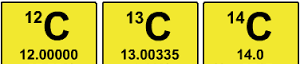
What do these isotopes of carbon all have in common?
a)
neutrons & mass number
b)
atomic number and neutrons
c)
atomic number and electrons
d)
protons, atomic number, and mass number
40.
How many neutrons does the isotope of lithium have?
a)
8
b)
3
c)
4
d)
5
41.
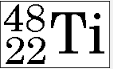
How many protons does this isotope of titanium have?
a)
48
b)
22
c)
26
d)
70
42.
which atom has  4 neutrons?
a)
Li-6
b)
Li-7
c)
Li-8
d)
they have the same # of neutrons
43.
Isotopes are atoms of the same element with different #’s of __________ & therefore different __________.
a)
n0 ;  atomic #’s
b)
p+ ; atomic #’s
c)
e- ; atomic masses
d)
n0 ; atomic masses
44.
How many neutrons does the isotope below have?     89 36Kr
a)
53
b)
36
c)
89
d)
125
45.
Four isotopes of lead include lead-204, lead-206, lead-207, and lead-208.  The average atomic mass of lead is 207.2.  Which isotope of lead is likely to be the most abundant.
a)
204
b)
206
c)
207
d)
208
46.
How many electrons are in an atom that has an atomic number of 34, an atomic mass of 74 and a charge of -2?
a)
34
b)
36
c)
2
d)
40
47.

A neutron changes into a proton and an electron releasing this type of particle.

a)

alpha decay

b)

beta decay

c)

gamma decay

d)

all of the above

e)

alpha & beta decay

48.

This type of radiation can travel across galaxies.

a)

alpha

b)

beta

c)

gamma

d)

all of the above

e)

none of the above

49.

This particle has 2 protons and 2 neutrons like a helium nucleus.

a)

alpha particle

b)

beta particle

c)

gamma photon

d)

alpha and gamma particles

e)

none of the above

50.

This type of decay creates a new element

a)

alpha

b)

beta

c)

gamma

d)

alpha and beta

e)

none of the above

51.

In the equation, 146C --> 147N + 0-1B, the _______ decay of radioactive carbon-14 results in the creation of a new nitrogen-14 atom.

a)

Gamma

b)

Beta

c)

Alpha

52.
Uranium-238  decays into  Thorium-234  by emitting .........
a)
an alpha particle
b)
a beta particle
c)
gamma rays
d)
visible light
53.
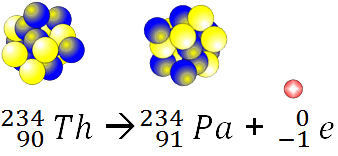
Which type of nuclear radiation is being emitted here?
a)
Alpha
b)
beta
c)
gamma 
d)
none
54.
If we start off with element 24X50 after an alpha decay we get another element Y that looks like
a)
22Y50
b)
22Y46
c)
20Y48
d)
26Y54
55.
If we start off with element 24X50 after an beta decay we get another element Y that looks like
a)
23Y50
b)
22Y46
c)
25Y50
d)
24Y50
56.

What type of decay is shown here

23892U ---> 23490Th + 42He.

a)

alpha

b)

beta

c)

gamma

57.
24.1% of all the isotopes of a an element have a mass of 75.23 amu, 48.7% have a mass of 74.61 amu, and 27.2% have a mass of 75.20 amu.
What is the average mass of this element?
a)
74.92 amu
b)
24.97 amu
c)
75.01 amu
d)
74.51 amu
58.
Calcium has three different isotopes. One has a mass of 35.00 amu; another has a mass of 41.00 amu; and another has a mass of 40.00 amu. Which isotope is the most abundant of the three?
a)
40.00 amu
b)
41.00 amu
c)
35.00 amu
d)
impossible to tell
59.
An element with 4.35% have a mass of 49.9461 amu, 83.79% have amass of 51.9405 amu, 9.50% have a mass of 52.9407 amu, and 2.36% have a mass of 53.9389amu.
a)
51.99 amu
b)
52.19 amu
c)
53.45 amu
d)
17.33 amu
60.
An isotope has three forms.  30% have a mass of 4 amu, 20% have a mass of 5 amu and 50% have a mass of 3 amu.  Average atomic mass will be closest to
a)
2 amu
b)
3 amu
c)
4 amu
d)
5 amu
61.
Example of physical property
a)
electromotive force
b)
boiling point
c)
combustion
d)
reactivity with water
62.
Example of physical property
a)
freezing point
b)
ability to blow up
c)
toxicity
d)
radioactivity
63.
Example of a physical property
a)
flammability
b)
luster
c)
ability to rust
d)
ability to explode
64.
What kind of properties can only be observed when a substance changes into a different substance?
a)
physical properties
b)
chemical properties
65.
Example of a physical property
a)
magnetism
b)
reactivity with oxygen
c)
flammability
d)
non-reactive
66.
Properties that can be observed without changing the identity of the substance.
a)
Physical
b)
Chemical
67.
Example for physical property
a)
odor
b)
burns in air
c)
reacts with water to create hydrogen gas
d)
rust
68.
Example for physical property
a)
reacts with an acid
b)
explodes
c)
flammibility
d)
taste
69.
Example for physical property
a)
melting point
b)
flammability
c)
reactivity 
d)
combustion
70.
Example of a physical property
a)
reactivity
b)
 color
c)
combustion
d)
ability to burn
71.
Ability to rust is this type of property:
a)
Physical property
b)
Chemical property
72.
Alka-Seltzer gives off carbon dioxide when added to water
a)
physical change
b)
chemical change
73.
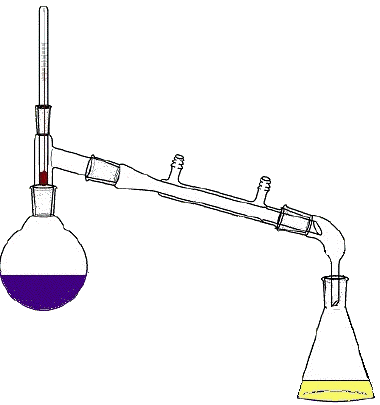
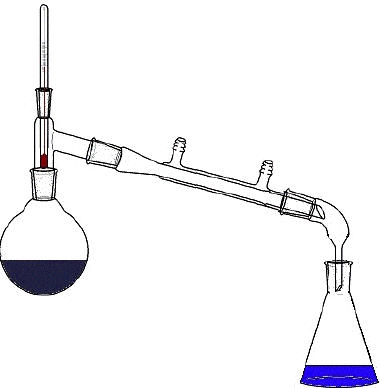
Which of the following pairs of substances may best be separated through distillation
a)
 sand and soil
b)
water and soil
c)
salt and sand
d)
 water and alcohol
74.
Which one of the following techniques would best be used to separate soil and water?
a)
Decanting
b)
distillation
c)
Filtration
d)
Chromatography
75.
Which one of the following would you use to separate sand from iron filings?
a)
a bar magnet
b)
filter paper
c)
chromatography paper
d)
alum
76.
Which one of the following is NOT a mixture?
a)
Sugar
b)
Paint
c)
Crude oil
d)
Air
77.
Which mixture could you separate by adding water and then pouring through a coffee filter?
a)
sand and salt, because the salt would dissolve and the sand would not
b)
baking soda and salt, because they both dissolve
c)
sugar and salt, because they both dissolve
d)
iron fillings and sand, because neither one dissolves
78.
Matter can not be created nor destroyed: it can only be
a)
Destroyed a little bit
b)
Invisible
c)
Transformed, changed
d)
None of the above
79.
In which state of matter are the atoms spaced the farthest apart & are the most compressible?
a)
solid 
b)
liquid
c)
gas
80.
What is digestion?
a)
Physical property
b)
Chemical change
c)
Physical change
d)
Chemical property
81.
When you break a cracker into pieces it is a 
a)
Chemical change
b)
Physical change
c)
Chemical Weathering
d)
Physical Weathering
82.
Which state of matter has the highest kinetic energy (atoms move the fastest)?
a)
solid
b)
liquid 
c)
gas
83.
In which state of matter are the atoms spaced the closest together?
a)
solid
b)
liquid
c)
gas
84.
When ice melts does kinetic energy decrease (release heat) or increase (absorb heat)?
a)
kinetic energy decreases & heat is released 
b)
kinetic energy increases & heat is absorbed
85.
Water and alcohol are easily separated by distillation because of their
a)
 different melting points
b)
different colours
c)
different densities
d)
different boiling points
86.

This substance can be separated by physical means

a)

Mixtures

b)

Pure Substances

c)

Elements

d)

Compounds

87.

This substance can be separated by chemical means only

a)

Homogenous mixtures

b)

Heterogeneous misxtures

c)

Elements

d)

Compounds

88.

How does the amount of energy change in the substance in the phase change from a solid to a liquid?

a)

energy is not affected

b)

increases the amount of energy

c)

decreases energy the amount of energy

d)

amount of energy cannot be determined

89.

How does the amount of energy change in the substance in the phase change from gas to a liquid?

a)

energy is not affected

b)

increases the amount of energy

c)

decreases energy the amount of energy

d)

amount of energy cannot be determined

90.

How does the amount of energy change in the substance in the phase change from a solid to a gas

a)

energy is not affected

b)

increases the amount of energy

c)

decreases energy the amount of energy

d)

amount of energy cannot be determined

91.

Classify the following as an element, compound, homogeneous mixture, or heterogeneous mixture.

Water (H2O), Table Salt (NaCl)

a)

Homogenous mixtures

b)

Heterogeneous mixtures

c)

Elements

d)

Compounds

92.

Classify the following as an element, compound, homogeneous mixture, or heterogeneous mixture.

Gravel and Dirt

a)

Homogenous mixtures

b)

Heterogeneous mixtures

c)

Elements

d)

Compounds

93.

Identify the following changes as chemical or physical

Boiling Water

a)

Chemical

b)

Physical

c)

Cannot be determined

94.

Identify the following changes as chemical or physical

Burning Paper

a)

Chemical

b)

Physical

c)

Cannot be determined

95.

What does this illustrate

a)

Elements

b)

Compunds

c)

Mixture of Elements and Compunds

d)

Mixture of Compounds

96.

What does this pic illustrate?

a)

Element

b)

Mixture of Compunds

c)

Mixture of elemets

d)

Compounds

97.

Which of the following is matched incorrectly.

a)

Air: compound

b)

Steel alloy: homogeneous mixture

c)

Glucose (C6H12O6): compound

d)

Cookies & Cream: heterogenous mixture

98.

Two characteristics of Matter are:

a)

Has volume and is energy

b)

Has mass and is energy

c)

Has mass and volume

d)

Doesn't take up space and is not energy

99.

Mass is a measurement of

a)

how much space an object occupies.

b)

how dense an object is.

c)

the amount of matter in an object.

d)

the volume of an object.

100.

An element is made of one type of

a)

molecule

b)

atom

c)

compound

d)

mixture

101.

A compound is

a)

a substance that is composed of two or more elements that are chemically bonded.

b)

a molecule formed by atoms of the same element.

c)

another word for an atom.

d)

any substances that can be split apart.

102.

A change in a substance that does not involve a change in the identity of the substance is called (a)n

a)

chemical change.

b)

physical change.

c)

extensive property.

d)

intensive property.

103.

Which is not true about the liquid state of matter?

a)

The liquid state has a definite volume and a definite shape.

b)

The liquid state takes on the shape of its container.

c)

The liquid states has a definite volume and an indefinite shape.

d)

The particles in a liquid can easily move past each other.

104.

If a mixture is uniform in composition, it is considered to be

a)

heterogeneous.

b)

molecular.

c)

homogeneous.

d)

elemental.

105.

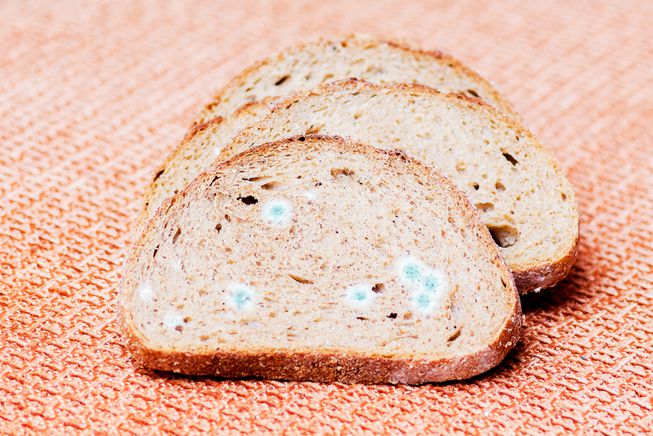
Moldy Bread

a)

Physical Change

b)

Chemical Change

106.

Filtration and evaporation are...

a)

A mixture of two substances.

b)

A homogeneous mixture.

c)

Methods to separate the components of mixtures.

d)

A physical combination.

107.

Matter existin three main states...

a)

Reversible, irreversible and volume

b)

Mass, density and volume

c)

Solid, liquid and gas.

d)

Physical, chemical and irreversible

108.

Which of the following is a heterogeneous mixture?

a)

brass

b)

sand

c)

Kool-aid

d)

vanilla yogurt

109.

Which of the following is a homogeneous mixture?

a)

jello

b)

granite

c)

dirt

d)

salsa

110.

Dry ice is an example of what phase change. (SOLID to GAS).

a)

freezing

b)

melting

c)

vaporization/boiling

d)

sublimation

111.
Why does electronegativity increase across a period?
a)
Adding more energy levels makes the ve- further from the nucleus
b)
There are more valence electrons in the outer shell
c)
There are more protons  in the nucleus
d)
There are less protons in the nucleus
112.
The metals of Group 1 are commonly called the 
a)
Transition metals
b)
Alkaline earth metals
c)
Lanthanides
d)
Alkali Metals
113.
The minimum energy required to remove an electron from the ground state of an atom
a)
electron configuration
b)
energy levels
c)
ionization energy
d)
ionic bond
114.
Francium (Fr) has the lowest ionization energy in Group 1 because - 
a)
it has the smallest number of valence electrons
b)
it has the greatest atomic mass
c)
it has the greatest number of protons, so it attracts its electrons the strongest
d)
its 1 valence electron is very far from the nucleus, so little energy is needed to remove it
115.

Our modern Periodic Table is organized by increasing....

a)

oxidation numbers

b)

average atomic mass

c)

atomic number

d)

alphabetical order

116.
Which of the following is true?
a)
Electrons attract neutrons
b)
Neutrons attract protons
c)
Protons attract electrons
d)
Electrons attract electrons
117.
As you move down the periodic table atoms get bigger.  This is because ____________.
a)
The atoms have more mass.
b)
The atoms have more protons.
c)
The atoms have more energy levels
d)
The atoms have more nuetrons
118.

Why doesn't having more protons increase the attraction down a column?

a)

there are more valence electrons in the outermost energy level

b)

actually, there aren't more protons in the nucleus down the column

c)

as energy levels are added, non-valence electrons block the extra protons from attracting ve-

d)

more neutrons block the extra protons

119.

Atoms of the noble gases are generally not reactive

because-

a)

they are neutral atoms

b)

they are charged

c)

their outer electron (valence) level is filled

d)

they are too large to react

120.

In general ionization ____ as you go down a group,

and ____ as you go across the periodic table.

a)

decreases, decreases

b)

decreases, increases

c)

increases, decreases

d)

increases, increases

121.

Electronegativity __________ from left to right within a period and __________ from top to bottom within a group.

a)

increases, decreases

b)

increases, increases

122.

Which elements have properties that are in between metals and nonmetals.

a)

Halogens

b)

Alkali Metals

c)

Metalloids

d)

Alkaline Earth Metals

123.

What makes a valence electron more attracted to the nucleus?

a)

less distance between the nucleus and having less protons

b)

less distance between the nucleus and having more protons

c)

more distance between the nucleus and having less protons

d)

more distance between the nucleus and having more protons

e)

less distance and having more valence electrons

124.

What is the tendency of an atom to attract electrons towards itself in a bond?

a)

atomic radius

b)

ionization energy

c)

shielding

d)

Electronegativity

125.

The higher the ionization energy...

a)

the more attracted the valence electron is to the nucleus so it is harder to remove

b)

the less attracted the valence electron is to the nucleus so it is easier to remove

c)

the more attracted the valence electron is to another electron, so it is harder to remove

d)

the more repelled a valence electron is to another electron, so it is easier to remove

126.

Why does ionization energy decrease going down a group?

a)

Adding more energy levels makes the ve- further from the nucleus so it is easier to remove

b)

There are more valence electrons in the outer shell so the ve- is easier to remove

c)

There are more protons in the nucleus so the ve- is easier to remove

d)

There are less protons in the nucleus so the ve- is easier to remove

127.

What happens to atomic radius across a period?

a)

the atoms get bigger because the nucleus is bigger as more protons are added

b)

the atoms get bigger because there are more ve-

c)

the atoms get smaller because with more attraction to the extra protons, the e- cloud moves closer to the nucleus

d)

the atoms get bigger because there are more energy levels

128.

Element Z has more protons than element Y, but both have 4 energy levels. Which statement is true?

a)

Y is smaller and would attract electrons more in a bond

b)

Y is bigger and would attract electrons more in a bond

c)

Z is smaller and would attract electrons more in a bond

d)

Z is bigger and would attract electrons more in a bond

129.

A full valence shell is considered having _ ve-.

a)

0

b)

2

c)

6

d)

8

130.

Which of the following lose all their ve- when forming an ion?

a)

metals

b)

nonmetals

c)

metalloids

d)

depends on how many ve- the element has

131.

Which has a higher electronegativity.. Rb or Sr?

a)

Rb, because with more p+ in its nucleus it attracts e- more

b)

Sr, because with more p+ in its nucleus it attracts e- more

c)

Rb, because with more nrg levels the ve- are closer to/ more attracted to the nucleus

d)

Sr, because with more nrg levels the ve- are closer to/ more attracted to the nucleus

132.

The trends on the periodic table are dependent on..

a)

how attracted a valence electron is to the nucleus

b)

how attracted valence electrons are to each other

c)

how attracted a valence electrons is to a non valence electron

d)

how attracted a non valence electron is to the nucleus

133.

Which of the following elements has the smallest atomic radius?

a)

Lithium

b)

Fluorine

c)

Boron

d)

Sodium

134.

Which atom has the largest atomic radius?

a)

Magnesium

b)

Calcium

c)

Barium

d)

Strontium

135.

The element with the LOWEST electronegativity in the halogens is - 

a)
At
b)
F
c)
Cl
d)
Br
136.

The element with the HIGHEST electronegativity in Period 3 is -

a)

Na

b)

Cl

c)

Ar

d)

Mg

137.

Who developed the Periodic Table?

a)

Mendeleev and his saddle worn butt.

b)

Pavlov, who was a teacher and physchologist

c)

Ladahoff, who was a teacher and biologist

138.

Atoms in the same group on the periodic table have

____ numbers of valence electrons and _____ properties.

a)

different, different

b)

different, similar

c)

similar, similar

d)

similar, different

139.

The atom with the smallest atomic radius in Period 4 (row 4) is - 

a)
K
b)
Kr
c)
Fe
d)

Br

140.

List the following in order of weakest to strongest ionization energy.

Ne, Li, N, F

a)

Ne, N, F, Li

b)

Li, N, F, Ne

c)

Ne, F, N, Li

d)

Li, F, N, Ne

141.

List the following from smallest to largest atomic radius.

N, Ne, F, Li

a)

F, N, Li, Ne

b)

Li, N, F, Ne

c)

Ne, F, N, Li

d)

Ne, N, F, Li

142.

List the following from least to greatest electronegativity.

N, Ne, F, Li

a)

F, N, Li, Ne

b)

Li, N, F, Ne

c)

Ne, F, N, Li

d)

Ne, Li, N, F

143.

Chlorine is a _ so it will _ electrons when forming an ion.

a)

metal, lose

b)

metal, gain

c)

nonmetal, lose

d)

nonmetal, gain

144.

Phosphorus will gain _ ve- to have a charge of _.

a)

5 , -5

b)

3, +3

c)

3, -3

d)

5, +5

145.

Which has a higher ionization energy.. F or Br?

a)

F, because with more p+ in its nucleus it attracts e- more making them harder to remove.

b)

Br, because with more p+ in its nucleus it attracts e- more making them harder to remove.

c)

Br, because with less energy levels the ve- are closer to/ more attracted to the nucleus making them harder to remove.

d)

F, because with less energy levels the ve- are closer to/ more attracted to the nucleus making them harder to remove.

146.

What is the trend for electronegativity as you move left to right across a period and why?

a)

EN increases because the shielding effect increases causing the effective nuclear charge to decrease as you add more protons to the nucleus

b)

EN decreases because the shielding effect decreases causing the effective nuclear charge to increase as you add more protons to the nucleus

c)

EN increases because the effective nuclear charge increases as you add protons to the nucleus and increase the number of valence electrons in the outer shell

d)

EN decreases because the effective nuclear charge decreases as you reduce the number of protons in the nucleus and increase the number of valence electrons in the outer shell

147.

What is the trend for EN as you move down a group or family and why?

a)

EN increases because the number of energy levels decrease causing an increase in the shielding effect and a decrease in the effective nuclear charge.

b)

EN decreases because the number of energy levels increases causing an increase in the shielding effect and a decrease in the effective nuclear charge

c)

EN increases because the number of energy levels increases causing a decrease in the shielding effect and an increase in the effective nuclear charge

d)

EN decreases because the number of energy levels decrease causing a decrease in the shielding effect and a decrease in the effective nuclear charge.

148.

Arrange the following elements in order by increasing electronegativity - Sn, Sr, I, Ag, Zr

a)

Sr, Zr, Ag, Sn, I

b)

Sr, Ag, Zr, I, Sn

c)

I, Sn, Ag, Zr, Sr

d)

Sn, I, Zr, Ag, Sr

149.

Metals that are the most reactive have the following characteristics

a)

small atomic radius, high ionization energy, high electronegativity

b)

large atomic radius, high ionization energy, low electronegativity

c)

large atomic radius, low ionization energy, low electronegativity

d)

small atomic radius, low ionization energy, low electronegativity

150.

This could be the dot diagram of

a)

Mg

b)

Cl

c)

C

d)

O

151.

This is a correct dot diagram for neon (Ne)

a)

true

b)

false

152.

How would you draw a Lewis dot diagram for Magnesium?

a)
b)
c)
d)
153.
This is a correct dot diagram for fluorine, group 17.
a)
true
b)
false
154.
What is the name of this element?
a)
Lithium
b)
Boron
c)
Carbon
d)
Neon
155.
How many valence electrons?
a)
2
b)
3
c)
5
d)
10
156.

What is this element? Use a periodic table!

a)

Beryllium (atomic #4)

b)

Boron (atomic #5)

c)

Carbon (atomic #6)

d)

Nitrogen (atomic #7)

157.

Which element would be in group 2?

a)

V

b)

W

c)

X

d)

Y

e)

Z

158.
What is the mass number of this atom?
a)
1
b)
3
c)
4
d)
7
159.
What is the atomic number of this atom?
a)
2
b)
4
c)
6
d)
none of the above
160.

What is the name for the central area of an atom, where most of the atom's mass is located?

a)

Neutron

b)

Electron

c)

Proton

d)

Nucleus

161.
Which is the electron configuration for an oxygen atom?
a)
1s22s22p63s23p64s2
b)
1s22s22p4
c)
1s22s22p6
d)
1s22s22p63s23p6
162.
What is the maximum number of electrons that an orbital can have?
a)
1 electron
b)
2 electrons
c)
3 electrons
d)
4 electrons
163.
How many valence electrons are represented here?
a)
7
b)
5
c)
2
d)
8
164.
How many electrons can the d sublevel hold?
a)
8
b)
10
c)
2
d)
4
165.
What is this element? 
1s22s22p63s23p6
4s23d104p6
a)
Argon
b)
Krypton
c)
Selenium
d)
Bromide
166.
What is the shorthand electron configuration for Sulfur atom?
a)
[Ar] 3p4
b)
[He] 3s23p4
c)
[Ne] 3s23p4
d)
[Na] 3s23p3
167.
How many electrons can the first energy level hold?
a)
1
b)
2
c)
8
d)
0
168.
How many valence electrons does Chlorine have?
a)
5
b)
2
c)
7
d)
5
169.
How many valence electrons does phosphorus have?
a)
5
b)
2
c)
8
d)
15
170.
What element has the valence shell configuration
3s2 3p2
a)
Al
b)
B
c)
Si
d)
Ga
171.
What atom matches this electron configuration?
[Xe] 6s2 4f14 5d9
a)
Mercury
b)
Gold
c)
Platinum
d)
Thallium
172.
What atom matches this electron configuration?
1s2s2p3s2
a)
Neon
b)
Magnesium
c)
Aluminum
d)
Potassium
173.

LiBr is called

a)

lithium bromine

b)

lithium (I) bromine

c)

lithium bromide

d)

lithuim (I) bromide

174.

Which of the following combinations would need roman numerals in the name?

a)

potassium + fluorine

b)

beryllium + oxygen

c)

boron + iodine

d)

lead + oxygen

175.

What is the name of the compound Na2(SO4)?

a)

Sodium sulfate

b)

Sodium sulfide

c)

Sodium sulfite

d)

Sodium sulfuroxide

176.
What is the correct formula for Sodium Oxide?
a)
NaO
b)
NaO2
c)
Na2O
d)
Na2O2
177.
What is the formula for copper(I) sulfate?
a)
CuSO3
b)
CuSO4
c)
Cu2SO3
d)
Cu2SO4
178.
Which of the following is the correct name for the chemical formula Ca(NO2)2?
a)
cadmium nitride
b)
calcium nitrate
c)
calcium nitrite
d)
cadmium nitrite
179.
How do the following two elements bond together?
Cr3+  O2-         
a)
CrO
b)
Cr3O2
c)
Cr2O3
d)
CrO3
180.
PbS2
a)
lead sulfide
b)
lead sulfur
c)
lead II sulfide
d)
lead IV sulfide
181.
The proper formula for magnesium hydroxide:
a)
MgOH
b)
Mg2OH
c)
Mg(OH)2
d)
Mg2OH2
182.
Which of the following is NOT an ionic compound:
a)
CaO
b)
NaOH
c)
BaCl2
d)
Br2
183.
How do the following two elements bond together?
Al3+  O2-         
a)
AlO
b)
Al2O3
c)
Al3O6
d)
Al3O2
184.
What is the correct formula for the compound, lithium oxide?
a)
LiO
b)
Li2O
c)
LiO2
d)
Li2O2
185.
The name for CrN:
a)
Chromium nitride
b)
Chromium (I) nitride
c)
Chromium (III) nitride
d)
Chromium nitride (III)
186.
Name the following ionic compound: BeCl2
a)
beryllium chlorine
b)
beryllium II chloride
c)
beryllium chloride
d)
beryllium dichloride
187.
The chemical formula of iron (III)bromide is
a)
FeBr
b)
Fe(III)Br
c)
FeBr₃
d)
Fe₂Br₃
188.
What is the formula for calcium phosphide?
a)
CaP
b)
Ca2P3
c)
Ca3P2
d)
Ca2P
189.

Name the following compound: CaCl2

a)

calcium dichloride

b)

calcium chloride

c)

calcium (II) chloride

d)

carbon chloride

e)

None of these.

190.

Name the following compound: Zn3N2

a)

zinc nitride

b)

trizinc dinitride

c)

zinc (III) nitride

d)

zinc (II) nitide

e)

zinc nitrogen

191.
The chemical formula for an ionic compound of potassium and oxygen is
a)
KO.
b)
K2O.
c)
K2O2.
d)
KO2.
192.
What is the NAME of....
Na2S
a)
sodium (II) sulfide
b)
sodium sulfide
c)
disodium sulfide
d)
sodium sulfur
193.
What is the NAME of....
Mg3N2
a)
magnesium (III) nitride
b)
magnesium (II) nitride
c)
magnesium (II) nitrogen
d)
magnesium nitride
194.
What is the FORMULA for....
beryllium iodide
a)
Be2I
b)
BeI
c)
BeI2
d)
BI2
195.
The name of Al₂(SO₄)₃ is
a)
aluminum sulfur oxide
b)
aluminum sulfate
c)
aluminum trisulfate
d)
aluminum (III) sulfate
196.
The name of Ca₃(PO₄)₂ is
a)
calcium phosphide oxide
b)
calcium phosphate
c)
tricalcium diphosphate
d)
carbon phosphate
197.
What is the formula for tin (II) nitride?
a)
Sn3N2
b)
SnN2
c)
Sn3N
d)
SnN
198.
Name the Compound:
SnO2
a)
tin(II) oxide
b)
tin(IV)oxide
c)
tin(II)oxegen 
d)
tin oxide
199.

What is the formula for Magnesium Carbonate?

a)

MgCO3

b)

Mg(CO3)2

c)

Mg2CO6

d)

Mg2CO3

200.

Name the following ionic compound: Li(NO3)

a)

lithium nitrate

b)

lithium III nitrate

c)

lithium nitride

d)

lithium oxide

201.

Name this compound:

(NH4)F

a)

Ammonia fluoride

b)

Ammonium fluorite

c)

Ammonia fluorate

d)

Ammonium fluoride

202.
How do the following two elements bond together?
Na1+  F1-         
a)
NaF
b)
NaF3
c)
Na3F
d)
Na1F2
203.
How do the following two elements bond together?
K1+  S2- 
a)
KS
b)
K8S
c)
K6S3
d)
K2S
204.
How do the following two elements bond together?
Al3+  O2-         
a)
AlO
b)
Al2O3
c)
Al3O6
d)
Al3O2
205.

What is the name of the following compound: NaCl

a)

sodium chloride

b)

sodium (I) chloride

c)

sodium chlorine

d)

sodium (I) chlorine

206.

What is the what charge of manganese in the compound: Mn2O3

a)

+1

b)

+2

c)

+3

d)

-3

207.

What is the charge of copper in the compound: CuBr2

a)

+1

b)

+2

c)

-1

d)

-2

208.

What is the what charge of lead in the compound: lead (IV) iodide

a)

+1

b)

+4

c)

+6

d)

-1

209.

Which is the correct formula for the compound: Calcium Oxide

a)

CaO

b)

CaO2

c)

Ca2O

210.
Carbon dioxide
a)
C2O2
b)
C20
c)
CO
d)
CO2
211.
Phosphorous trichloride
a)
PCl3
b)
P3Cl
c)
P3Cl3
d)
PCL
212.
Bromine monoflouride
a)
Br1F1
b)
BrF
c)
Br2F
d)
BrF2
213.
Disulfur trioxide
a)
S3O2
b)
SO
c)
S2O3
d)
S2O
214.
As4O10
a)
arsenic oxide
b)
quadarsenic decoxide
c)
tetraarsenic decoxide
d)
arsenic decoxide
215.
P3F4
a)
Phosphorous fluoride
b)
Triphosphorous tetrafluoride
c)
Phosphate Fluoride
d)
Trifluoride hexafluoride
216.
BrP
a)
Bromide phosphide
b)
Bromide phosphate
c)
Monobromide monophosphide
d)
Bromide monophosphide
217.
N2O5
a)
Nitrogen Oxide
b)
Dinitrogen pentaoxide
c)
Nitrate pentaoxide
d)
Dinitrate pentaoxide
218.
Tribromine nonoxide
a)
Br3O9
b)
Br3O10
c)
Br3O6
d)
Br3O4
219.
SeF4
a)
Tetraselenium fluoride
b)
Selenium Fluoride
c)
Selenium tetraflouride
d)
Selenium (IV) Fluoride
220.
Write the correct name for SO3.
a)
sulfurous oxide
b)
sulfite
c)
monosulfur trioxide
d)
sulfur trioxide