wayground logo

Free Printable Worksheets

Font size

S
M
L
XL
Worksheets

Final Review 2021

Total questions: 84

Worksheet time: 2hrs 7mins

Name
Class
Date
1.
Which one of the following would you use to separate sand from iron filings?
a)
a bar magnet
b)
filter paper
c)
chromatography paper
d)
alum
2.

This diagram represents...

a)

An element

b)

A molecule

c)

A compound

d)

A mixture of elements and compounds

3.
a)
element
b)
compound
c)
mixture of elements
d)
mixture of compounds
4.
The physical separation of mixtures into individual components is..
a)
chromatography
b)
opacity 
c)
latent
d)
trace evidence 
5.
Two or more substances that are mixed together but not chemically combined is a ___
a)
compound
b)
mixture
c)
keratin
d)
chromatography
6.

As temperature increases, what happens to particles?

a)

They speed up

b)

They slow down

7.
What takes place when a liquid changes to a gas?
a)
condensation
b)
melting
c)
evaporation
d)
freezing
8.
Change from Gas to Solid is called........
a)
Sublimation
b)
Deposition
c)
Fusion
d)
condensation
9.
What is sublimation?
a)
phase change between solid and liquid
b)
pahse change from gas to solid
c)
phase change from solid to gas
d)
phase change from solid to solid
10.
What is the mass?
a)
272.1 cm
b)
270.2 g
c)
272.1 g
d)
270.1 g
11.
What measurement is taken with this instrument?
a)
weight
b)
mass
c)
volume
d)
distance
12.
What is the measurement using the correct number of sig. figs.?
a)
39.5 mL
b)
40 mL
c)
39 mL
d)
40.0 mL
13.

How much KNO3 solute is saturated at 40 degrees?

a)

75

b)

55

c)

65

d)

85

14.

How much C12H22O11 solute is saturated at 40 degrees?

a)

240

b)

220

c)

230

d)

250

15.

What type of a solution is 60g NaNO3 at 40ºC in 100g H2O?

a)

Saturated

b)

Unsaturated

c)

Supersaturated

16.

What line segment represents only the solid state? (Diagram F)

a)

A-B

b)

B-C

c)

C-D

d)

D-E

17.
True or false: melting and freezing occur at the same temperature!
a)
True
b)
False
c)
I don't know
18.

A substance's heating curve is shown in the graph. What is its boiling point? (Diagram B)

a)

100 C

b)

60 C

c)

80 C

d)

20 C

19.
Which one of these is not a noble gas?
a)
Helium
b)
Radon
c)
Iodine
d)
Krypton
20.
What is the atomic number of Oxygen?
a)
6
b)
7
c)
8
d)
9
21.
What family is Sodium a part of?
a)
Transition Metals
b)
Halogens
c)
Alkali Metals
d)
Alkaline Earth Metals
22.
What family is silver a part of?
a)
Transition Metals
b)
Noble Gases
c)
Alkali Metals
d)
Alkaline Earth Metals
23.
Which element has the smaller atomic radius: potassium (K) or bromine (Br)?
a)
potassium (K)
b)
bromine (Br)
24.
Which element has the greatest ionization energy: Aluminum (Al)    or    Chlorine (Cl)?
a)
Aluminum (Al)
b)
Chlorine (Cl)
25.
Which element has the greatest electronegativity: Nitrogen (N) or Arsenic (As)?
a)
Nitrogen (N)
b)
Arsenic (As)
26.
As you move down the periodic table atoms get bigger.  This is because ____________.
a)
The atoms have more mass.
b)
The atoms have more protons.
c)
The atoms have more energy levels
d)
The atoms have more nuetrons
27.

As you move to the right across the periodic table atoms tend to get smaller because, ______________.

a)

the atoms have more mass.

b)

the atoms have more neutrons and mass

c)

the atoms have more protons (and a greater nuclear charge)

d)

the atoms have more electrons.

28.
How many protons are in Beryllium?
a)
4
b)
9
c)
5
d)
2
29.
What is the number of protons that the element in this image contain?
a)
14
b)
7
c)
15
d)
18
30.

Which element has 2 valence electrons and is in period 6?

a)

O

b)

He

c)

Ba

31.
What electron configuration matches an oxygen atom?
a)
1s22s22p63s2, 3p64s23d104p5
b)
1s22s22p4
c)
1s22s22p6
d)
1s22s22p63s23p64s23d1
32.
Identify the Electron Configuration for Aluminum (Al)
a)
1s2s2p3s3p1
b)
1s2s2p3s3p3
c)
1s2s2p3s4p1
33.

What is the maximum number of electrons that an S orbital can have?

a)

1 electron

b)

2 electrons

c)

3 electrons

d)

4 electrons

34.
How many d orbitals are there in a given sublevel?
a)
1
b)
3
c)
5
d)
7
35.
How many p orbitals are there in a sublevel?
a)
2
b)
1
c)
4
d)
3
36.
Mg2+ and Cl- create...
a)
Mg2Cl
b)
MgCl2
c)
Mg2Cl2
d)
MgCl
37.

Which of the following pairs of elements could NOT react to form an ionic compound?

a)

Carbon and Oxygen

b)

Potassium and Fluorine

c)

Silver and Oxygen

d)

Aluminum and Chlorine

38.

Ionic bonds are formed between...

a)

Non - metals

b)

A metal and a non-metal

c)

Metals

39.

Which of the below is an ionic compounds?

a)

Ni

b)

MgCl2

c)

H2O

d)

CH4

40.

Name the type of bonding in which the electrons are shared.

a)

Ionic bonding

b)

Covalent bonding

c)

Metallic bonding

41.

The covalent bond forms between

a)

a metal and nonmetal

b)

a nonmetal and nonmetal

c)

a metal and metal

42.

Which of these is not a covalent molecule?

a)

MgO

b)

CO2

c)

HCl

d)

CH4

43.
Carbon dioxide
a)
C2O2
b)
C20
c)
CO
d)
CO2
44.

What is the approximate percent composition by mass of oxygen in the compound MgSO4 (Molar Mass = 120.4 g/mol)?

a)

20%

b)

27%

c)

46%

d)

53%

45.

A compound consists of 72.2% magnesium and 27.8% nitrogen by mass. What is the empirical formula?

a)

Mg4N3

b)

MgN2

c)

Mg3N2

d)

MgN

46.
What is the molecular formula for a compound with the empirical formula: K2SOand a molecular mass of 696g.
a)
K2SO
b)
K8SO16
c)
K8S4O
d)
K8S4O16 
47.

Which subatomic particle has a positive charge?

a)

proton

b)

neutron

c)

electron

d)

midichlorian

48.

Which subatomic particle has a negative charge?

a)

proton

b)

neutron

c)

electron

d)

cybertron

49.

The nucleus of an atom contains which subatomic particles?

a)

protons and electrons

b)

protons and neutrons

c)

electrons and neutrons

d)

protons, electrons, and neutrons

50.

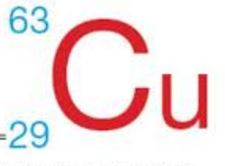
How many electrons does a Copper atom have?

a)

63

b)

29

c)

92

d)

34

51.
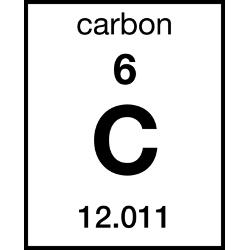
What does the 6 represent above the C
a)
Symbol 
b)
Name 
c)
Mass Number 
d)
Atomic Number 
52.
What is the atomic mass of Copper?
a)
63
b)
29
c)
34
d)
92
53.
How many electrons does Cu4+ have?
a)
29
b)
33
c)
25
d)
30
54.
How many valence electrons in this structure?
a)
6
b)
5
c)
4
d)
7
55.
What is the molar mass of table salt (NaCl)?
a)
116.886 g/mol
b)
35.453 g/mol
c)
22.990 g/mol
d)
58.443 g/mol
56.
What is the molar mass of fluorine gas?
(beware!)
a)
18.998 g/mol
b)
38 g/mol
c)
9 g/mol
d)
18 g/mol
57.
What is the mass of 0.89 mol of CaCl2?
a)
111 grams
b)
0.008 grams
c)
98.9 grams
d)
none of the choices
58.
How many moles are in 22 g of argon? 
a)
880 moles
b)
0.55 moles
c)
1.81 moles
d)
5 moles
59.

Which element is depicted above?

a)

carbon

b)

neon

c)

oxygen

d)

calcium

60.

What is the state when electrons move to a higher energy level upon absorption of energy?

a)

active

b)

inactive

c)

excited

d)

ground

61.

How do electrons become excited?

a)

Emitting light/energy

b)

Absorbing light/energy

c)

Going down an orbital/energy level

d)

Going up an orbital/energy level

62.

What form of energy is emitted when an excited electron returns to the ground state?

a)

Photon (light)

b)

Heat

c)

Kinetic

d)

Potential

63.
Absorption of energy by an electron results in 
a)
it moving from the ground to an excited state
b)
it moving from an excited to the ground state
c)
the emission of a photon
d)
it moving from an excited to the ground state and the emission of a photon
64.
What is the charge of an atom that has lost one electron?
a)
-1
b)
-2
c)
+1
d)
+2
65.
What is the charge of an atom that has gained one electron?
a)
-1
b)
-2
c)
+1
d)
+2
66.

Cations are _________________ and anions are _______________

a)

metals, nonmetals

b)

nonmetals, metals

67.
an atom with atomic number 6 would have how many protons 
a)
6
b)
12
c)
3
d)
cannot be determined 
68.

Which one of the following discoveries came first?

a)

electrons

b)

neutrons

c)

quarks

d)

atoms

69.

What is the neutral particle found in the nucleus called?

a)

proton

b)

neutron

c)

electron

d)

quark

70.

Which one of the following parts of the atom is the smallest?

a)

electron cloud

b)

electron

c)

nucleus

71.

The majority of an atom's mass exists where?

a)

In the nucleus

b)

In the electron cloud

c)

In the space between the nucleus and the electrons

d)

In the neutrons

72.

What did James Chadwick discover last about the atom?

a)

neutrons

b)

electrons

c)

the atomic theory

d)

protons

73.

Ni(ClO3)2 --> NiCl2 + O2

a)

Synthesis

b)

Decomposition

c)

Single Replacement

d)

Double Replacement

74.

C + H2 --> CH4

a)

Synthesis

b)

Decomposition

c)

Single Replacement

d)

Double Replacement

75.

Cl2 + KI --> KCl + I2

a)

Synthesis

b)

Decomposition

c)

Single Replacement

d)

Double Replacement

76.

HCl + NaOH --> NaCl + H2O

a)

Synthesis

b)

Decomposition

c)

Single Replacement

d)

Double Replacement

77.
Combining substances to form a new substance
a)
Displacement
b)
Synthesis
c)
Decomposition
d)
Oxidation
78.
Is the following equation balanced?...
Al + O2 --> 2Al2O3
a)
Yes!
b)
No!
79.

LiBr is called

a)

lithium bromine

b)

lithium (I) bromine

c)

lithium bromide

d)

lithuim (I) bromide

80.

Name the following ionic compound: BeCl2

a)

beryllium chlorine

b)

beryllium II chloride

c)

beryllium chloride

d)

beryllium dichloride

81.
What is the correct name for NO?
a)
Mononitrogen Monoxide
b)
Nitrogen Monoxide
c)
Mononitrogen Dioxide
d)
Nitrogen Oxide
82.

What do you call the substance that is being dissolved?

a)

solution

b)

solute

c)

solvent

d)

suspension

83.

When the solution equilibrium point is reached and no more solute will dissolve, the solution is said to be _________.

a)

unsaturated

b)

saturated

c)

supersaturated

84.

Molarity is measured in _____.

a)

moles per g.

b)

mols per L.

c)

moles per mm.

d)

moles per mL.