Wayground logo

Free Printable Worksheets

Font size

S
M
L
XL
Worksheets

BMK 4 Review

Total questions: 47

Worksheet time: 52mins
Name
Class
Date
1.
When humans burn fossil fuels, most of the carbon quickly enters the                       as carbon dioxide.
a)
Water
b)
Atmosphere
c)
Sun
d)
Air
2.
Which one of these does not add CO2 to the atmosphere?
a)
cooking with gas
b)
planting trees
c)
burning wood
d)
riding in a bus
3.
How do living organisms return carbon to the atmosphere in the carbon cycle?
a)
respiration and photosynthesis
b)
 decomposition and respiration
4.
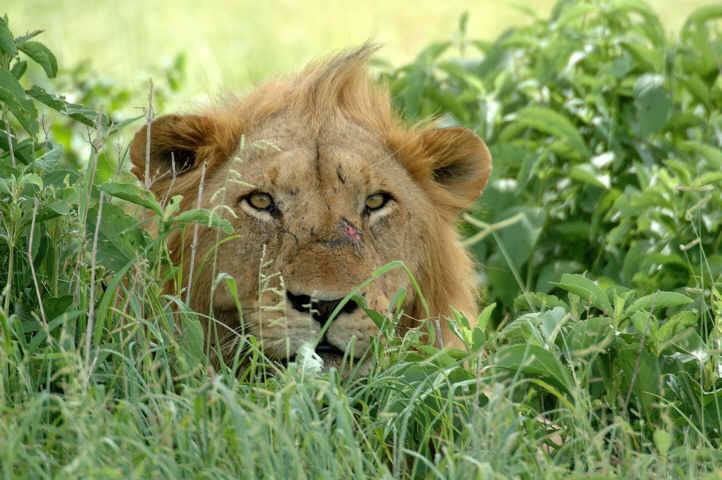
How does the carbon in grass become part of a lion?
a)
The lion eats the grass
b)
Carbon from grass doesn't end up in a lion. 
c)
The carbon ends up in the lion's food chain. 
d)
The lion breathes in carbon given out by the plant
5.
Organisms that do not decompose can be buried and become what?
a)
water
b)
nutrients
c)
air
d)
fossil fuels
6.
TRUE or FALSE?
All of the carbon in existence is continually recycled in the carbon cycle.
a)
True
b)
False
7.
Carbon can be found in...
a)
The atmosphere
b)
Soil
c)
Fossil fuels
d)
All of the above
8.
Which of the following removes carbon from the atmosphere?
a)
Combustion
b)
Respiration
c)
Photosynthesis
d)
Death
9.
The average temperature of the surface of Earth has increased approximately 1°C in the past century. Which reason best explains this increase in temperature?
a)
lower levels of ozone in the atmosphere
b)
lower levels of nitrogen in the atmosphere
c)
higher levels of carbon dioxide and other greenhouse gases in the atmosphere
d)
higher levels of oxygen in the atmosphere
10.
Where does the energy that travels through an ecosystem originally come from?
a)
Earth's Core
b)
Water
c)
Plants
d)
The Sun
11.
An organism that lives by breaking down dead organic matter into simpler parts is a _______________________.
a)
scavenger
b)
consumer
c)
decomposer
d)
carnivore
12.
A second-level (secondary) consumer CANNOT be which type of consumer?
a)
Carnivore.
b)
Decomposer.
c)
Omnivore
d)
Herbivore.
13.
Recently, a family of bobcats moved into an area with a large rabbit population. What changes may occur in the ecosystem?
a)
The rabbit population may increase
b)
The rabbit population may decrease
c)
The rabbit population may increase first, then decrease
d)
The rabbit population will remain the same
14.
In the food web shown, the snail would be considered...
a)
primary consumer
b)
secondary consumer
c)
tertiary consumer
d)
producer
15.

Using the food web which of the following is a tertiary consumer?

a)

frog

b)

bird

c)

eagle

d)

worm

16.

Using the food web what would happen if the eagle became extinct?

a)

The frog population would decrease.

b)

The frog population would increase.

c)

The butterfly population would increase.

d)

The snake population would decrease.

17.

If fish were poisoned which organism would be affected?

a)

algae

b)

phytoplankton

c)

clams

d)

octopus

18.

What % of energy is passed from organism to organism?

a)

100%

b)

10%

c)

5%

d)

25%

19.

The graph shows that

a)

wolf population control the rabbit population

b)

the rabbit population control the wolf population

c)

the two populations do not affect each other

d)

wolves do not hunt rabbits

20.
Mullet are local estuarine fish that move in schools and feed on plankton and plant matter. Natural predators of the mullet include spotted sea trout, sharks, pelicans and dolphins. The graph below shows how the number of mullet in an area has changed over time. 
Based on the data, one student concludes that a new predator was introduced into the area during this time period. Which of the following is a likely alternate explanation for the change in the mullet population?
a)
mullet prey increased in the area
b)
 mullet parasites decreased in the area
c)
the temperature of the area increased
d)
the amount of aquatic plants in the area decreased
21.

What happened to the Hare population after the decrease in Lynx population in 1860?

a)

The decrease of lynx led to an increase in the amount of hares.

b)

The decrease of lynx led to a decrease in the hare population.

c)

The hare population stayed the same.

22.

How did the increased population of wolves in year 5 affect the deer population in year 6?

a)

The increase in wolves led to a decrease in deer.

b)

There was no effect because the data showed that the population stayed the same.

c)

The increase in wolves led to an increase in deer.

23.

What caused the population of deer to drop from year 1 to year 2?

a)

The deer ate each other.

b)

Producers became extinct.

c)

A wild Elsasser appeared and killed them all!

d)
24.
When a population grows past the ecosystem's carrying capacity, what happens to the population?
a)
Continues to grow
b)
The population starts to die off to return to carrying capcity
c)
The population will go extinct due to lack of resources
d)
The population grows then finds a new carrying capacity
25.

A Limiting Factor regulates how many organisms live in an ecosystem OR regulates the Carrying Capacity.

a)

True

b)

False

26.

Which of the following is NOT a Limiting Factor.

a)

Territorial Space

b)

Available Water

c)

Amount of Bees

d)

Temperature

e)

Food Availability

27.

According to the graph, what scenario best fits?

a)

The Owl Population increased because there were more mice to eat.

b)

The Mice population increased because Owl population decrease, so there were less owls hunting mice.

28.

Why was the songbird population reduced by the presence of too many elk in Yellowstone?

a)

Elk ate young trees, so birds had fewer places to nest.

b)

Elk ate too many songbirds.

c)

Wolves ate songbirds when no elk were available.

29.

Yellowstone elk made hunting easier for foxes by

a)

hunting with them.

b)

eating the tall grasses that small mammals used to hide.

c)

chasing the wolves out of the park.

d)

eating only small trees.

30.

The Red dotted line reperesents what?

a)

Carrying Capacity

b)

Average of population

31.

What converts nitrogen gas into a usable form for plants and animals?

a)

bacteria

b)

rain

c)

fungi

d)

car exhaust

32.

The process in which nitrogen circulates and is recycled is called

a)

The nitrogen cycle

b)

The carbon cycle

c)

The water cycle

d)

The phosphorus cycle

33.

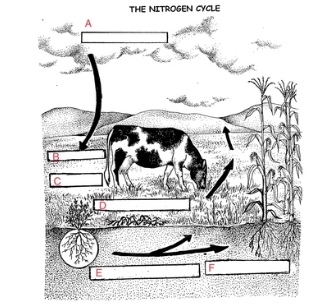
In the nitrogen cycle, what does label A in the diagram represent?

a)

Gas

b)

Clouds

c)

Carbon dioxide in the atmosphere

d)

Nitrogen in the atmosphere

34.
Plants and animals need nitrogen to make __________.
a)
Protein
b)
Carbohydrates
c)
Lipids
d)
Minerals
35.

What is the role of decomposing bacteria in the nitrogen cycle?

a)

change Nitrogen gas into Nitrate

b)

Return the nitrogen compounds to the soil

c)

Turn nitrogen into water

d)

Turn nitrate into nitrogen gas

36.

What does the color green indicate on the map

a)

There was a deficiency of nitrogen fertilizer in the soil

b)

There was an excess of nitrogen fertilizer in the soil

c)

There was exactly enough nitrogen fertilizer in the soil

d)

No fertilizer was used

37.

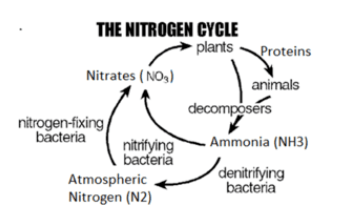
According to this diagram, plants use nitrogen to make _________________________

a)

carbohydrates

b)

cellulose

c)

proteins

d)

unsaturated fats

38.

What hormone is released when blood glucose levels rise above normal?

a)

insulin

b)

glucagon

c)

glycogen

d)

leptin

39.

What organ releases hormones that regulate blood glucose levels?

a)

salivary glands

b)

stomach

c)

small intestine

d)

pancreas

40.

What causes type 1 diabetes?

a)

lack of exercise

b)

obesity

c)

eating too much carbohydrates

d)

autoimmune disease

41.
The two types of feedback systems that help organisms maintain homeostasis are:
a)
positive and negative 
b)
receptor and effector
c)
static and dynamic
d)
minor and major
42.

When glucose levels in the blood rise, your brain sends a signal to your pancreas. The pancreas releases insulin, which opens channels in cell membranes to allow glucose to enter the cell, lowering blood sugar levels. This is an example of a:

a)

Positive Feedback Loop

b)

Negative Feedback Loop

43.
A person with AIDS is likely to develop infectious diseases because the virus that causes AIDS
a)
destroys cancerous cells
b)
damages the immune system
c)
increases the rate of antibody production
d)
increases the rate of microbe destruction
44.
When a new viral infection appears in a population, scientists usually try to develop a vaccine against the virus. Which substances would most likely be contained in the new vaccine?
a)
live bacteria that ingest viruses
b)
white blood cells from an infected individual
c)
weakened viruses associated with the infection
d)
a variety of microbes that will attack the virus
45.
Can a virus change the normal activity of a cell?
a)
No
b)
Maybe
c)
Yes
46.

Which of the following is NOT true about vaccines?

a)

the only way to control the spread of viral diseases

b)

made from live viruses

c)

stimulate the body's immune response

47.

With a vaccine, the body builds up an immunity to the germ/pathogen even though you've never actually had the germ/pathogen.

a)

True

b)

False