
NEW
Font size
 Worksheets
Chemical bonding unit review
Total questions: 33
Worksheet time: 20mins
Ionic bonds are between...
Covalent compound is formed when chemical reaction occurs between the atoms of...
potassium and chloride
calcium and chloride
hydrogen and oxygen
magnesium and oxygen

NaBr
H2O
When K forms an ionic bond with Br, which of the following occurs?
K gains an electron and Br loses an electron
K loses an electron and Br gains an electron
K and Br both lose electrons
K and Br share a pair of electrons
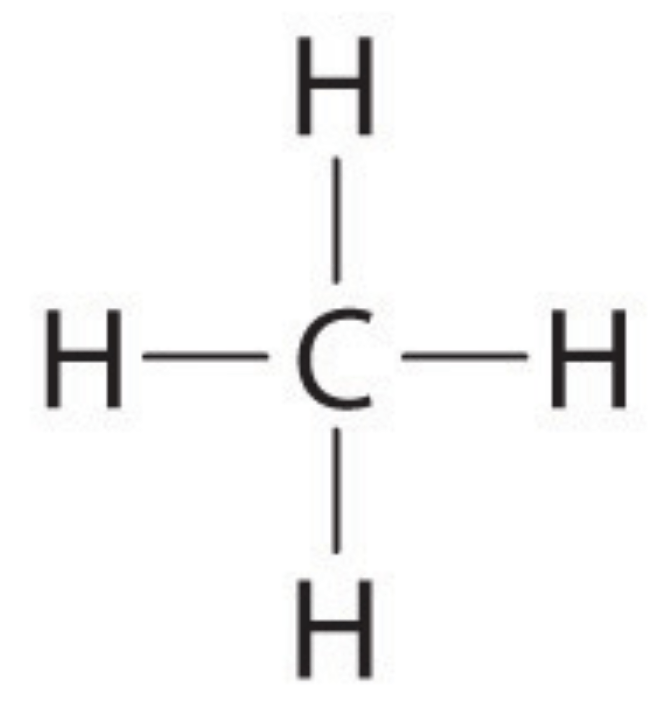
Classify the following molecule.
polar
nonpolar

Classify the following molecule.
polar
nonpolar

Classify the following molecule.
polar
nonpolar

Is the following molecule polar or nonpolar?
polar
nonpolar

Classify the following molecule.
polar
nonpolar
VSEPR theory states that
Protons want to repel each others
Protons want to attract each other
Electrons want to repel each other
Electron want to attract each other


What is the generic formula and molecular geometry of the molecule shown?
AX2, linear
AX2E2, bent
AX2E, trigonal planar
AX2E4, octahedral

What is the generic formula and molecular geometry of the molecule shown?
AX2, linear
AX2E2, bent
AX2E, trigonal planar
AX2E4 , octahedral

What is the generic formula and molecular geometry of the molecule shown?
AX , linear
AXE , bent
AX3E , trigonal pyramid
AX3, trigonal planar

What is the generic formula and molecular geometry of the molecule shown?
AE4, tetrahedral
AX4, tetrahedral
AX3E , trigonal pyramid
AX3 , trigonal planar

What is the generic formula and molecular geometry of the molecule shown?
AX3E3, trigonal bipyramid
AX3E, trigonal pyramid
AXE3, trigonal planar
AX3E2, octahedral
Which of the following is TRUE about ionic compounds?
They have low melting and boiling points.
They can conduct electricity in the solid state.
They are stronger than covalent bonds.
They are usually formed from 2 metals.
What properties does an ionic compound have?
A low boiling point and it conducts electricity when dissolved in water
A high melting and it conducts electricity when liquid
A high boiling point and it conducts electricity when solid

