
 Worksheets
C1 up to periodic table
Total questions: 59
Worksheet time: 53mins
What is the smallest unit of matter? It is composed of protons and neutrons, held together in the nucleus, and electrons around the nucleus in different electron orbitals, which form an electron cloud.
cell
nucleus
atom
electron
What are any of the various self-contained units of matter or energy that are fundamental parts of all matter. These particles include electrons, protons, and neutrons.
subatomic particles
elements
nucleus
electron cloud
What is a subatomic particle with a positive charge that is in the nucleus of an atom?
neutron
proton
electron
valence electron
What is a subatomic particle without an electric charge, located in the nucleus of an atom?
neutron
proton
electron
valence electron
What is a subatomic particle with a negative charge? It is found in the electron cloud surrounding the nucleus.
neutron
proton
electron
electron cloud
What is the system of electrons surrounding the nucleus of an atom?
valence electrons
nucleus
electrons
electron cloud
What is the center of an atom containing protons and neutrons?
nucleus
neutron
proton
electron cloud
What is the number of protons in the nucleus of an atom that determines the chemical properties of an atom?
mass number
atomic mass
atomic number
atomic symbol
What is the combined mass of all the protons and neutrons of an atom and is approximately equal to the number of protons and neutrons?
atomic mass
atomic number
subatomic particles
nucleus weight
What is the atomic number?
the number of protons in the nucleus
the number of protons and neutrons in the nucleus
the number of neutrons in the nucleus
the number of protons in the energy levels
What is the mass number?
the number of protons in the nucleus
the number of protons and neutrons in the nucleus
the number of neutrons in the nucleus
the number of protons and electrons in the atom
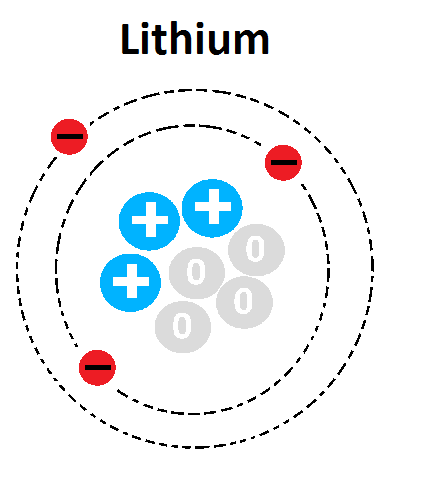
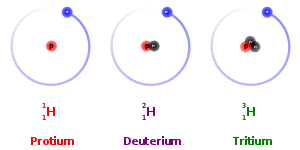
What is the atomic number of this atom?
1
3
4
7
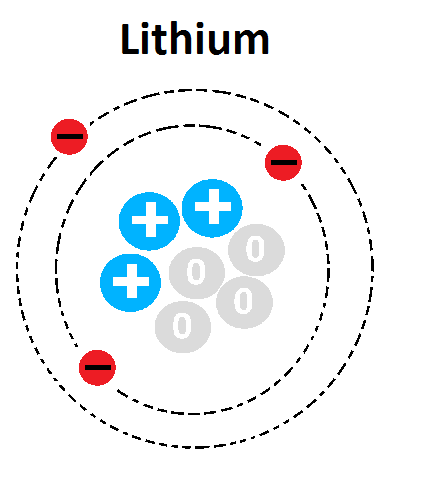
What is the mass number of this atom?
1
3
4
7
An atom has 10 protons, 15 neutrons and 10 electrons what is its mass number.
20
10
35
25
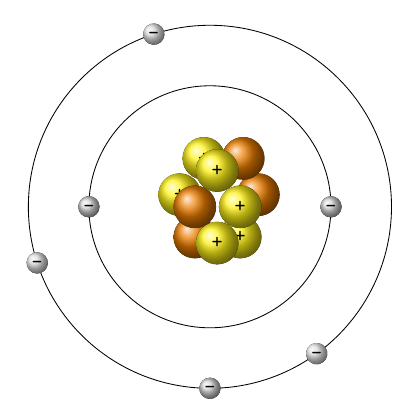
How many electrons does this atom have?
2
4
6
10

Is the number below the element symbol on the periodic table the mass number?
Yes!
NO!!


What is the charge of a sodium ion?
+2
+1
-1
-2


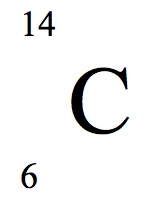




In the 'plum-pudding' model the electrons and found
at the bottom of the ball of positive charge
spread out through out the ball of negative charge
spread out through out the ball of positive charge
all together in the middle
Which scientist discovered the atom has a small central positive nucleus with negative electrons orbiting it?
Bohr
Chadwick
Dalton
JJ Thomson
Rutherford
Bohr discovered that the _________________ are at fixed distances from the nucleus.
protons
neutrons
energy shells
- Who first grouped elements in families (similar chemical and physical properties)?
Newlands
Mendeleev
Dobereiner
Moseley
Who arranged the known elements into horizontal rows of increasing atomic mass leaving gaps for as yet undiscovered elements?
Mendeleev
Meyer
Newlands
Moseley
Which scientist arranged the 60 known elements in columns of increasing atomic mass so that each column contained seven elements?
Newlands
Meyer
Mendeleev
Moseley
How did Mendeleev overcome some of the problems in his version of the periodic table?
He made up new elements to fill in gaps.
He left gaps for undiscovered elements.
He ordered the elements in terms of atomic mass.
He placed elements in groups according to similar properties.
Magnesium is in Group 3 and Period 2. What is the electronic structure of magnesium?
1.1.1
3.2
2.8.2
2.8.8

