
 Worksheets
CTECH Level 3 Unit 4 Anatomy and Physiology - Mixture of Systems
Total questions: 52
Worksheet time: 27mins
What is it called when there is an interruption of blood to the brain?
Migraine
Stroke
Heart attack
Homeostasis
What is the largest vein in the body?
Septum
Aorta
Capillaries
Vena cava
What is the condition of keeping the body stable?
Homeopathy
Balance
Homeostasis
Physiology
What is the clear, yellowish liquid portion of the blood?
Plasma
Veins
Platelets
Capillaries
How many chambers does the heart have?
4
3
2
1
What is responsible for clotting the blood when a person gets cut?
Capillaries
Platelets
Plasma
Vena cava
Why does the blood turn dark red as it circulates through the body?
Because the heart is pumping blood to the brain
Because Oxygen is replaced with Carbon Dioxide
Because there are no platelets
Because Carbon Monoxide is replaced with Oxygen
What is the main function of valves in the circulatory system?
To pump blood throughout the body
To prevent blood from moving in the wrong direction
To prevent platelets from clotting the blood
To keep the body stable

#4
Aorta
Pulmonary artery
Inferior vena cava
Superior vena cava
The relaxing of the heart is known as
Diastole
Systole
Heart Rate
Cardiac Arrest
The function of red blood cells is to transport oxygen from the lungs to the body tissues.
True
False
What is the liquid part of the blood called?
(a)
Which mineral is needed to make haemoglobin?
Calcium
Magnesium
Iron
Nitrate
What is a Lymphocyte?
White Blood Cell
Red Blood Cell
Lymph
Mlerp
What is the largest organ of the lymphatic system?
Appendix
Spleen
Thymus
Soup
What is Lymph?
Blood
Cerumen
A type of smoothie
Blood plasma
What do lymph nodes house?
Yellow Blood Cells
Red Blood Cells
Blue Blood Cells
White Blood Cells
Where does lymph come from?
Leaked blood plasma
Special lymph-producing ducts
Glands in your elbow
Apples
The joints that allow the most movement are called
Fixed
Fibrous
Cartilaginous
Synovial
A hinge joint allows
A wide range of movements
Circumduction
Rotation
Movement in only one direction (ie. backwards & forwards)
An example of a Saddle joint is in the
Knee
Hip
Thumb
Vertebral column
The teeth and tongue of the oral cavity break foodstuff down physically. This is an example of
mechanical digestion
chemical digestion
absorption
peristalsis
Which organ makes bile to help break down fats?
liver
gallbladder
pancreas
Which of the following helps digest carbohydrates in the mouth...
salivary amylase
lysozymes
mucin
bolus

What are the fingerlike structures located in the small intestine that absorbs nutrients?
Duodenum
Villi
Bile
Pancreas
Why doesn't the stomach digest itself with hydrochloric acid?
It is lined with villi to protect the lining of the stomach
the lining is covered with mucus to protect itself
the stomach wall becomes immune to the strong acid over time
the stomach walls are made of very thick skeletal muscle.
The two largest divisions of the nervous system are the
parasympathetic and sympathetic.
central and peripheral.
afferent and efferent.
autonomic and somatic.
somatic and sympathetic.
"Fight or flight" is mostly associated with which subdivision of the nervous system?
Somatic
Central
Sympathetic
Parasympathetic
Spinal
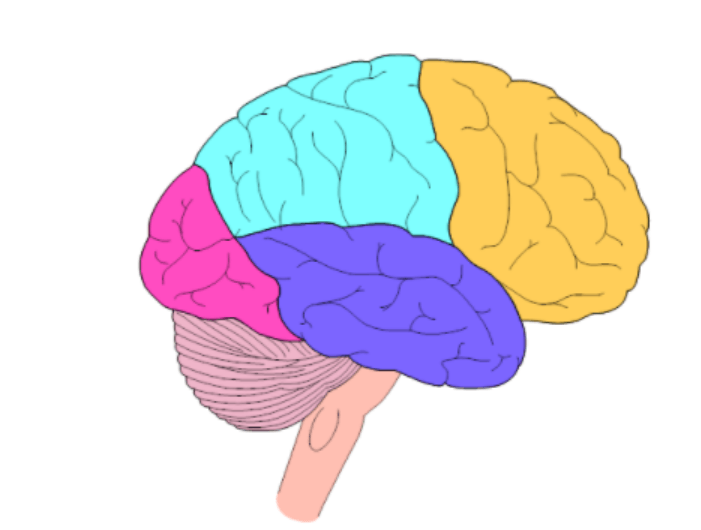
What lobe is orange in this picture?
Frontal
Parietal
Temporal
Occipital
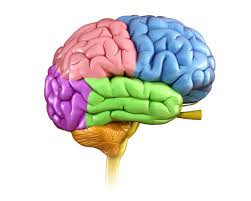
What lobe is green in this picture?
Frontal
Parietal
Temporal
Occipital
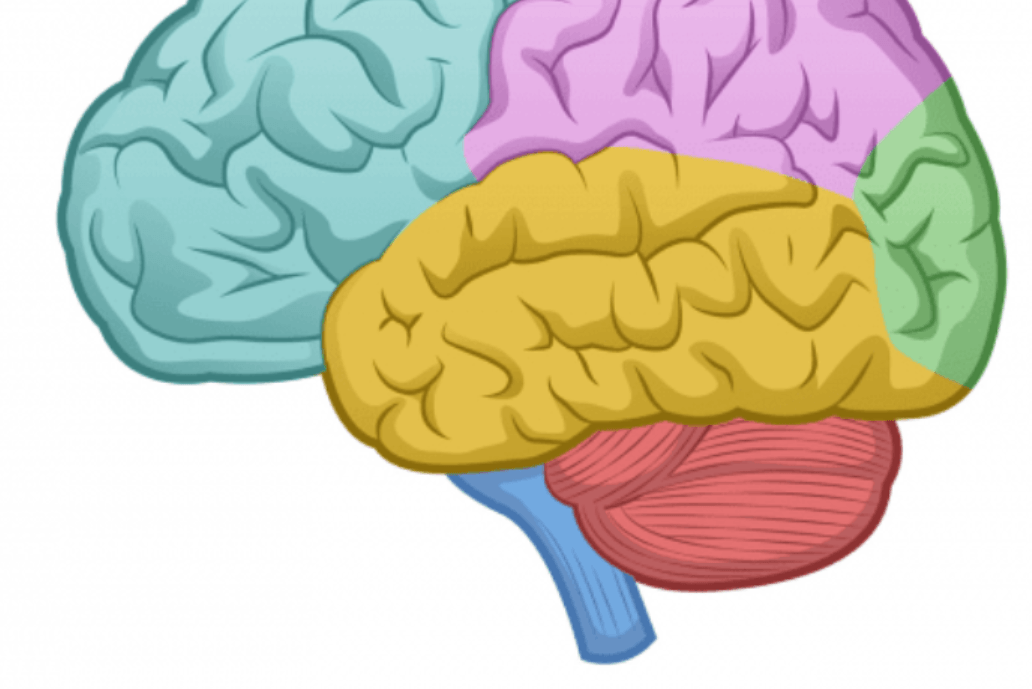
What structure is red in this picture?
Cerebrum
Cerebellum
Brain Stem
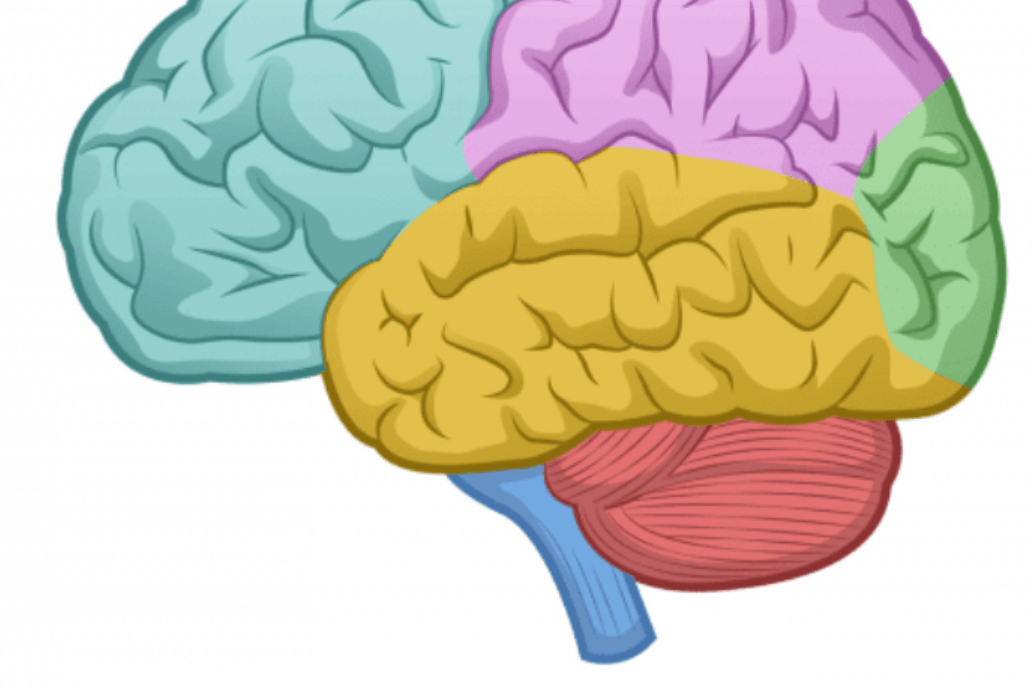
What structure is blue in this picture?
Cerebrum
Cerebellum
Brain Stem
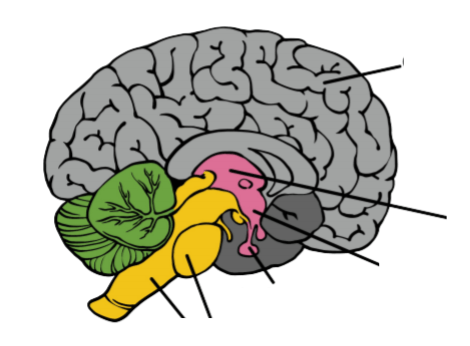
What structure is grey in this picture?
Cerebrum
Cerebellum
Brain Stem


What does the middle ear consist of?
Ear canal,Ear drum
Ear canal, ossicles
Ear drum, Ossicles
Ossicles, Cochlea
What are the three tiny bones called?
Ossicles - Hammer, Angus, Stirrup
Ossicles - Hammer, Anvil, Stirrup
Occulars - Hammer, Anvil, Stirrup
Occulars - Hanson, Angus, Stands
What is inside of the Cochlea?
Liquid, and tiny hairs
Water, and tiny hairs
Acid, and hairs
Water, and fuzz
What else does our ears do besides help us to hear?
Smell
Balance
Sight
Fight off sickness
What is the importance of ear wax?
Collects dust and dirt
Help the sound travel
Collect dust, dirt and fight infection
Fight infection
What turns the sound waves into neural signals ?
Cochlea
The movement of the liquid
Movement of the cilia
The Nerve
What is the ear drum?
A thin piece of skin
A thin Tendon
A bone
Part of the inner ear
Hammer, Anvil, and stirrup are all called....
Three bones
Ossicles
Ear bones
Occulars

