wayground logo

Free Printable Worksheets

Font size

S
M
L
XL
Worksheets

BioChemistry

Total questions: 168

Worksheet time: 8hrs 24mins

Name
Class
Date
1.
Glucose is a _____.
a)
carbohydrate
b)
lipid
c)
protein 
d)
nucleic acid
2.
Glucose is a _____.
a)
carbohydrate
b)
lipid
c)
protein 
d)
nucleic acid
3.
Proteins are composed of what smaller building blocks?
a)
amino acids
b)
nucleic acids
c)
fatty acids
d)
nucleotides
4.
Which group of organic molecules serve as long-term energy storage and make the cell membrane is?
a)
proteins
b)
carbohydrates
c)
lipids
d)
nucleic acids
5.
The primary purpose the body uses monosaccharides for is?
a)
Building muscles
b)
Helping the Immune System
c)
Immediate Energy
d)
Generating Heat
6.
Building blocks of polymers.
a)
monomer
b)
polypeptide
c)
monosaccharide
d)
glycerol
7.
Attractions between water molecules are called
a)
Covalent bonds
b)
Ionic bonds
c)
Polar bonds
d)
Hydrogen bonds
8.
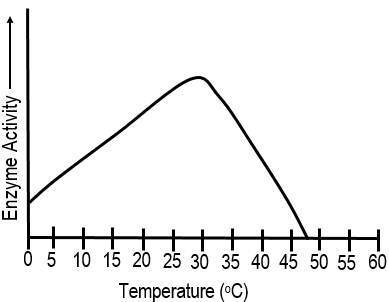
Based on the graph, what temperature does this enzyme work best? 
a)
15 C
b)
40 C
c)
30 C
9.
Enzymes are
a)
nucleic acids
b)
proteins
c)
lipids
d)
carbohydrates
10.
Enzymes are _________ that __________ chemical reactions.
a)
proteins, slow down
b)
proteins, speed up
c)
lipids, slow down
d)
lipids, speed up
11.
Which substance is an organic molecule?
a)
water
b)
oxygen
c)
sugar
d)
carbon dioxide
12.
Which substance is an inorganic molecule?
a)
water
b)
starch
c)
DNA
d)
fat
13.
A substance is most likely to diffuse into a cell when
a)
it is a large organic food molecule such as protein or starch
b)
it is enclosed in an organelle such as a vacuole
c)
the concentration of the substance is greater outside the cell than inside
d)
the pH of the substance is greater than the pH of the cellListen
14.
The diagram below shows the relative concentration of molecules inside and outside of a cell.

Which statement best describes the general direction of diffusion across the membrane of this cell?
a)
Glucose would diffuse into the cell.
b)
Protein would diffuse out of the cell.
c)
Oxygen would diffuse into the cell.
d)
Carbon dioxide would diffuse out of the cell.
15.
What is the study of the composition, structure, and properties of MATTER?
a)
Chemistry
b)
Biology
c)
Geology
d)
Physics
16.
What are the building blocks of MATTER?
a)
Atoms
b)
Cells
c)
Protons
d)
Neutrons
17.
A(n) ____________________ is a pure substance made of a single type of atom and cannot be broken down.
a)
Element
b)
Compound
c)
Molecule
d)
Mixture
18.
What holds atoms, molecules, and compounds together?
a)
Chemical Bonds
b)
Electromagnetism
c)
Magnetism
d)
Electricity
19.
A molecule is formed when two or more ____________ chemically join together.
a)
Atoms
b)
Compounds
c)
Mixtures
d)
Solutions
20.
Which science examines the structure of living organisms at the atomic level?
a)
Biochemistry
b)
Geology
c)
Zoology
d)
Cytology
21.

How many Hydrogen atoms are in 4H2O?

a)

6

b)

8

c)

2

d)

4

22.

How many Oxygen atoms are in H2O?

a)

1

b)

2

c)

0

d)

4

23.

How many Magnesium atoms are in 10MgCl2?

a)

10

b)

5

c)

20

24.
How many elements are in C6H12O6?
a)
1
b)
2
c)
3
d)
4
25.

How many atoms are there TOTAL in H2SO4 ?

a)

6

b)

5

c)

7

d)

3

26.

How many Nitrogen atoms are in (NH₄)₂CrO₄?

a)

1

b)

2

c)

8

d)

16

27.

How many elements are present in this compound? (Careful!)

Mg2As3COHNi2

a)

2

b)

4

c)

6

d)

10

28.

Pb

a)

Plutonium

b)

Lead

c)

Platinum

d)

Radon

29.

Fluorine

a)

Fl

b)

Ra

c)

Fr

d)

F

30.

Sulfur

a)

S

b)

Sn

c)

Na

d)

Sr

31.

Sodium

a)

Ne

b)

S

c)

Na

d)

Mg

32.

the basic building block of matter that makes up everything

a)

Bohr Model

b)

Atom

c)

Electron Cloud

33.

Which element makes up more than 65% of the human body?

a)

Hydrogen

b)

Oxygen

c)

Nitrogen

d)

Carbon

34.

Which of the following is NOT an element?

a)

Gold

b)

Carbon Dioxide

c)

Helium

d)

Sodium

35.

Organic compounds are made of carbon

a)

True

b)

False

36.

Is water an element or a compound?

a)

element

b)

compound

c)

neither

d)

both

37.

Two or more substances chemically combined is a(n)

a)

compound

b)

element

c)

atom

d)

electron

38.

Define: Enzyme

a)

The movement of molecules from an area of high concentration to an area of low concentration.

b)

Type of protein that speeds up chemical reactions in living things.

c)

Any substance that cannot be broken down into simpler substances.

39.

Define: Carbohydrate

a)

The chemical combination of two or more elements.

b)

Any substance that cannot be broken down into simpler substances.

c)

An energy-rich organic compound such as sugar.

40.

Define: Proteins

a)

Large organic molecules that are made of amino acids.

b)

Any substance that cannot be broken down into simpler substances.

c)

The movement of WATER from areas of high concentration to areas of low concentration.

41.

Define: Lipid

a)

Type of protein that speeds up chemical reactions in living things.

b)

Any substance that cannot be broken down into simpler substances.

c)

An energy-rich organic compound such as fat.

42.

How many atoms of hydrogen are in a sugar molecule with the formula C6H12O6

a)

12

b)

6

c)

24

d)

18

43.

The branch of chemistry that studies carbon-containing substances

a)

Analytical Chemistry

b)

Organic Chemistry

c)

Inorganic Chemistry

d)

Biochemistry

44.
Water is classified as an inorganic compound because it
a)
does not contain carbon
b)
does not contain nitrogen
c)
contains hydrogen
d)
contains oxygen
45.
In the diagram which substance belongs in area Z?
a)
water
b)
oxygen
c)
nitrogen
d)
carbon
46.
Which statement describes all enzymes?
a)
They control the transport of materials.
b)
They provide energy for chemical reactions.
c)
They affect the rate of chemical reactions.
d)
They absorb oxygen from the environment.
47.
Two examples of carbohydrates are
a)
fatty acids and glycerol
b)
fats and waxes
c)
sugars and starches
d)
amino acids and alcohol
48.
Vegetable oils, such as corn oil, belong to which general class of organic substances?
a)
lipids
b)
proteins
c)
carbohydrates
d)
salts
49.
Which biomolecule is made of nucleotides and contain you DNA?
a)
Carbohydrate
b)
Lipids
c)
Protein
d)
Nucleic Acid
50.
Which biomolecule has sugars and starches?
a)
Lipids
b)
Proteins
c)
Carbohydrates
d)
Nucleic Acid
51.
Which biomolecule functions include enzymes­ which speeds the rate of chemical reactions, structural components in cells, mechanical functions in muscles and cytoskeleton, cell signaling, and immune response; provides structure and helps with chemical reactions 
a)
Protein
b)
Lipids
c)
Carbohydrate
d)
Nucleic Acid
52.
Which biomolecule is important source of energy for humans; glucose for human cells, tissues, and organs; provides fiber, sugar, and starches; provides structural support, cell wall, and cell membrane maker?
a)
Nucleic Acid
b)
Lipid
c)
Carbohydrate
d)
Protein
53.
Which biomolecule includes fats, such as triglycerides, oils, waxes, and steroids (cholesterol); insoluble in water; provides energy storage, insulation, part of cell membrane, and hormones 
a)
Nucleic Acid
b)
Lipids
c)
Carbohydrate
d)
Protein
54.
Identify the biomolecule
a)
Carbohydrate
b)
Lipid
c)
Protein
d)
Nucleic Acid
55.
Identify the biomolecule
a)
Lipid
b)
Protein
c)
Carbohydrate
d)
Nucleic Acid
56.
What is the monomer for a protein?
a)
Monosaccharide
b)
Triglyceride
c)
Amino Acid
d)
Nucleotide
57.
Lipids are made up of which of the following?
a)
glycerol and fatty acids tails
b)
glycerol and monolipids
c)
fatty acids and phosolipids
d)
amino acids and nucleotides
58.
What is the monomer of nucleic acids?
a)
Glycerol
b)
Monosaccharides
c)
Amino Acids
d)
Nucleotides
59.
Which biomolecule is this a picture of?
a)
Protein
b)
Nucleic Acid
c)
Lipid
d)
Carbohydrate
60.
The arrangement of which three components is used to distinguish one molecule from another?
a)
carbon, hydrogen, and oxygen
b)
glucose, fructose, and ribose
c)
peptide, fatty acid, and purine
d)
water, carbon dioxide, and notrogen
61.
The waxy, organic substances used by aquatic birds to coat their feathers, when analyzed consists mostly of 
a)
lipids
b)
proteins
c)
carbohydrates
d)
nucleic acids
62.

What is the monomer for carbohydrates? Remember: its the fancy word for sugar

a)

nucelotide

b)

monosaccaride

c)

nucleic acid

d)

polymer

63.

Which macromolecule has the function of quick energy?

a)

Lipids

b)

Carbohydrates

c)

Protein

d)

Nucleic Acids

64.

Which macromolecule has the function of long term energy or energy storage

a)

Nucleic Acids

b)

Carbohydrates

c)

Lipids

d)

Protein

65.

What is the monomer for protein?

a)

Polymer

b)

Nucleic Acids

c)

Amino Acids

d)

Fatty Acids

66.
What are the single sugars that are the building blocks of carbohydrates?
a)
monosaccharides
b)
disaccharides
c)
polysaccharides
d)
amino acid
67.
Nucleotides are monomers of
a)
Carbohydrates
b)
Lipids
c)
Proteins
d)
Nucleic Acids
68.
Glycerol and fatty acids are the monomers of
a)
Carbohydrates
b)
Lipids
c)
Proteins
d)
Nucleic Acids
69.
What is the function of nucleic acids?
a)
store genetic information
b)
store energy (long-term)
c)
store energy (short-term)
d)
build skin, hair, nails, muscles
70.
Carbohydrates are made of... 
a)
C H O
b)
C H O N
c)
C H O N P
d)
C H O N S
71.
Lipids are made of... 
a)
C H O
b)
C H O N
c)
C H O N P
d)
C H O N S
72.
Proteins are made of... 
a)
C H O
b)
C H O N
c)
C H O N P
d)
C H O N S
73.
What are the four macromolecules?
a)
proteins, nucleic acids, carbohydrates, and lipids
b)
monosaccharides, lipids, polysaccaharides, and proteins
c)
RNA, DNA, proteins, and carbohydrates
d)
proteins, DNA, RNA, and steroids
74.

Select the  products in the following chemical formula:  CH4 +2O2  CO2+ 2H2OCH_{4\ }+2O_2\ \rightarrow\ CO_2+\ 2H_2O 

a)

 2H2O2H_2O 

b)

 2O22O_2 

c)

 CH4CH_4 

d)

 CO2CO_2 

75.

Select the reactants in the following chemical formula:  CH4 +2O2  CO2+ 2H2OCH_{4\ }+2O_2\ \rightarrow\ CO_2+\ 2H_2O 

a)

 2H2O2H_2O

b)

 2O22O_2

c)

 CH4CH_4

d)

 CO2CO_2

76.

What does the arrow in a chemical reaction show?

a)

The direction of the reaction

b)

The components of a reaction

c)

The reactants of a reaction

d)

The temperature of a reaction

77.
Enzymes are...
a)
nucleic acids
b)
proteins
c)
lipids
d)
carbohydrates
78.
What is the function of an enzyme?
a)
enzymes break themselves into small pieces
b)
enzymes slow down chemical reactions
c)
enzymes speed up chemical reactions
d)
enzymes combine products to form reactants 
79.
Enzymes speed up reaction rates by changing...
a)
Activation Energy
b)
pH
c)
Hydrogen Bonds
d)
Kinetic Energy
80.
With what 3 letters do enzymes typically end?
a)
-ose
b)
-ase
c)
-ese
d)
-tic
81.
Enzymes will make a reaction go _______ and use ______ energy.
a)
faster, less
b)
faster, more
c)
slower, less
d)
slower, more
82.
Which biomolecule includes sugars and starches? (Hint: simple or complex)
a)
Lipids
b)
Proteins
c)
Carbohydrates
d)
Nucleic Acids
83.
Which biomolecule group includes fats, oils, and waxes?
a)
Proteins
b)
Nucleic Acid
c)
Lipids
d)
Carbohydrate
84.
ALL polymers (large molecules) are made up of...
a)
monosaccharides
b)
monomers
c)
proteins
d)
None of these
85.
Monomers combine to form ________ through the process of ________.
a)
polymers; hydrolysis
b)
polymers; dehydration synthesis
c)
monomers; hydrolysis
d)
monomers; dehydration synthesis
86.

Polymer's split apart to form ________, by __________.

a)

monomers, hydrolysis

b)

monomers, dehydration synthesis

c)

amino acids, hydrolysis

d)

amino acids, dehydration synthesis

87.

What is the function of carbohydrates?

a)

Perform cell's functions/tasks

b)

Fast energy

c)

Energy storage

d)

Alter other biomolecules

e)

Store information for cells

88.

What is the function of nucleic acids?

a)

Perform cell's functions/tasks

b)

Fast energy

c)

Energy storage

d)

Alter other biomolecules

e)

Store information for cells

89.

What is the function of lipids?

a)

Perform cell's functions/tasks

b)

Fast energy

c)

Energy storage

d)

Alter other biomolecules

e)

Store information for cells

90.

Your friend is really irritable while sitting in class. He feels lightheaded and dizzy. He is also feeling a bit of confusion and brain fog.


What inferences are most realistic to make about the biomolecules in your friend's body?

a)

He is running low on fast sources of energy

b)

Proteins are being broken down or reshaped

c)

The coding information in the cell is incorrect or incomplete

d)

There is not enough insulation or energy storage

91.

Your friend is really irritable while sitting in class. He feels lightheaded and dizzy. He is also feeling a bit of confusion and brain fog.


What biomolecule does your friend need?

a)

Carbohydrates

b)

Lipids

c)

Proteins

d)

Nucleic Acids

92.
compound made up of CHO and are main sources of energy for living organisms
a)
Carbohydrate
b)
Lipid
c)
Protein
d)
Nucleic Acid
93.
single sugar molecules
a)
Monosaccharide
b)
Molecule
c)
Starch
d)
Sugar
94.

Which of the following are the main elements found in biomolecules?

a)

C, H, O, N, P, S

b)

Ca, He, Os, Ni, Pt, Si

c)

C, He, O, Mg, Pd, S

d)

C, H, Os, Ma, Ni, Se

95.

What is the monomer that makes up proteins?

a)

Amino acids

b)

Monosaccharides

c)

Diglycerides

d)

Nucleotides

96.

What is the monomer that makes up nucleic acids?

a)

Monosaccharides

b)

Fatty acids

c)

Nucleotides

d)

Amino acids

97.

Which biomolecule is one of the main sources of energy in the human body?

a)

Carbohydrates

b)

Lipids

c)

Proteins

d)

Nucleic acids

98.

Which biomolecule is useful for insulation and energy storage in the human body?

a)

Carbohydrates

b)

Lipids

c)

Nucleic Acids

d)

Proteins

99.

Which biomolecules play a role in the immune system and in the structure of the cytoskeleton?

a)

Carbohydrates

b)

Lipids

c)

Proteins

d)

Nucleic Acids

100.

Which biomolecule is in charge of storing and expressing genetic information?

a)

Carbohydrates

b)

Lipids

c)

Proteins

d)

Nucleic Acids

101.

What is the name of nucleic acid polymers?

a)

Polysaccharides

b)

Triglycerides

c)

Polypeptides

d)

DNA and RNA

102.

Made of monosaccharides

a)

Carbohydrates

b)

Proteins

c)

Nucleic Acids

103.

Glucose, Lactose, Sucrose, and Cellulose are all examples.

a)

Proteins

b)

Lipids

c)

Carbohydrates

104.

DNA and RNA are examples of

a)

nucleic acids

b)

proteins

c)

lipids

105.

Protein that speeds up a biological reaction by lowering the activation energy needed to start the reaction.

a)

Substrate

b)

Enzyme

c)

Amino acid

d)

Lipid

106.
This term means "many/multiple"
a)
Mono
b)
Di
c)
Poly
d)
Saccharide
107.
Molecules made of C,H, and O. Source of long term energy.
a)
Carbohydrate
b)
Lipid
c)
Protein
d)
Nucleic Acid
108.
This term means "sugar"
a)
Glycerol
b)
Fatty Acid
c)
Saccharide
d)
Nucleotide
109.
Made of C,H,O, N, and P. DNA and ATP are both examples
a)
Protein
b)
Carbohydrate
c)
Lipid
d)
Nucleic Acid
110.
Parts or "pieces" that make up biomolecules
a)
Nucleotide
b)
Saccharide
c)
Amino Acid
d)
Monomer
111.
Chemical process that combines molecules by releasing water as a waste product. 
a)
Dehydration Synthesis
b)
Hydrolysis
c)
Protein Synthesis
d)
Transcription
112.
These monomers are known as the "building blocks of protein"
a)
Nucleotide
b)
Glycerol
c)
Saccharide
d)
Amino Acid
113.
Composed of C,H,O and N. Examples are enzymes and antibiotics. 
a)
Carbohydrate
b)
Lipid
c)
Protein
d)
Nucleic Acid
114.
A nucleic acid molecule that is needed for cellular chemical energy. 
a)
DNA
b)
RNA
c)
ATP
d)
Carbohydrate
115.
This term means "one/single"
a)
Mono
b)
Di
c)
Tri
d)
Poly
116.
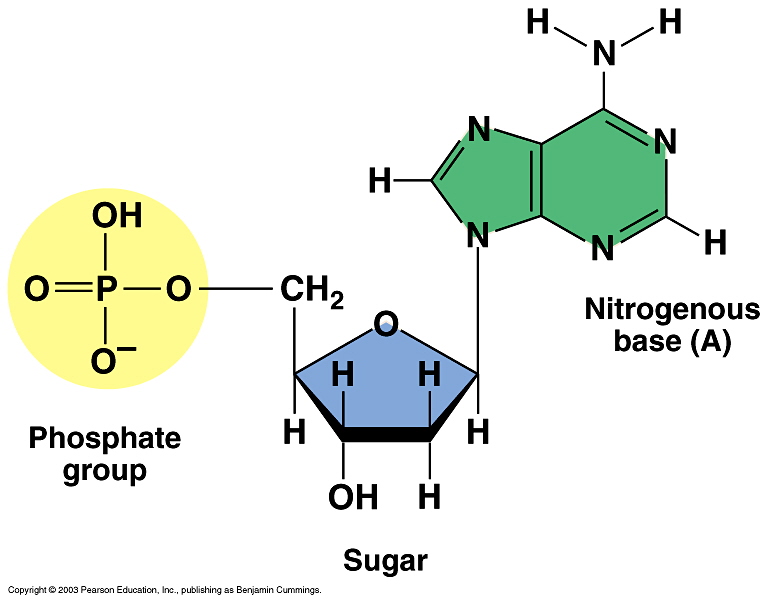
Identify this molecule
a)
Carbohydrate
b)
Lipid
c)
Protein
d)
Nucleic Acid
117.
Identify this molecule
a)
Carbohydrate
b)
Protein
c)
Nucleic Acid
d)
Lipid
118.

What makes up the disaccharide sucrose?

a)

glucose + glucose

b)

glucose + fructose

c)

glucose + galactose

d)

glucose + maltose

119.
How many sugar units make up disaccharides?
a)
one
b)
two
c)
three
d)
zero
120.
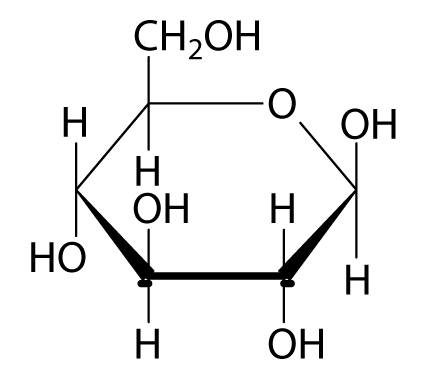
What type of carbohydrate is this?
a)
polysaccharide
b)
disaccharide
c)
monosaccharide
d)
it isn't a carbohydrate
121.
Some carbohydrate foods are ________
a)
fruits
b)
grains
c)
vegetables
d)
all the above
122.

What element(s) are in carbohydrates?

a)

carbon/hydrogen

b)

oxygen

c)

phosphorus

d)

nitrogen

e)

sulfur

123.
Glucose is a ________________.
a)
monosaccharide
b)
disaccharide
c)
polysaccharide
d)
oligosaccharide
124.
Fructose is a _____________.
a)
monosaccharide
b)
disaccharide
c)
polysaccharide
d)
nonsaccharide
125.

How many saccharide units are joined together in a disaccharide?

a)

1

b)

2

c)

several

d)

millions

126.

Which saccharides join together to make sucrose?

a)

glucose

b)

ribose

c)

fructose

d)

mannose

127.

What is cellulose typically used for?

a)

energy storage molecule

b)

structural function

c)

cellular recognition

128.
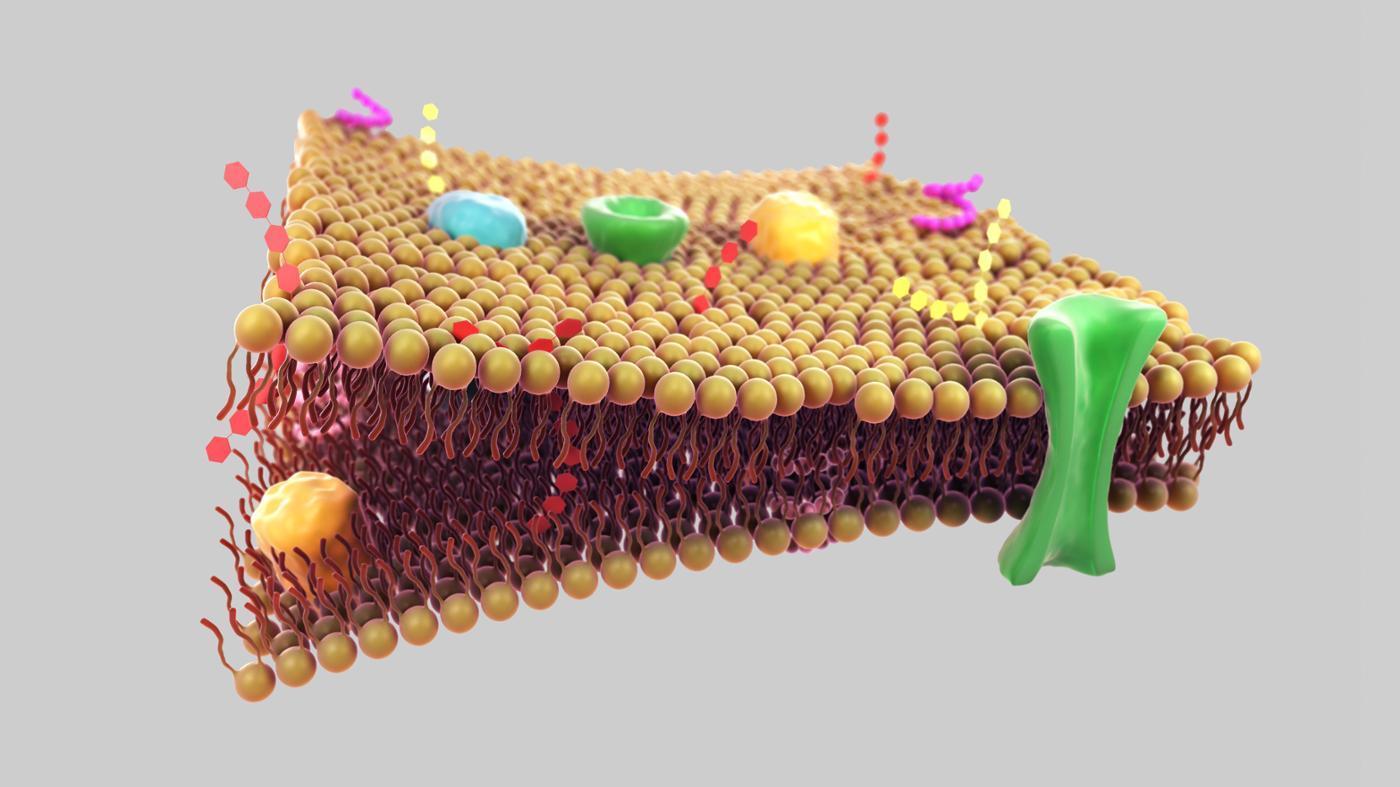
The phospholipid bilayer comprises what part of the cell?
a)
cytoplasm
b)
cell membrane
c)
cytoskeleton
d)
nuclear membrane
129.
Saturated fats have _______________
a)
straight structure
b)
single bonds
c)
solidity at room temperature
d)
all of the above
130.
Unsaturated fats have _______________
a)
bent structure
b)
double bonds
c)
liqudity at room temperature
d)
all of the above
131.
An example of an unsaturated fat would be ________
a)
butter
b)
bacon fat
c)
vegetable oil
d)
scrapple
132.
All of the following are lipids except __________
a)
ear wax
b)
saturated fats
c)
cholesterol
d)
starch
133.
How do lipids function for cells and organisms?
a)
store information
b)
store energy
c)
breakdown wastes
d)
join with substrates
134.
If you eat too much saturated fat, cholesterol might build up:
a)
in your brain
b)
in your liver
c)
in your veins and arteries
d)
in your bones
135.
What is the key difference between saturated and unsaturated fats?
a)
Saturated fats are usually liquid at room temperature; unsaturated fats are usually solid
b)
Saturated fats stay solid at room temperature; unsaturated fats are usually liquid
c)
Saturated fats can be found in vegetable oils, unsaturated fats can be found in animal products
d)
Saturated fats are healthier than unsaturated fats
136.

Saturated fats contain single bonds and double bonds

a)

True

b)

False

137.

What is an example of a saturated fat?

a)

Olive oil

b)

Butter

c)

Corn oil

d)

Steroids

138.

What is an example of an unsaturated fat?

a)

Butter

b)

Coconut Oil

c)

Olive Oil

d)

Steroids

139.
Which affects your body more?
a)
The amount of fat you eat
b)
The type of fat you eat
c)
Both
d)
None
140.

Saturated fats contain

a)

only single bonds along their fatty acid chain

b)

only double bonds along their fatty acid chain

c)

both single and double bonds along their fatty acid chain

141.
DNA and RNA are examples of...
a)
proteins
b)
nucleic acids
c)
carbohydrates
d)
lipids
142.
What is the monomer of nucleic acids?
a)
Glycerol
b)
Monosaccharides
c)
Amino Acids
d)
Nucleotides
143.
Proteins are made of monomers called ___________
a)
Nucleotides
b)
Monosaccharides
c)
Amino Acids
d)
Glycerol and fatty acids
144.

The monomers and building blocks of proteins.

a)

Carbohydrates

b)

Hydrochloric Acids

c)

Nucleic Acids

d)

Amino Acids

145.

Contains the elements Carbon, Hydrogen, and Nitrogen. Does NOT contain phosphorus.

a)

Proteins

b)

Nucleic Acids

c)

Carbohydrates

d)

Lipids

146.

Identify some foods you eat that you know are high in protein.

a)

Strawberries

b)

Meat

c)

Peanuts

d)

Water

147.

Compare the elements that are present in a protein to those in a carbohydrate.

a)

Protein = C, H, O, N (S) and Carbohydrate = C, H, O

b)

Protein = C, H, O, N and Carbohydrate = C, H, N

c)

Protein = C, H, O, N, P and Carbohydrate = C, H, O

148.

How many amino acids does your body use to build proteins?

a)

40

b)

25

c)

20

d)

15

149.

What are the three parts of a nucleotide?

a)

a base

b)

a protein

c)

5-carbon sugar

d)

a phosphate group

150.

What is the function of DNA?

a)

Tells you it is a nucleic acid and not a protein

b)

Carrier of genetic information

c)

Creates proteins

d)

Allows things to enter and leave the cell

151.

What is the function of RNA?

a)

Messenger carrying instructions from DNA for controlling the synthesis of proteins

b)

Carries genetic information

c)

Allows things to enter/leave the cell

d)

Tells you it is a nucleic acid and not a protein

152.

What is the main function of ATP?

a)

When the body breaks down proteins, carbohydrates, and lipids to create energy for our body to function.

b)

Copies DNA

c)

Transports Molecules

d)

Carrier of genetic information

153.

What is the name of the bond that connects two amino acids in a polypeptide chain?

(a)  

154.

COMPLETE THE ANALOGY:


Proteins are to Amino Acids as

Nucleic Acids are to _________.

a)

Monosaccharides

b)

Phosphodiester Linkages

c)

Nitrogen Bases

d)

Nucleotides

155.

Amino acids are held together with:

a)

hydrogen bonds

b)

ionic bonds

c)

peptide bonds

d)

metallic bonds

156.
What is the monomer of nucleic acids?
a)
Glycerol
b)
Monosaccharides
c)
Amino Acids
d)
Nucleotides
157.
What are the components of a nucleotide?
a)
nitrogen base, phosphate group, and pentose sugar
b)
pentose sugar, purine, and pyrimidine
c)
nitrogen base and a phosphate group
d)
DNA, phosphate group, monosaccharide
158.

Which of the following is NOT part of a nucleotide?

a)

Nitrogenous Base

b)

Phosphate Group

c)

Pentose Sugar

d)

Fatty Acid

159.

What sugar is found in DNA?

a)

Glucose

b)

Ribose

c)

Deoxyribose

d)

Fructose

160.

Nucleic acids are made of

a)

CHO

b)

CHON

c)

CHONP

d)

CHONS

161.

Which of the following elements does a nucleic acid have that a Carbohydrate and Lipid do not?

a)
Carbon
b)
Oxygen
c)
Hydrogen
d)
Nitrogen
162.
Which biomolecule builds muscle?
a)
carbohydrates
b)
lipids
c)
proteins
d)
nucleic acids
163.
What is a polymer?
a)
a large molecule made up of subunits (pieces)
b)
building blocks
c)
a small molecule made up of a single piece
d)
none of the above
164.

Which organic molecule is used by the body as a source of long term energy?

a)

glucose molecules

b)

protein molecules

c)

carbohydrates

d)

lipids

165.

Proteins are composed of a chain of

a)

glucose

b)

carbon

c)

amino acids

d)

fatty acids

166.

An energy rich organic compound needed by organisms is

a)

oxygen

b)

glucose

c)

water

d)

salt

167.

The basic building blocks of a nucleic acid are

a)

hormones

b)

fats

c)

nucleotides

d)

amino acids

168.

The shape of a protein molecule directly determines its

a)

roles in building water molecules

b)

circulation throughout the body

c)

movements through the cytoplasm

d)

functions inside and outside the cell