Wayground logo

Free Printable Worksheets

Font size

S
M
L
XL
Worksheets

lets play

Total questions: 113

Worksheet time: 5hrs 31mins

Name
Class
Date
1.

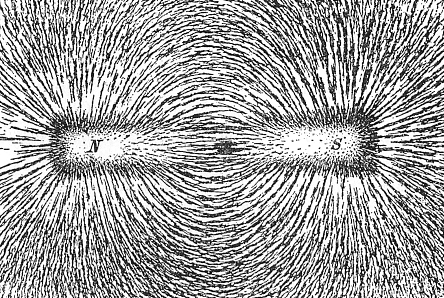
The magnetic ____________ around a bar magnet is shown above.

a)

legs

b)

flowers

c)

field

d)

direction

2.

The Earth produces its own ________ field.

a)

spectrum

b)

electric

c)

magnetic

d)

progressive

3.

A compass points toward the south pole of Earth's magnetic field, located near the Earth's geographical ________.

a)

north

b)

south

c)

east

d)

west

4.

In magnetic materials, all of the ________ are pointing in the same direction.

a)

doors

b)

electrons

c)

domains

d)

orbits

5.

If two magnets are close together, the magnetic force will be ________.

a)

smelly

b)

weak

c)

strong

d)

positive

6.

What is the name of this device?

a)

electric circuit

b)

generator

c)

electromagnet

d)

electric motor

7.

What happens in an electromagnet?

a)

Mechanical energy produces an electric field

b)

Mechanical energy transforms into electrical energy

c)

Electrical energy produces a magnetic field

d)

Electrical energy transforms into mechanical energy

8.

When electricity to an electromagnet is stopped, what happens to the strength of the magnet?

a)

The magnetism stays the same

b)

The magnetism decreases

c)

The magnetism increases

d)

The magnetism stops

9.

Which energy transformation is found in generator?

a)

Chemical energy to Electrical energy

b)

Chemical energy to Mechanical energy

c)

Electrical energy to Mechanical energy

d)

Mechanical energy to Electrical energy

10.

What type of machine converts electrical energy to mechanical energy using magnetism?

a)

Turbine

b)

Motor

c)

Generator

d)

Electromagnet

11.

What is created by the flow of electric current?

a)

A magnetic field

b)

A transformer

c)

An electric field

d)

A battery

12.

Which part of the power plant rotates when pushed by wind, water, or steam to help the generator create power for future use?

a)

Electromagnet

b)

Turbine

c)

Gasoline

d)

Motor

13.
A magnet will pick up a nail, but not a penny because the nail
a)
has rust on it.
b)
is lighter than the penny.
c)
has a sharp point.
d)
contains iron.
14.
Magnetism is a type of ____________
a)
force
b)
book
c)
plant
d)
animal
15.
A magnet cannot not move which of the following objects?
a)
a paper clip
b)
a nail
c)
a toothpick
d)
a staple
16.
True or False: All metals stick to magnets.
a)
True
b)
False
17.
It is possible for a magnet to have only one pole.
a)
True
b)
False
18.
A device that uses a free-moving magnetic needle to show direction is a:
a)
lodestone
b)
magnet
c)
compass
d)
magnetic field
19.
Where is the force of attraction the strongest on a magnet?
a)
at the poles
b)
in the middle
c)
above the magnet
d)
below the magnet
20.
What will happen when these magnets are brought close together?
a)
They will attract each other.
b)
They will repel each other.
c)
Both magnets will turn to the left
d)
Both magnets will turn to the right
21.
Which of these is attracted to a magnet?
a)
iron nail
b)
copper penny
c)
piece of paper
d)
notebook
22.
The magnet's shown will
a)
not move
b)
attract
c)
repel
d)
all of the above
23.
What do you call it when two magnets come together?
a)
attract
b)
iron
c)
poles
d)
repel
24.
All magnets have 2
a)
fields
b)
colors
c)
poles
d)
all of the above
25.
The two poles on a magnet are
a)
north and east
b)
north and west
c)
south and north
d)
south and west
26.
A magnet will pick up a nail, but not a penny because the nail
a)
has rust on it.
b)
is lighter than the penny.
c)
has a sharp point.
d)
contains iron.
27.
Magnets have a north and a south ___________
a)
shape
b)
color
c)
pole
d)
region
28.
A ____________ is a special metal that attracts other metals.
a)
coil
b)
magnet
c)
bunker
d)
repellant
29.
Magnets attract to __________________.
a)
iron
b)
nickel
c)
cobalt
d)
all of the above
30.
True of False:  Magnets attract to aluminum foil.
a)
True
b)
False
31.
_______________________ is the invisible force that flows through a magnet.  
a)
repel
b)
copper
c)
attraction
d)
magnetism
32.
What happens when the North pole of a magnet interacts with another magnet's north pole?
a)
attract
b)
repel
33.
A magnet can lose its magnetic properties if you ___________________
a)
drop or hit the magnet
b)
put the magnet in a strong magnetic field that is opposite of its own
c)
heat up the magnet
d)
all of the above
34.
True or False:  An electromagnet can function without electricity.
a)
True
b)
False
35.
There are several modern uses of magnets.  A ________________________ can have million of magnets.  Each magnet points in its own direction, making a code.  This allows an individual to make purchases.
a)
Driver's License
b)
Check Book
c)
Credit Card
d)
TV
36.
True or False:  A permanent magnet stays magnetized for a long time
a)
True
b)
False
37.
There are several modern uses of magnets.  ________________________ make electricity by spinning magnets around coils of wire.  The magnetism makes an electric current in the wire.
a)
ceiling fans
b)
smoke detectors
c)
flashlights
d)
generators
38.
There are several modern uses of magnets.  Magnets allow high speed trains to ______________________ above the track.  They go faster because without touching the tracks there is no friction to slow them down.
a)
collide
b)
levitate
c)
attract
d)
repair
39.
True or False:  A temporary magnet remains magnetized for a long period of time
a)
True
b)
False
40.
True or False:  The Earth is a giant magnet
a)
True
b)
False
41.
This large crane magnet functions only when the electrical current is ON.  The crane magnet is an example of what type of magnet?
a)
NIB Magnet
b)
Ceramic Magnet
c)
Electromagnet
d)
funnel magnet
42.
In this image, matching north poles from two magnets are introduced.  What do you predict will be the outcome?
a)
There will be no interaction.  The poles of magnets do not have an effect on one another.
b)
The two north poles will attract each other
c)
The two north poles will repel each other
d)
The two magnets will combine and become one magnet
43.

Which of the following would be attracted to a magnet?

a)

ping pong ball

b)

iron needle

c)

rubber band

d)

penny

44.

Does a magnet attract or repel to an aluminum can?

a)

repel

b)

attract

45.

What two poles attract to each other?

a)

north and north

b)

south and south

c)

east and west

d)

north and south

46.

What happens when the same poles are pushed together?

a)

The poles will repel.

b)

The poles will attract.

c)

The poles will float.

d)

The poles will sink.

47.

What is a pole on a magnet?

a)

a place on a magnet where magnetism is

strongest.

b)

a plastic toy and rubber band

c)

an iron nail

d)

a bolt

48.

What will happen when a magnet is brought close to a jar filled with paper clips.

a)

The paper clips will not move.

b)

The paper clips will jump out of the jar.

c)

The paper clips will move towards the magnet.

d)

The magnet will repel the paper clips.

49.

What kind of objects are attracted to magnets?

a)

A.) Most metal objects

b)

B.) All metal objects

c)

C.) Most wooden objects

d)

D.) Most plastic objects

50.

When a magnet pulls an object closer to itself it is ...

a)

A.) Repelling the object

b)

B.) Insulting the object

c)

C.) Doing nothing to the object

d)

D.) Attracting the object

51.

What does repelling mean?

a)

A.) Pulling towards

b)

B.) Pushing away from

c)

C.) Dropping down a cliff with a bungee cord

d)

D.) Swinging around in circles

52.

What does the Earth have to do with magnets?

a)

A.) The Earth IS a giant magnet.

b)

B.) The Earth is magnetically attracted to the Sun.

c)

C.) Nothing. This is a silly question.

d)

D.) Magnets are found on the Earth?

53.

Are magnets more powerful close up or farther away?

a)

A.) Definitely more powerful close up!

b)

B.) Definitely more powerful far away!

c)

C.) Distance doesn't matter.

d)

D.) Magnets only work at a distance of 2 centimeters.
54.
What kind of magnet can be turned on and off?
a)
refridgerator magnet
b)
electromagnet
c)
magnetite
d)
iron
55.
Surrounding every magnet is a __________  __________.
a)
magnetic field
b)
electrical current
c)
another magnet
d)
an enemy
56.
How do electromagnets differ from regular magnets? 
a)
A. They  can be turned off and on 
b)
B. Their polarity can be reversed
c)
C. Their strength can be changed
d)
D. All of the above
57.
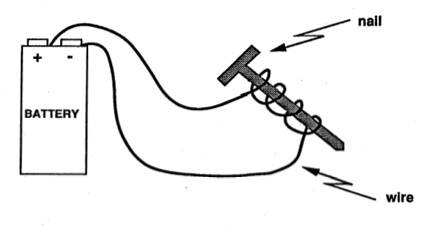
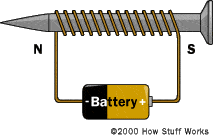
This is a picture of a simple electromagnet. How can the electromagnet be made stronger?
a)
Add more coils of wire to the nail.
b)
Use a smaller battery.
c)
Reverse the poles of the magnet.
d)
Remove all the coils and the nail.
58.

What are the components of the electromagnets?

a)

battery, wire and bulb

b)

battery , copper wire and plastic bottle

c)

battery, copper wire and iron nail

d)

battery, wire and aluminum

59.
Magnetism is a type of ____________
a)
force
b)
book
c)
plant
d)
animal
60.
The force of magnetism can go through many materials.
a)
True
b)
False
61.
What would we call a nail that can pick up a paperclip because it is touching a magnet?
a)
temporary magnet
b)
poles
c)
force
d)
detector
62.
The force of magnetism is stronger when magnets are ________________
a)
cold
b)
round
c)
closer together
d)
farther apart
63.
How is a permanent magnet DIFFERENT from a temporary magnet?
a)
A permanent magnet attracts materials made of iron.
b)
A permanent magnet has poles.
c)
A permanent magnet has a magnetic field.
d)
A permanent magnet keeps its magnetism for a long time.
64.
It is possible for a magnet to have only one pole.
a)
True
b)
False
65.
Where is the force of attraction the strongest on a magnet?
a)
at the poles
b)
in the middle
c)
above the magnet
d)
below the magnet
66.
Earth's magnetic field and a bar magnet attract particles to the same locations. Where are they?
a)
The middle
b)
All around the outside
c)
The north and south poles
d)
First to the middle, then to the ends
67.
When two magnets attract, they ______________
a)
push apart
b)
change color
c)
get colder
d)
pull together
68.
What will happen when these magnets are brought close together?
a)
They will attract each other.
b)
They will repel each other.
c)
Both magnets will turn to the left
d)
Both magnets will turn to the right
69.
What characteristics do magnetic substances have?
a)
They can give you a "shock" when you touch them
b)
They can push or pull objects without touching them
c)
They are always black and cold to touch
d)
They fall faster than other objects when you drop them
70.
What happens when two north poles of a magnet are placed together?
a)
they repel
b)
they attract
c)
they cancel each other out
d)
the strength of the magnet is doubled
71.
When you put ring magnets on a pencil, the magnets stay apart from each other because
a)
magnets are too weak to stay together.
b)
material that makes up the magnets aren't magnetic.
c)
same poles of the magnets are facing each other.
d)
the pencil stops the force of the magnets.
72.
The magnet's shown will
a)
not move
b)
attract
c)
repel
d)
all of the above
73.
The magnet's shown will
a)
not move
b)
attract
c)
repel
d)
all of the above
74.
The two poles on a magnet are
a)
north and east
b)
north and west
c)
south and north
d)
south and west
75.
Which object would a magnet attract?
a)
a glass bottle
b)
a piece of paper
c)
a metal paper clip
compass
d)
a rubber eraser
magnetic field
76.
The space around a magnet where the force of a magnet can attract best is called__________
a)
magnetism
b)
bar magnet
c)
horseshoe magnet
d)
magnetic field
77.

A magnet cannot move which of the following objects?

a)

a paper clip

b)

a nail

c)

a toothpick

d)

a staple

78.

When two magnets repel, they ________________

a)

change color

b)

pull together

c)

push apart

d)

get colder

79.
What do the lines around this magnet represent?
a)
North Pole
b)
South Pole
c)
Magnetic Declination
d)
Magnetic Field
80.
If you cut a magnet in half, what happens to the poles?
a)
One half gets the North Pole, the other half gets the South Pole
b)
Both halves get only a North Pole
c)
Both halves get only a South Pole
d)
Both halves get a North pole and a South Pole
81.
Earth acts like a giant magnet because its center is made up MOSTLY of
a)
granite
b)
limestone
c)
iron
d)
nickel
82.
What will happen when these magnets are brought close together?
a)
They will attract each other.
b)
They will repel each other.
c)
Both magnets will turn to the left
d)
Both magnets will turn to the right
83.
Where is the strongest attraction force of the magnet?
a)
at the poles
b)
in the middle
c)
above the magnet
d)
below the magnet
84.
A device that uses a free-moving magnetic needle to show direction is a:
a)
Ruler
b)
magnet
c)
compass
d)
magnetic field
85.

What is a magnet?

a)

a piece of rubber that draws plastic

b)

a piece of material or rock that attracts other metals

c)

a pole that attracts trash

d)

a push or a pull

86.

Name the poles on a magnet

a)

North Pole & East Pole

b)

East Pole & West Pole

c)

South Pole & West Pole

d)

North Pole & South Pole

87.

What type of magnet is this?

a)

a bar magnet

b)

a "U" magnet

c)

a horseshoe magnet

d)

a stick magnet

88.

A _________________________ is the invisible force that surrounds a magnet.

a)

bar magnet

b)

a gravitational force

c)

a magnetic field

d)

gravity

89.

When the north pole of one magnet is put near the south pole of another magnet they

a)

repel

b)

flip

c)

fall

d)

attract

90.

A magnet pushes or pulls objects made of

a)

wood

b)

iron

c)

plastic

d)

cooper

91.

All metals get attracted towards a magnet

a)

true

b)

false

92.

A magnet gets demagnetised when it is

a)

not stored properly

b)

heated

c)

dropped from a height

d)

all the above

93.

________________ is a natural magnet.

a)

Magnetite

b)

Electromagnet

c)

temporary magnet

d)

None of these

94.

What happens when two north poles of a magnet are placed together?

a)

they repel (push away)

b)

they attract (pull together)

c)

they cancel each other out

d)

the strength of the magnet is doubled

95.

Where is the strongest attraction force of the magnet?

a)

at the poles

b)

in the middle

c)

above the magnet

d)

below the magnet

96.

A magnetite is a natural magnet found in nature

a)

true

b)

false

97.

A permanent magnet

a)

always has a magnetic force

b)

has a magnetic force for a period of time

98.

Every magnet creates its own magnetic field

a)

which doesn´t affect neighbouring objects

b)

which affects neighbouring objects

99.

Magnetism is a property that allows the objects to attract or repel.

a)

True

b)

False

100.

Magnets have two poles ...

a)

East and West poles

b)

North and South poles

c)

East and South poles

101.

If you put any two magnets together, there are two possible options ... (tick)

a)

Opposite poles repel each other

b)

Opposite poles attract each other

c)

Identical poles repel each other

102.

A magnetic (a)   is the area that fills a space where a magnetic force works (write the word)

103.

True or False: All metals are attracted to magnets.

a)

True

b)

False

104.

Magnets can be ... (tick)

a)

permanent magnets

b)

induced magnets

c)

natural magnets

d)

iron magnets

e)

plastic magnets

105.

Gold and silver are not magnetic

a)

False

b)

True

106.

Our planet is a magnet because ... (tick)

a)

its core is filled with hot water

b)

its core is filled with hot, liquid iron

c)

its core is filled with a liquid magnet

107.

Are the magnetic poles and the geographical poles the same?

a)

Yes, they are

b)

No, they aren´t

108.

A compass is a navigatonial ... that uses a magnetised needle. (write the word)

(a)  

109.

In a compass you can see ... (tick)

a)

the four cardinal points

b)

only the north and the south points

c)

the degrees

d)

only the west and the east points

110.

A compass always points the Earth´s magnetic .... .... (write two words with capital letters)

(a)  

111.

Can you switch an electromagnet on and off?

a)

Yes, you can

b)

No, you can´t

112.

An electromagnet ...

a)

Always acts like a magnet

b)

Acts like a magnet sometimes

c)

Acts like a magnet when an electric current flows through it

113.

A magnet is ...

a)

any object which has electricity

b)

any object which has a magnetic force

c)

any object in nature