
 Worksheets
Frankenstein Boyd
Total questions: 151
Worksheet time: 1hrs 17mins
Frankenstein was published in what year?
1818
2012
1985
1762
Where was Victor Frankenstein raised?
Birmingham, Alabama
Geneva, Switzerland
London, England
Paris, France
Which of the following statements best represents the message of Frankenstein?
Men named Victor should not attend medical school until they are very old.
Technology is limitless and should be taken as far as it can go.
Creators have no responsibility for their technological advancements or creations.
It is not okay to create something or advance science without doing it responsibly.
Which of the following is an accurate theme statement exhibited in Mary Shelley’s Frankenstein?
Ambition always positively impacts the outcome of an individual’s goals.
Revenge is acceptable when teaching someone a hateful lesson.
Isolation can influence positive behaviors in a person.
Abandonment can negatively impact the way an individual feels.
Which of the following is an accurate theme statement exhibited in Mary Shelley’s Frankenstein?
Ambition always positively impacts the outcome of an individual’s goals.
Revenge is acceptable when teaching someone a hateful lesson.
Isolation can influence positive behaviors in a person.
Abandonment can negatively impact the way an individual feels.
In Mary Shelley’s novel, Frankenstein, the doctor’s story is being re-told...
By an investigator who is researching the murders.
By the captain of the ship.
When Abigail finds Dr. Frankenstein’s journals.
By a professor who is giving a lecture.
How does the doctor treat his creature when it first comes to life?
He is strict and cruel in order to control it.
He is as loving and caring as a parent.
He abandons the creature immediately.
He tries to kill it.
To learn about human beings, the creature observes…
Inmates in a prison.
People living and working in a poor neighborhood in the city.
A family in a country cottage.
People visiting a church and graveyard.
What name does the creature choose for himself?
Adam
Cain
Lucifer
Prometheus
The doctor’s attempt to create a second creature is ruined when…
The police arrest him.
The monster burns down the laboratory.
The doctor destroys his own work because he doesn’t want to create a “race of devils”.
It refuses to live
What threat does the creature issue to Dr. Frankenstein?
“If I am first to reach Geneva, nothing will await you.”
“Mankind will loathe you, as it loathes me.”
“You, too, will be fatherless.”
“I shall be with you on your wedding night.”
Why does the doctor decide to tell Walton his horrifying story?
So that Walton will tell the world what happened.
To give the captain a warning and make him wiser.
Because they are having a scary story contest.
To convince the captain to give him control of the ship.
In order to save the innocent Justine from execution, the doctor… ?
Sends an anonymous letter from the supposed murderer.
Tells the court the truth about the creature, but they do not believe him.
Plans an elaborate escape, but the plan fails.
Does nothing to save her.
How did Frankenstein feel when his experiment was successful, and the creature came to life?
He was laughing at how funny the monster was.
He was afraid and unpleasant.
He was excited and happy.
He was horrified and disgusted.
What is remarkable about the creature’s speech?
He shows no emotion.
He has the voice of a child.
He is highly intelligent.
He struggles to pronounce every word.
To what does the creature attribute his evil behavior?
He is controlled by demons.
The doctor gave him the brain of an insane murderer.
He has no conception of right and wrong.
He has been twisted by negative life experiences with humans.
What does the creature do when he sees a girl drowning?
He laughs at her.
He calls for help.
He rescues her.
He watches as a shark eats her.
The doctor’s attempt to create a second creature is ruined when…
The police arrest him.
The monster burns down the laboratory.
The doctor destroys his own work because he doesn’t want to create a “race of devils”.
It refuses to live.
What threat does the creature issue to Dr. Frankenstein?
“If I am first to reach Geneva, nothing will await you.”
“You, too, will be fatherless.”
“Mankind will loathe you, as it loathes me.”
"I shall be with you on your wedding night.”
Why does the doctor decide to tell Walton his horrifying story?
So that Walton will tell the world what happened.
To give the captain a warning and make him wiser.
Because they are having a scary story contest.
To convince the captain to give him control of the ship.
In order to save the innocent Justine from execution, the doctor… ?
Sends an anonymous letter from the supposed murderer.
Tells the court the truth about the creature, but they do not believe him.
Plans an elaborate escape, but the plan fails.
Does nothing to save her.
How does Dr. Frankenstein fail in protecting Elizabeth?
The doctor does nothing because he believes that he is the creature’s only target, not Elizabeth.
The doctor is imprisoned at the time and can do nothing.
The creature switches places with Elizabeth, and the doctor stabs him, thinking it is her.
The creature switches places with Elizabeth, and the doctor stabs him, thinking it is her.
At the end of the novel, what happens to the creature?
He starts training for the Olympics.
He starts a party rental company.
He marries a village girl and they live happily ever after.
He cries over Dr. Frankenstein’s body and then says he regrets what he has done and that he intends to end his own life.
Romanticism was characterized by…
Love and Harmony
Support for deduction, reason, and science
Emotion, individuality, and a idealization of nature
Ballads and other love songs
The first book of poetry that was written during the Romantic period was…
Childe Harold’s Pilgrimage
Lyrical Ballads
Sense and Sensibility
A Vindication of the Rights of Women
Mary Shelley’s parents were…
Mary Wollstonecraft and William Godwin
Jane Austen and Samuel Coleridge
Martha Wadsworth Brewster and Oliver Brewster
Sarah Osborne and William Wordsworth
Which of the following books did Mary Wollstonecraft write?
Childe Harold’s Pilgrimage
Lyrical Ballads
Sense and Sensibility
A Vindication of the Rights of Women
Percy Bysshe Shelley became famous in history because…
He was a Rebel Leader/Warrior for the British Army.
He was murdered in the French Revolution by Napoleon.
He was a famous actor/dancer.
He was a famous poet.
The idea that dead beings could be revived using electricity is known as…
Electrochemistry
Galvanism
Ornithology
Volumetricism
The original title of Frankenstein was..
Dr. Frankenstein
The Modern Prometheus
Puzzle Pieces
When It All Comes Together
Frankenstein is considered to be the FIRST example of what genre of literature?
Romance
Horror
Science Fiction
Fiction
Romantics legitimized the __________________as a critical authority.
Deduction and reason
Science
Human Body and medicine
Individual Imagination
Who is named Frankenstein in the story?
The Monster
The Doctor

How did Frankenstein feel when his experiment was successful, and the creature came to life?
He was ecstatic and jubilant.
He was afraid and resigned.
He was excited and happy.
He was horrified and disgusted.
Who was accused of committing the murder of William?
Jean-Claude, one of the servants, was accused of committing the murder.
Justine, who lived with the family, was accused of committing the murder.
Frankenstein’s brother was accused of committing the murder.
Frank, one of the boy’s friends, was accused of committing the murder.


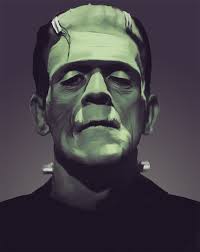
J.R.R Tolkein
Which quote best illustrates the theme, "those who are hurt will seek revenge"?
I devote thee, miserable fiend, to torture and death. Never will I give up my search until he or I perish; and then with what ecstasy shall I join my Elizabeth and my departed friends.
As I sat, a train of reflection occurred to me which led me to consider the effects of what I was now doing. Three years before, I was engaged in the same manner and had created a fiend whose unparalleled barbarity had desolated my heart.
His limbs were in proportion, and I had selected his features as beautiful. Beautiful! Great God! His yellow skin scarcely covered the work of muscles and arteries beneath.
‘All men hate the wretched; how, then, must I be hated, who am miserable beyond all living things! Yet you, my creator, detest and spurn me.
Which quote best illustrates the theme, "isolation breeds evil"?
You seek for knowledge and wisdom, as I once did; and I ardently hope that the gratification of your wishes may not be a serpent to sting you, as mine has been.
No mortal could support the horror of that countenance. A mummy again endued with animation could not be so hideous as that wretch.
All men hate the wretched; how, then, must I be hated, who am miserable beyond all living things! Yet you, my creator, detest and spurn me.
Urged by this impulse, I seized on the boy as he passed and drew him towards me. As soon as he beheld my form, he placed his hands before his eyes and uttered a shrill scream.
Which quote best illustrates the theme, "overstepping boundaries is dangerous and can lead to despair"?
If any being felt emotions of benevolence towards me, I should return them a hundred and a hundredfold; for that one creature’s sake I would make peace with the whole kind!
With an anxiety that almost amounted to agony, I collected the instruments of life around me, that I might infuse a spark of being into the lifeless thing that lay at my feet.
Many times I considered Satan as the fitter emblem of my condition, for often, like him, when I viewed the bliss of my protectors, the bitter gall of envy rose within me.
I contemplated the lake: the waters were placid; all around was calm; and the snowy mountains, ‘the palaces of nature,’ were not changed. By degrees the calm and heavenly scene restored me.
Which quote best illustrates the theme, "nature has the power to heal"?
If the multitude of mankind knew of my existence, they would do as you do, and arm themselves for my destruction.
But again when I reflected that they had spurned and deserted me, anger returned, a rage of anger.
I had desired it with an ardour that far exceeded moderation; but now that I had finished, the beauty of the dream vanished, and breathless horror and disgust filled my heart.
I contemplated the lake: the waters were placid; all around was calm; and the snowy mountains, ‘the palaces of nature,’ were not changed. By degrees the calm and heavenly scene restored me.
How did the monster learn to speak?
He hid in the closet and listened during class at school
He stole books from the library and taught himself
He observed a family through a hole in the wall of their cabin
He made friends with a rugged mountain man who taught him
What did the monster ask Frankenstein to do for him?
make him a wife
take him into the family
teach him science and math
build him a cabin
Who was accused of committing the murder of William?
Jean-Claude, one of the servants, was accused of committing the murder.
Justine, who lived with the family, was accused of committing the murder.
Frankenstein’s brother was accused of committing the murder.
Frank, one of the boy’s friends, was accused of committing the murder.
Where did the creature take shelter?
He stayed in a lean-to attached to a cottage.
He found a cave in the mountains and lived there until he met with Victor again.
He built a log cabin in the woods.
He slept out in the open, because he didn’t need protection from the elements.
J.R.R Tolkein
When he meets Mr. De Lacey, he tells him that he is on his way to visit friends. By “friends,” he means...
Mr. De Lacey, Agatha, and Felix.
no one; he is making up an excuse for why he is knocking on the door.
Dr. Frankenstein.
sailors on a faraway ship.
According to the novel
Technology is okay in moderation
Technology is limitless and should be taken as far as it can go
Creators have no responsibility for their technological advancements or creations
It is not okay to create something or advance science without doing it responsibly.
What was the elder De Lacey's reaction when the creature entered the cottage and began speaking with him?
He invited the creature in to talk.
He beat him with a stick
They became great friends
He ignored him
What does the monster do for the cottagers?
Builds for them
Their chores
Protects them
Nothing
How did Frankenstein feel when his experiment was successful, and the creature came to life?
He was ecstatic and jubilant.
He was afraid and resigned.
He was excited and happy.
He was horrified and disgusted.
Who was accused of committing the murder of William?
Jean-Claude, one of the servants, was accused of committing the murder.
Justine, who lived with the family, was accused of committing the murder.
Frankenstein’s brother was accused of committing the murder.
Frank, one of the boy’s friends, was accused of committing the murder.
Victor Frankenstein tells his story to _____.
the manager of a hotel
the captain of a ship
his professor at university
his father
Victor was born in _____.
France
England
Scotland
Switzerland
When Victor receives a letter from his father, he returns to the town of _____.
Geneva
Berlin
Vienna
Paris
_____ lives with the Frankenstein family and helps to look after the children.
Agatha
William
Justine
Sophie
Victor makes a monster with _____ skin and eyes.
yellow
blue
green
red
The monster learns to speak when he hears _____ teaching Sophie some new words.
William
Ernest
Victor
Felix
The first person the monster kills is _____.
Victor’s father
Victor’s brother, Ernest
Victor’s brother, William
Victor’s mother
On the wedding night, the monster finds and kills _____.
William
Elizabeth
father
Victor
Who said or wrote this?
‘My father has agreed to let me study at the university, so we shall be able to spend a lot of time together.’
Felix
Elizabeth
Justine
Henry Clerval
Who said or wrote this?
‘My heart was made for love, like a man’s heart.’
the monster
Henry Clerval
Captain Walton
Victor Frankenstein
Choose the phrase with the same meaning.
You take care of something or somebody.
look for
look up
look after
look round
You fall down suddenly because you are ill or hurt.
stand
scream
follow
faint
When Victor goes to university he _____.
often goes home to visit his family
studies very hard for two years
often goes out with Henry Clerval
sleeps a lot and doesn’t study
Victor makes a monster out of _____.
different pieces of dead people
a dead person
different pieces of dead animals
a dead animal
When the monster comes alive, Victor _____.
talks to him
shows him to his professor
kills him
runs away from him
The monster is full of hate when Victor _____.
makes a new laboratory
doesn’t make the new monster
makes a new machine
makes the new monster
At the end, Victor _____ on Captain Walton’s boat.
escapes
falls asleep
wakes up
dies
The young woman, Justine, goes to _____.
school
England
prison
Scotland
Before he dies, Victor chases the monster to _____.
the high mountains of the east
the big lakes of the west
the hot countries of the south
the cold, icy lands of the north
Victor works and studies in a _____.
laboratory
hut
hospital
classroom
How does the monster fulfill his threat of being with Victor on his wedding night?
He kills Victor on his wedding night
He strangles Elizabeth on the wedding night
He kills Victor's father on his wedding night
He watches from just outside the window as Elizabeth and Victor marry
Who is left alive at the end of the novel?
Robert Walton
Victor Frankenstein
Henry Clerval
Alphonse Frankenstein (Victor's father)
Who is the last narrator in the novel?
The Monster
Victor Frankenstein
Robert Walton
Mrs. Saville
In her letter, why does Elizabeth assume that Victor has put off the idea of marriage?
She believes that he loves another woman
She thinks that he never wants to marry anyone
She believes that he's too distracted with the building of a monster
She wishes to marry Henry Clerval instead
After the deaths of both Elizabeth and his father, what happens to Victor?
He immediately begins hunting the monster
He runs away to a monastery to become a priest
He goes insane and is put in an institution
He seeks to protect Ernest
What does the monster do to keep Victor on his trail?
He leaves a map
He leaves clues and food
He does not wish for Victor to chase him at all
He is the one chasing Victor
What happens to the monster after the death of Victor?
He is excited to have finally won over his master
He is worried that he will be blamed for Victor's death
He mourns the loss of his creator since now he has no reason to live
He is angry that Frankenstein can no longer chase him
What is the monster's fate at the end of the novel?
He will drown himself in the icy arctic waters
He will be arrested and hanged for all his crimes
He will light himself on a funeral pyre and die
He will continue to seek a mate as ugly as himself
Mary Shelley spends a lot of time throughout the novel describing the beautiful scenery and nature.
True
False
Which of the following is a theme NOT seen in the novel?
Parents have a responsibility to raise their children
People are a product of their environment and influences
Science is harmful and not to be trusted
What does the monster do to keep Victor on his trail?
He leaves a map
He leaves clues and food
He does not wish for Victor to chase him at all
He is the one chasing Victor
What happens to the monster after the death of Victor?
He is excited to have finally won over his master
He is worried that he will be blamed for Victor's death
He mourns the loss of his creator since now he has no reason to live
He is angry that Frankenstein can no longer chase him
What is the monster's fate at the end of the novel?
He will drown himself in the icy arctic waters
He will be arrested and hanged for all his crimes
He will light himself on a funeral pyre and die
He will continue to seek a mate as ugly as himself
How does the monster fulfill his threat of being with Victor on his wedding night?
He kills Victor on his wedding night
He strangles Elizabeth on the wedding night
He kills Victor's father on his wedding night
He watches from just outside the window as Elizabeth and Victor marry
The setting and ending of this story is in
Switzerland
The North Pole
South America
Fairbanks, Alaska
Robert Walton was able to comfort Frankenstein
True
False
Despite everything, Frankenstein can still manage to be optimistic about the future
True
False
Walton was very worried about the glass
True
False
The crew don't want to abandon their expedition
True
False

