

wayground logo

Free Printable Worksheets

Font size

S
M
L
XL
Worksheets

WHAP Revolutions

Total questions: 56

Worksheet time: 35mins

Name
Class
Date
1.

Which movement in the 1700s promoted reason, liberty, and self determination?

a)

The Scientific Revolution

b)

The Renaissance

c)

The Enlightenment

d)

The American Revolution

2.

What is the name of the movement that promotes the interests of a particular nation due to intense pride?

a)

A revolution

b)

Protestantism

c)

Enlightenment

d)

Nationalism

3.

Which TWO nations unified due to nationalistic movements?

a)

Italy

b)

America

c)

Germany

d)

France

4.

Which nation was the first to industrialize?

a)

Britain

b)

France

c)

Germany

d)

Japan

5.

All of the following helped countries to industrialize EXCEPT

a)

Access to waterways

b)

Natural resources like coal

c)

Access to foreign resources and markets

d)

Being colonies of other nations

6.

All of the following were reactions to industrialization's negative effects on workers EXCEPT

a)

Labor unions

b)

Communism

c)

The invisible hand

d)

Utilitarianism

7.

As countries embraced Adam Smith's capitalism laissez-faire policies, what new forms of business were promoted? Select ALL that apply.

a)

corporations

b)

monopolies

c)

socialism

d)

transnational businesses

8.

Bolivar envisioned

a)

a Grand Colombia, which united all the liberated South American states

b)

a united Portugal and Spain

c)

a Spanish takeover of Portuguese Brazil

d)

a loosely knit confederation of South American States

9.

Toussant L'Ouverture

a)

was a member of the Committee of Public Safety under Robespierre

b)

rose to the rank of General under Napoleon

c)

was a complete revolutionary failure

d)

helped free slaves in Haiti

10.

Select ALL of the following that are considered an impact of industrialization during the 18th and 19th centuries.

a)

Increased competition between industrialized nations

b)

Rise of global inequalities

c)

Transformation of society.

d)

Decolonization of Africa

11.

Capitalism is

a)

An economic system in which the means of production are privately owned and money is invested to make profits.

b)

An economic system in which the means of production are owned by the public (government) and operate for the welfare of all.

12.
Socialism is
a)
an economic system in which the factors of production are owned by the public and operate for the welfare of all.
b)
an economic system in which the factors of production are privately owned and money is invested in business ventures to make a profit.
13.
The American desire for a trade relationship with Japan in 1853 led to
a)
The overthrow of the shogun and the modernization of the country
b)
Increased tensions between China and Korea
c)
Greater Russian influence in Manchuria
d)
The colonization of Taiwan
14.
Which of the following was NOT a reason India had become Britain's most important colony by about 1800?
a)
India offered crucial port facilities for the British navy.
b)
India was a major outlet for British manufactured goods.
c)
India was an important supplier of British raw materials.
d)
India was an important location for British textile factories.
15.
A major factor in the expansion of industrialization was the development of
a)
Socialism
b)
Feudalism
c)
Land grants
d)
Railroads
16.
Which of the following is most likely to have influenced 18th century population trends in both Europe and China?
a)
A sharp decline in average global temperatures
b)
Introduction of Western Hemisphere crops
c)
Innovation in birth control measures
d)
Improvement in surgical procedures
17.

Under the Tokugawa Japan was

a)

a major trading nation

b)

rapidly industrializing

c)

bankrupt

d)

isolated

18.

Commander Perry is connected to

a)

the opening of Japan for trade

b)

the attack on China during the Opium wars

c)

Russia's rapid growth as a power

d)

the defeat of the Napoleon

19.
The Meiji reforms in Japan resulted in
a)
The strengthening of hte power of regional lords at the expense of the emperor
b)
A shift of power away from regional lords and to the emperor
c)
The Tokugawa shogunate's adoption of a unified civil code
d)
The overthrow of the imperial system for a democratic republic
20.

What caused the Taiping and Boxer rebellions?

a)

Foreign economic involvement in China

b)

British selling opium to China

c)

Indians refusing to touch the gunpowder pouches

d)

Americans moving into West North America

21.

What was Japan's response to foreign interference in the nineteenth century?

a)

Adapt to Western politics and culture (Meiji Restoration)

b)

Isolate themselves further by resisting and fighting

c)

Became allies with the Chinese to become the dominant power in the region

d)

Adapt to the ideas of the islanders and tribal people to resist

22.

Which of the following descriptions is an accurate change over time in the period c. 1750-1900?

a)

Once the leader in scientific and economic development, China fell behind Europe

b)

Once the leading producer of porcelain, China fell behind India

c)

Once a country that maintained an isolationist policy, China participated in the Scramble of Africa

d)

Once a country that actively sought foreign converts to Buddhism, China became an atheist state

23.

Which company took over other European states colonies in India?

a)

British East India Company

b)

British West India Company

c)

Dutch East India Company

d)

French East India Company

24.

What was a negative effect of migrants moving to new societies looking for work?

a)

They would receive prejudice and racism from the people

b)

They would lose their culture because of enclaves

c)

They would return to their home societies after saving enough money

d)

They would loss their connections to their home societies

25.
Abolition of Slavery
a)
All South American countries abolished slavery by 1880. In Britian it was because a change in economic interest, and resistance from the enslaved people.
b)
Change from rural to urban lifestyle, the growth of cities
c)
groups of workers who unite to improve conditions for themselves (higher wages, safer working conditions)
d)
Constructed in 1870s to connect European Russia with the Pacific; completed by the end of the 1880s; brought Russia into a more active Asian role.
26.
Adam Smith
a)
Scottish philosopher; Economy depends on demand of people.
b)
All South American countries abolished slavery by 1880. In Britian it was because a change in economic interest, and resistance from the enslaved people.
c)
Change from rural to urban lifestyle, the growth of cities
d)
groups of workers who unite to improve conditions for themselves (higher wages, safer working conditions)
27.
Canals
a)
an artificial waterway used to direct water (usually from a river or lake) to a certain area (city, town, etc.)
b)
Scottish philosopher; Economy depends on demand of people.
c)
All South American countries abolished slavery by 1880. In Britian it was because a change in economic interest, and resistance from the enslaved people.
d)
Change from rural to urban lifestyle, the growth of cities
28.
Capitalism
a)
an economic system based on private ownership of capital, companies choices, goal is to make profit to reinvest in company
b)
an artificial waterway used to direct water (usually from a river or lake) to a certain area (city, town, etc.)
c)
Scottish philosopher; Economy depends on demand of people.
d)
All South American countries abolished slavery by 1880. In Britian it was because a change in economic interest, and resistance from the enslaved people.
29.
communism
a)
Everyone is equal, perfect justice
b)
oil burning, replaced steam engine, used in transportation
c)
an economic system based on private ownership of capital, companies choices, goal is to make profit to reinvest in company
d)
an artificial waterway used to direct water (usually from a river or lake) to a certain area (city, town, etc.)
30.
consumer markets
a)
The markets for products and services purchased by individuals or households to satisfy their specific needs.
b)
Everyone is equal, perfect justice
c)
oil burning, replaced steam engine, used in transportation
d)
an economic system based on private ownership of capital, companies choices, goal is to make profit to reinvest in company
31.
Emancipation of Serfdom
a)
This happened in Russia ,1861 (brought about by the tsar at the time, Alexander II
b)
father of modern conservatism. noted for his emphasis on tradition
c)
Everyone/ Everything depends on someone or something
d)
Public service for criminals which displayed disciplinary methods and created living and working conditions reminiscent of slavery where prisoners were housed and treated like animals with a high mortality rate.
32.
global division of power
a)
Shift of powers from countries to companies
b)
a nonrenewable energy resource that forms in the Earth's crust for millions of years, coal, oil, natural gas.
c)
a method of production that brought many workers and machines together into one building, "Putting out system"
d)
a type of economy in which it's goods are produced mainly for export rather than for domestic use
33.
Industrial Revolution
a)
The change from an agricultural to an industrial society and from home manufacturing to factory production, especially the one that took place in England from about 1750 to about 1850.
b)
migration into a place (especially migration to a country of which you are not a native in order to settle there). Jews went to USA, Australia, Argentina. Irish went to USA or Britain.
c)
Shift of powers from countries to companies
d)
a nonrenewable energy resource that forms in the Earth's crust for millions of years, coal, oil, natural gas.
34.
John Stuart Mill
a)
believed in laissez-faire but believed government should work for the well being of all
b)
the process of developing machine production of goods
c)
The change from an agricultural to an industrial society and from home manufacturing to factory production, especially the one that took place in England from about 1750 to about 1850.
d)
migration into a place (especially migration to a country of which you are not a native in order to settle there). Jews went to USA, Australia, Argentina. Irish went to USA or Britain.
35.
Karl Marx
a)
German journalist and philosopher. He is known for two books: The Communist Manifesto (1848) and Das Kapital (Vols. I-III, 1867-1894).
b)
believed in laissez-faire but believed government should work for the well being of all
c)
the process of developing machine production of goods
d)
The change from an agricultural to an industrial society and from home manufacturing to factory production, especially the one that took place in England from about 1750 to about 1850.
36.
Laissez Faire
a)
the doctrine that government should not interfere in commercial affairs
b)
German journalist and philosopher. He is known for two books: The Communist Manifesto (1848) and Das Kapital (Vols. I-III, 1867-1894).
c)
believed in laissez-faire but believed government should work for the well being of all
d)
the process of developing machine production of goods
37.
Mass Production
a)
the production of large quantities of goods using machinery and often an assembly line
b)
Willing to respect/ accept other opinions, "open minded"
c)
the doctrine that government should not interfere in commercial affairs
d)
German journalist and philosopher. He is known for two books: The Communist Manifesto (1848) and Das Kapital (Vols. I-III, 1867-1894).
38.
meiji restoration
a)
Political program that followed the destruction of the Tokugawa Shogunate in 1868, and set Japan on the path of centralization, industrialization, and imperialism. 1866-1869.
b)
the production of large quantities of goods using machinery and often an assembly line
c)
Willing to respect/ accept other opinions, "open minded"
d)
the doctrine that government should not interfere in commercial affairs
39.
Middle class
a)
A social class made up of skilled workers, professionals, business people, and wealthy farmers
b)
Political program that followed the destruction of the Tokugawa Shogunate in 1868, and set Japan on the path of centralization, industrialization, and imperialism. 1866-1869.
c)
the production of large quantities of goods using machinery and often an assembly line
d)
Willing to respect/ accept other opinions, "open minded"
40.
private property
a)
property owned by individuals or companies, not by the government or the people as a whole
b)
A social class made up of skilled workers, professionals, business people, and wealthy farmers
c)
Political program that followed the destruction of the Tokugawa Shogunate in 1868, and set Japan on the path of centralization, industrialization, and imperialism. 1866-1869.
d)
the production of large quantities of goods using machinery and often an assembly line
41.
proletariat
a)
the industrial working class
b)
The extent to which a firm meets or exceeds the standard business practices for its industry.
c)
property owned by individuals or companies, not by the government or the people as a whole
d)
A social class made up of skilled workers, professionals, business people, and wealthy farmers
42.
public education
a)
As industry grew, America needed an educated workforce so public schools were created.
b)
the industrial working class
c)
The extent to which a firm meets or exceeds the standard business practices for its industry.
d)
property owned by individuals or companies, not by the government or the people as a whole
43.
Second Industrial Revolution
a)
Steep growth in industry and the production of steel, petrolium, electric power, and the machinery to produce other goods
b)
As industry grew, America needed an educated workforce so public schools were created.
c)
the industrial working class
d)
The extent to which a firm meets or exceeds the standard business practices for its industry.
44.
Social Impacts of Industrial Revolution
a)
Modernization, Family life changed
b)
Steep growth in industry and the production of steel, petrolium, electric power, and the machinery to produce other goods
c)
As industry grew, America needed an educated workforce so public schools were created.
d)
the industrial working class
45.
sugar plantations
a)
Sugar plantations were a major economic thing in South America and Africa requiring a large amount of Slavery. The model for using these with slaves was established by the Portuguese.
b)
steam-engines burned coal to to boil water and create steam, which drove mechanical devices that performed work.
c)
Focusing work effort on a particular product or a single task
d)
An economic system based on state ownership of capital
46.
Trans- Siberian Railroad
a)
Constructed in 1870s to connect European Russia with the Pacific; completed by the end of the 1880s; brought Russia into a more active Asian role.
b)
Sugar plantations were a major economic thing in South America and Africa requiring a large amount of Slavery. The model for using these with slaves was established by the Portuguese.
c)
steam-engines burned coal to to boil water and create steam, which drove mechanical devices that performed work.
d)
Focusing work effort on a particular product or a single task
47.
Unions
a)
groups of workers who unite to improve conditions for themselves (higher wages, safer working conditions)
b)
Constructed in 1870s to connect European Russia with the Pacific; completed by the end of the 1880s; brought Russia into a more active Asian role.
c)
Sugar plantations were a major economic thing in South America and Africa requiring a large amount of Slavery. The model for using these with slaves was established by the Portuguese.
d)
steam-engines burned coal to to boil water and create steam, which drove mechanical devices that performed work.
48.
Urbanization
a)
Change from rural to urban lifestyle, the growth of cities
b)
groups of workers who unite to improve conditions for themselves (higher wages, safer working conditions)
c)
Constructed in 1870s to connect European Russia with the Pacific; completed by the end of the 1880s; brought Russia into a more active Asian role.
d)
Sugar plantations were a major economic thing in South America and Africa requiring a large amount of Slavery. The model for using these with slaves was established by the Portuguese.
49.

What invention allowed for the factory system and mass production? (Hint: The inventor also created the cotton gin.)

a)

Interchangeable Parts

b)

Steel Plow

c)

Communism

d)

Tran Siberian Railroad

50.

A key factor in U.S. industrial success...

a)

Meiji Restoration

b)

Human capital

c)

swift rivers

d)

Nativism

51.

Capital...

a)

money available to invest in business

b)

a labor union that helps create labor contracts

c)

suppliers are not subject to losses greater than their amount of their investment

52.

Which event led to European social and political reform movements?

a)

Nationalism

b)

Industrial Revolution

c)

Boxer Rebellion

d)

Sepoy Rebellion

53.

Which best explains Russia's industrialization?

a)

Quickly industrialized alongside Great Britain

b)

Eventually industrialized, lagged behind the others

c)

Industrialized before any other nation

d)

Never industrialized

54.

Why was Russia slow to industrialize?

a)

Lost a civil war

b)

France owned all Russian markets

c)

Due to serfdom, Russia didn't have a middle class.

d)

Russian Boyars were open to industrialization.
55.

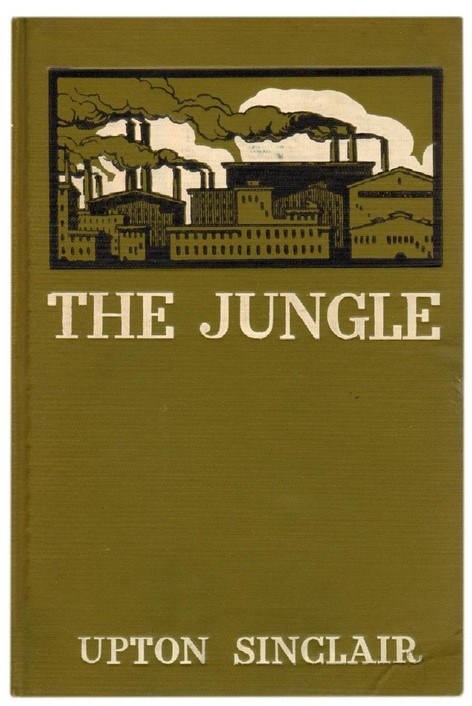
What government change occurred because of The Jungle?

a)

Regulation of cash crops used for food for cattle

b)

Unionization of meat industry

c)

Creation of a federal health department

d)

Federal Meat Inspection Act

56.
Wrote "How the other half lives" exposing conditions in the slums
a)
Susan B. Anthony
b)
Boss Tweed
c)
Jacob Riis
d)
Jane Addams
