
 Worksheets
American Revolution Complete Test Review
Total questions: 79
Worksheet time: 40mins
Is this an Political or Economic relationship between Great Britain and the 13 Colonies?
Control over trade
Political
Economic
Is this an Political or Economic method of Great Britain's control over the colonies?
Colonists had to obey British laws, which were enforced by the governors.
Political
Economic
Is this an Political or Economic method of Great Britain's control over the colonies?
Great Britain taxed the colonies after the French and Indian War
Political
Economic
Is this an Political or Economic method of Great Britain's control over the colonies?
Colonial Governors were appointed by the king or by the proprietor
Political
Economic
Is this an Political or Economic method of Great Britain's control over the colonies?
A colonial legislature made laws for each colony but was monitored by the colonial governor
Political
Economic
Is this an Political or Economic method of Great Britain's control over the colonies?
The colonies traded raw materials for goods made in Great Britain
Political
Economic
In order to help finance the maintain British troops in the Colonies, Great Britain had to impose ________ on the colonists.
Compromises
Taxes
Proclamation of 1763
Great Britain's desire to remain a world power resulted in a conflict know as the ___________________________?
Treaty of Alliance
Battle of Britain
French and Indian War
One reason for Great Britain taxing the colonies was
To raise revenue to pay the cost of the French and Indian War
To gain control of the Appalachian Mountains
To demonstrate how government should be run
Great Britain imposed taxes, such as the _____________, to raise necessary revenue (money) to pay for the cost of the French and Indian War
Gold Tax
Freedom Tax
Stamp Act
Tobacco Act
Which of the following was a source of Colonial Dissatisfaction?
England refused to protect them from the French
They thought the British King was weak
England would not buy Colonial goods
They had no representation in Parliament
Which of the following was a source of Colonial Dissatisfaction?
England refused to protect them from the French
Colonists supported the British King
The colonies opposed the British taxes
Great Britain had sold manufactured goods to the colonies
Which of the following was a source of Colonial Dissatisfaction?
England refused to protect them from the French
Some colonists resented the power of the colonial governors
French Blockade of British ships
Great Britain had sold manufactured goods to the colonies
Which of the following was a source of Colonial Dissatisfaction?
Great Britain wanted strict control over colonial legislatures
Colonist believed the King was weak
French Blockade of British ships
Great Britain had sold raw materials to the colonies
Which of the following was a source of Colonial Dissatisfaction?
Colonist wanted strict control over Parliament
The Proclamation of 1763, which followed the French and Indian War, restricted the western movement of settlers
French Blockade of British ships
Great Britain had sold raw materials to the colonies
Which of the following is not a source of colonial dissatisfaction?
The colonies had representation in Parliament.
The colonies opposed British taxes.
The colonists resented the colonial governors.
The Proclamation of 1763
Which of the following is not a source of colonial dissatisfaction?
The colonies had no representation in Parliament.
The colonies supported all British taxes.
The colonists resented the colonial governors.
The Proclamation of 1763
Is this an Political or Economic method of Great Britain's control over the colonies?
The colonies traded raw materials for goods made in Great Britain
Political
Economic

Who was the author of Common Sense?
Samuel Adams
Thomas Jefferson
Thomas Paine
John Locke

Who was the Commander of the Continental Army?
John Adams
George Washington
Patrick Henry
Benjamin Franklin

Who was the major author of the Declaration of Independence?
Thomas Jefferson
Thomas Paine
Samuel Adams
George Washington

Who made a daring ride to warm colonists that the British soldiers were coming?
Paul Revere
Samuel Adams
Thomas Jefferson
John Adams

Promoted the cause of independence?
John Locke
John Adams
Paul Revere
Phillis Wheatley

Outspoken member of the House of Burgesses; inspired colonial patriotism with his “Give me liberty or give me death” speech
Phillis Wheatley
Patrick Henry
Samuel Adams
John Adams

Prominent member of the Continental Congress; helped frame the Declaration of Independence; helped gain French support for American independence
Paul Revere
Thomas Paine
Benjamin Franklin
George Washington
Who was an enslaved African American poet who supported independence?
Phillis Wheatley
Patrick Henry
Thomas Paine
Thomas Paine
British king during the Revolutionary era.
Paul Revere
King George III
Marquis de Lafayette
George Washington
British general who surrendered at Yorktown
Lord Cornwallis
King George III
Marquis de Lafayette
George Washington
French nobleman who served in the Continental Army; worked with the king of France to send French troops, ships, and funds that assisted the colonists in the American Revolution and contributed to the victory at Yorktown
Lord Cornwallis
Thomas Paine
Marquis de Lafayette
George Washington
: Enslaved African American from Virginia, served as a spy in the Continental Army during the Revolutionary War. James Lafayette then had to fight for his freedom and won his freedom many years after the war, with the support of the Marquis de Lafayette.
Lord Cornwallis
Marquis de Lafayett
Crispus Attuck
James Armistead Lafayette
Fugitive enslaved African American who was the first person to die in the Boston Massacre
Lord Cornwallis
Marquis de Lafayett
Crispus Attuck
James Armistead Lafayette
Leadership of George Washington
Continental Advantage
British Advantage
Continental Disadvantage
British Disadvantage
Government could effectively tax citizens
Continental Advantage
British Advantage
Continental Disadvantage
British Disadvantage
Far away from supplies and fresh troops
Continental Advantage
British Advantage
Continental Disadvantage
British Disadvantage
Small, weak army and navy
Continental Advantage
British Advantage
Continental Disadvantage
British Disadvantage
Most citizens opposed to the war
Continental Advantage
British Advantage
Continental Disadvantage
British Disadvantage
Received help from France and Spain
Continental Advantage
British Advantage
Continental Disadvantage
British Disadvantage
Large, well trained army
Continental Advantage
British Advantage
Continental Disadvantage
British Disadvantage
Used “hit and run” tactics effectively
Continental Advantage
British Advantage
Continental Disadvantage
British Disadvantage
Hired German “Hessians” To increase army size
Continental Advantage
British Advantage
Continental Disadvantage
British Disadvantage
Fighting to defend home, family and beliefs
Continental Advantage
British Advantage
Continental Disadvantage
British Disadvantage
Used its navy to create an effective blockade
Continental Advantage
British Advantage
Continental Disadvantage
British Disadvantage
Loyalists openly sided against Patriots
Continental Advantage
British Advantage
Continental Disadvantage
British Disadvantage
The battles of Lexington/Concord April 1775 took place in which colony?
New York
Massachusetts
New Jersey
Virginia
The battle of Saratoga took place in which colony?
New York
Massachusetts
New Jersey
Virginia
The battle of Yorktown took place in which colony?
New York
Massachusetts
New Jersey
Virginia
The battle of Cowpens took place in which colony?
New York
South Carolina
New Jersey
Virginia
The battle of Trenton took place in which colony?
South Carolina
Massachusetts
New Jersey
Virginia

In which colony did the battle of Saratoga take place?
1
8
7
9
In which colony did Cornwallis surrender to George Washington, signaling the end of the revolution?
7
4
3
9
In which colony did the battle of Trenton take place?
7
4
3
9
The battle of Bunker Hill took place in which colony?
New York
Massachusetts
New Jersey
Virginia
In which colony did the battles of Lexington/Concord and Bunker Hill take place?
11
10
13
9


Why is the Battle of Saratoga considered to be a turning point in the American Revolution?
It was a major victory for the colonists showing that they had a chance to win the war
It was a major victory for Great Britain because Boston was destroyed
The French helped defeat the British in this battle
The colonists were almost at the point of complete surrender after the battle was over
What document officially ended the American Revolution and recognized America as an independent nation?
Olive Branch Petition
Treaty of Paris
Proclamation of 1763
Declaration of Independence
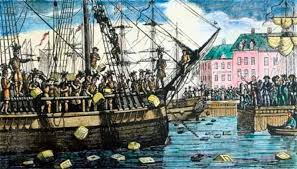
1773- Samuel Adams and Paul Revere led members of the Sons of Liberty in this protest against taxes.
First Continental Congress
Boston Massacre
Boston Tea Party
Stamp Act Congress
1775 - Delegates from all colonies except Georgia met to discuss problems with Great Britain and promote independence.
Treaty of Paris
First Continental Congress
Boston Tea Party
The Intolerable Acts
1783 - Great Britain recognized American independence in this treaty.
Declaration of Independence
Battle of Saratoga
Battle of Yorktown
Signing of the Treaty of Paris
1775 - First major battle of the war.
Saratoga
Lexington and Concord
Bunker Hill
Valley Forge

Of the following events, which happened last?
First Continental Congress
Boston Massacre
Boston Tea Party
French and Indian War

1775 - Where were the first armed conflicts of the American Revolution?
Yorktown
Saratoga
Lexington and Concord
Bunker Hill

1777 - This American victory was the turning point in the war and led to French support for the patriot cause.
Saratoga
Yorktown
Bunker Hill
Lexington and Concord

1781 - This was the colonial victory over forces of Lord Cornwallis that marked the end of the Revolutionary War.
Saratoga
Yorktown
Bunker Hill
Lexington and Concord
1770 - The event where colonists were shot after taunting British soldiers.
Boston Tea Party
Lexington and Concord
Boston Massacre
First Continental Congress
After the battle of Saratoga, which country signed the Treaty of Alliance with the colonies?
Great Britain
France
Portugal
Germany
Which 2 events took place in the colony of Massachusetts?
Battle of Cowpens and Surender at Yorktown
Battle of Yorktown and Battle of Saratoga
Boston Massacre and Bunker Hill
Battle of Saratoga and Battle of Trenton
Key philosophies in the Declaration of Independence were based upon ideas first expressed by __________________.
European philosophers
Native Americans
Russian Czars
John Smith
The idea that people have the right to life, liberty, and the pursuit of happiness is in which document?
The Constitution
The Articles of Confederation
The Declaration of Independence
The Bill of Rights
New __________________ideas led to a desire for independence and a democratic government in the American colonies.
Business
Political
Trade
Monarchy
What does unalienable mean?
something that is temporarily yours
something that must be earned
something that only kings and queens have
something that cannot be taken away
According to the Declaration of Independence, from where does government get its power?
the people it governs
the wealthy
the military
itself
According to the Declaration of Independence, people have a right and a duty to ______ a government that violates their rights.
change
keep
support
monitor
One purpose of the Declaration of Independence is to explain why the colonies are ___________________ Great Britain
happy with
helping support
returning to
rebelling against
The Declaration of Independence also explains the colonists beliefs about the rights and the role of ______________
queens
government.
kings
proprietors
According to the Declaration of Independence, what was/is created to protect our rights?
laws
government
kings
principles
What are examples of unalienable rights given in the Declaration of Independence?
life, liberty, and business
wealth, freedom, and happiness
life, liberty, and the pursuit of happiness
life, liberty, and property

