
 Worksheets
chemical effects of electric current
Total questions: 25
Worksheet time: 14mins
Which of the following metals is used in electroplating to make objects appear shining?
Iron
Copper
Chromium
Aluminium
LED stands for
light emitting diode
light efficient diode
length emitting diode
light emitting device
Adding common salt to distilled water makes it
Good Conductor
Poor Conductor
No change
Both A and B
An electrolyte is
a metal
a solution
a liquid that conducts electricity
none of these
Flow of electrons is called
Electrode
Electrolyte
Electric current
Electroplating
Which one of the following solutions will not conduct electricity?
lemon juice
vinegar
tap water
vegetable oil
The object to be electroplated is taken as ____________ electrode.
cathode
anode
electrode
none of these
Small amount of a mineral salt present naturally in water makes it a______________ of electricity.
insulator
conductor
both a and b
none of these
Electroplating prevents
electric current
chemical effect
lightening
rusting
one of the following is not used for electroplating metal articles. the one is -
nickel
chromium
sodium
silver
An electric current can produce
heating effect only.
chemical effect only.
magnetic effect only.
chemical, heating, and magnetic effects.
Iron is coated with (a) to protect it from corrosion.
During electrolysis of water,
hydrogen gas is produced
oxygen gas is produced
water is produced
both (a) and (b)
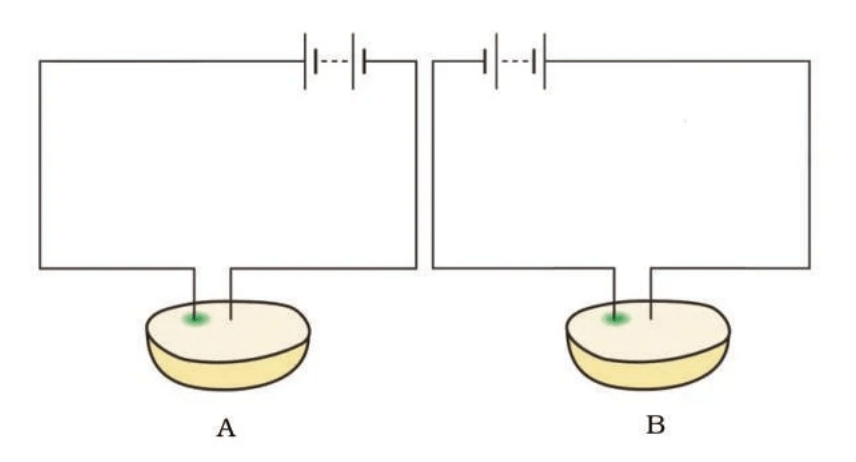
In the figure given,Which of these two circuits shows the correct observation.
A
B
Both A and B
None of the above
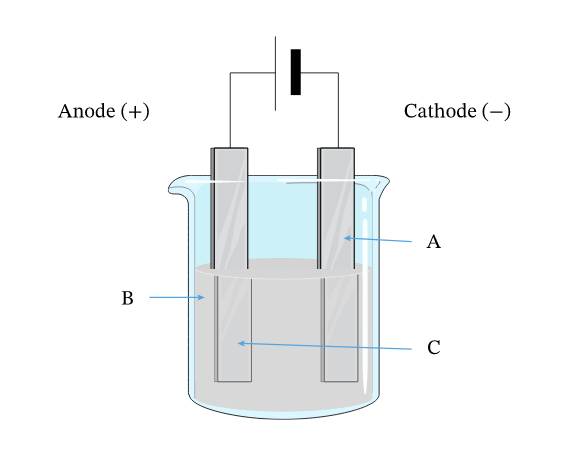
The diagram shows the purification of copper. What are the correct labels for this experiment?
A: Pure copper electrode
B: Copper sulfate electrolyte
C: Graphite electrode
A: Impure copper electrode
B: Copper sulfate electrolyte
C: Graphite electrode
A pure copper electrode,
B copper sulfate electrolyte
C impure copper electrode.
A: Pure copper electrodeB: Sulphuric acid electrolyteC: Impure copper electrode
What are the three chemical effects of current?
1.Gas Bubbles may be formed at electrodes
2. Metals may get deposited on electrodes
3. Change of colour of the solution.
1.Heat produced at electrodes.
2.Metals deposited on cathode.
3.Evolution of smell.
1.Gas Bubbles may be formed on cathode.
2. Metals may get deposited on electrolyte.
3. Change of colour of the solution.
None of the above.
A crystal of NaCl can conduct electricity.
True
False


the electrode connected to the negative terminal of a battery is known as
anode
negative pole
cathode
electrolyte
the phenomenon of decomposition of an electrolyte when electricity is passed through is known as
conduction
coating
electrolysis
electrorefining
the method of purification of metals by using electricity is known as
electroplating
electrorefining
electrometal
none of these
Which of the following solids are INSULATORS of electricity
Nickel
Wood
Rubber
Zinc
Glass
The electrolyte used to electroplate Cu on the spoon is
CuSO4
AgNO3
ZnSO4
None of the above

