
Font size
 Worksheets
Elements and the Periodic Table
Total questions: 49
Worksheet time: 30mins
How are the elements in the periodic table arranged?
by the number of neutrons
by the atomic number of an element
by the atomic mass of an element

What does the atomic number of an element tell you?
the number of neutrons
the number of valence electrons
the number of electrons
the number of protons

How many protons does this element contain?
No two elements have the same atomic number.
True
False
The chemical symbol of an element
tells the total number of protons and neutrons in the nucleus.
is a letter or letters that stand for the name of the element.
are pictures that stand for the element.
The vertical columns on the periodic table are called:
periods
elements
groups
matter
The horizontal rows on the periodic table are called:
periods
elements
groups
matter
_______ are the ROWS on the periodic table and are arranged according to their reactivity.
All matter is made of what?

Which Russian chemist arranged the first periodic table?
Mosely
Einstein
Mendeleev
Bohr
How many naturally occurring elements are there?
100
118
92
2
The symbol for silver is-
Au
Ag
Si
S
Which element has an atomic number of 11
Calcium
Boron
Sodium
Nitrogen
The Periodic Table is the organization of chemical ______ in the form of a table.
liquids
elements
mixtures
2. Elements are the simplest ________ substances.
pure
tarnished
flammable
True or False. A chemical symbol is an abbreviation of an element’s name.
True
False
True or False. An element's atomic mass is equal to the # of protons and electrons in the nucleus of the atom of that element.
True
False
True or False. An element's atomic mass is equal to the # of protons and neutrons in the nucleus of the atom of that element.
True
False
True or False. A picture of an element can always be found in its square on the Periodic Table.
True
False
Check all of the types of physical properties a metal can have.
shininess
taste
malleability
size
conductivity
Which of the following is an example of a metal?
Copper
Helium
Carbon
Oxygen
When a metal is _________it has the ability to be hammered or rolled into flat sheets, and other shapes.
malleable
shiny
ductile
A metal that has good _________ has the ability to transfer heat to another object.
malleability
conductivity
ductility
Ture or False. The physical properties of nonmetals are the direct opposite of metals.
True
False
______ are also classified based on their chemical properties.
metals
nonmetals
metalloids
__________have some characteristics of both metals and nonmetals…
metals
nonmetals
metalloids
_________ is the element with the simplest and smallest atom.
Uranium
Hydrogen
Oxygen
True or False. Noble gases do not gain, lose, or share electrons with other elements.
True
False
Elements have _______________ type of atom.
one
two
three

What is the ATOMIC NUMBER of this element?
15.9994
O
8
The elements are arranged in order of increasing _________.
atomic mass
atomic number
element symbol
The elements are grouped in vertical columns (UP/DOWN) called _________ where elements are grouped according to how they react with water and other similar characteristics.
periods
families
houses
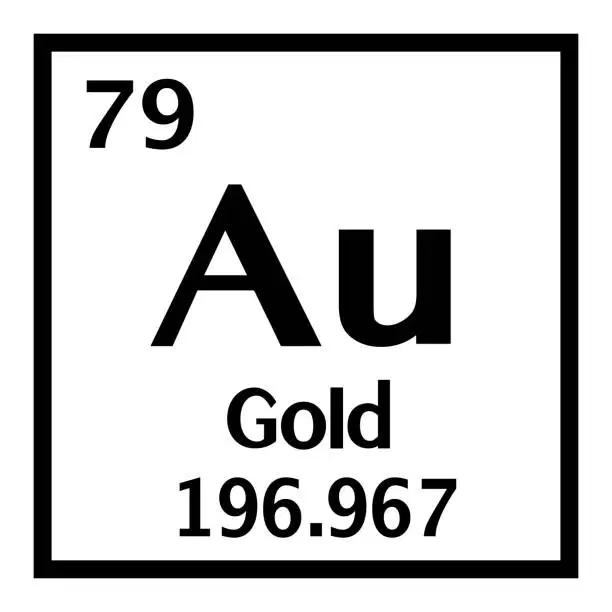
What is the CHEMICAL SYMBOL of this element?
Gold
Au
79
196.967
The elements are grouped in horizontal _________ which move LEFT TO RIGHT according to patterns.
groups
periods
houses
When a metal is _________it has the ability to be HAMMERED AND ROLLED INTO FLAT SHEETS, and other shapes.
shiny
ductile
malleable
A metal that has good _________ has the ability to TRANSFER HEAT TO ANOTHER OBJECT.
ductility
malleability
conductivity
What are NOBLE GASSES?
They are elements that DO NOT gain, lose, or share electrons.
They are elements that gain, lose, or share electrons.
They are very reactive elements.
What are VALENCE ELECTRONS?
The electrons in the outer shell of an atom.
All the electrons are considered valence electrons.
The electrons that make up a full electron shell.
Noble Gas is an example of a _________________.
period
group/family

