Wayground logo

Free Printable Worksheets

Font size

S
M
L
XL
Worksheets

REVISION TEST

Total questions: 50

Worksheet time: 34mins

Name
Class
Date
1.
Which of the following best describes soil erosion?
a)
A.  the breakdown of soil 
b)
A.  the improvement of soil
c)
A.  the addition of soil
d)
A.  the movement of soil by wind or water
2.
Soil is made of
a)
weathered rocks and minerals
b)
dead plants and animals
c)
air and water
d)
all of the above
3.
Which layer of soil are these roots growing in?
a)
subsoil
b)
topsoil
4.
The breaking down of rocks into smaller pieces.
a)
erosion
b)
weathering
c)
sediment
d)
sand
5.
Humus is.....
a)
the dead parts of plants and animals in soil.
b)
A food we eat with pretzels.
c)
The tiny particles inside of soil
d)
The roots that come off of a plant and live in soil.
6.

All of the layers of soil together can be called a _________.

a)

profile

b)

horizon

c)

row

d)

layer

7.

Which horizon is also called "topsoil"?

a)

Horizon O

b)

Horizon A

c)

Horizon B

d)

Horizon C

8.
How does soil form?
a)
Soil forms as rock is broken down by weathering and mixed with other materials on the surface.
b)
Soil forms when someone takes a shovel and breaks rocks, and then mixes it with dirt.
c)
Soil forms when an you throw rocks and dirt into a pond.
d)
Soil forms when you mix water and rocks together, then add air.
9.
Why is topsoil darker than all other levels of soil?
a)
It contains all the darker colored minerals
b)
It contains volcanic rock
c)
It contains more organic matter
d)
It contains bits of burned trees
10.

Soil formation begins with the weathering of

a)

litter

b)

humus

c)

bedrock

d)

the A horizon

11.

In anaerobic respiration, _______ is not required.

a)

ATP

b)

Glucose

c)

Oxygen

d)

None of these

12.

_________ and respiration processes are complementary to each other.

a)

Photosynthesis

b)

Aerobic respiration

c)

Fermentation

13.

How do plants breathe?

a)

Through the stem

b)

Through the stomata

c)

Through the chloroplast

14.

Which of the following is NOT an advantage of transpiration

a)

removes excess water

b)

Creates suction pull

c)

Lower plant body temperature

d)

transports food

15.

How do plants breathe?

a)

Through the stem

b)

Through the stomata

c)

Through the chloroplast

16.

All living organisms respire to get energy from food.

a)

true

b)

false

17.
In which organ is oxygen absorbed into the blood? 
a)
Gills
b)
Mouth
c)
Nose 
d)
Stomata 
18.
In our lungs, _________ is removed and ________ is absorbed. 
a)
oxygen ... carbon dioxide 
b)
carbon dioxide ... oxygen
c)
oxygen ... nitrogen 
d)
carbon dioxide ... nitrogen
19.
Lungs are part of the __________ system of a human. 
a)
circulatory 
b)
respiratory
c)
digestive
d)
muscular
20.

Yeast is a

a)

multicellular

b)

Carnivore

c)

anaerobe

d)

single celled organism

21.

What is the size of a heart?

a)

Closed fist

b)

Hand

c)

Open hand

d)

Closed hand

22.

Which of the following is the main circulatory fluid in our body ?

a)

Plasma

b)

Lymph

c)

Blood

d)

None of these

23.

Why is color of blood red?

a)

myoglobin

b)

globulin

c)

heamoglobin

d)

fibrinogen

24.

What is the function of white blood cells?

a)

transport oxygen

b)

fight against infection

c)

clotting

d)

all the above

25.

The blood vessel which carries blood to the heart

a)

lymphatic vessel

b)

capillaries

c)

veins

d)

arteries

26.

Instrument used to measure the heart beat

a)

Endoscope

b)

Kaleidoscope

c)

Microscope

d)

Stethoscope

27.

Pulmonary artery carries what type of blood

a)

Oxygenated

b)

mixed

c)

pure blood

d)

Deoxygenated

28.

Phloem helps in the transport of

a)

Food

b)

water

c)

Food and Water

d)

Oxygen

29.

Xylem transports

a)

Food

b)

Food and water

c)

Water and minerals

d)

Food, water and minerals

30.
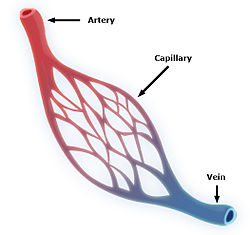
The smallest type of blood vessel is the:
a)
nerve
b)
vein
c)
capillary
d)
artery
31.

Vegetative propagation in potato takes place by

a)

leaves

b)

stem

c)

roots

d)

seed

32.
The male part of the flower is________
a)
pistil
b)
sepal
c)
ovaries
d)
stamen
33.
The pollen grains are found in this part of the stamen.
a)
anther
b)
style
c)
pistil
34.
The part of the flower on which the pollen grains land.
a)
pistil
b)
stamen
c)
sepals
d)
stigma
35.
The enlarged base of the pistil that stores the eggs of the plant is the ___.
a)
ovary
b)
ovule
c)
stigma
d)
style
36.
Brightly colored parts of flowers that attract insects.
a)
petals
b)
pistils
c)
stamen
d)
filaments
37.
They enclose the egg cells inside the ovaries.
a)
ovules
b)
anther
c)
seeds
d)
stamen
38.
The female part of a flower is
a)
pistil
b)
stamen
c)
filament
d)
sepal
39.
Fertilization is the process by which an 
a)
egg and pollen combine
b)
embryo grows into a plant
c)
animal carries pollen between plants
40.

Why do living things reproduce?

a)

Living things do not have a choice.

b)

To ensure continuity of their kind.

c)

To ensure consistency in their kind.

41.

Which of the following is the right order?

a)

Pollination -- Dispersal -- Germination -- Fertilisation

b)

Pollination -- Fertilisation -- Germination -- Dispersal

c)

Pollination -- Dispersal -- Fertilisation -- Germination

d)

Pollination -- Fertilisation -- Dispersal -- Germination

42.

Which is NOT a characteristic of flowers that are pollinated by wind?

a)

feathery stigma

b)

light

c)

sweet nectar

d)

small petals

43.

When we prevent overcrowding of plants, we reduce the competition for ________________________________________.

a)

Water, Minerals and Light

b)

Water, Nutrients and Minerals

c)

Water, Nutrients, Light and Minerals

d)

Water, Light and Space

44.

Which of the following consists of only parts of the female parts of the flower?

a)

style, ovary, anther, pollen grain

b)

anther. style, ovary, stigma, egg cell

c)

egg cell, male reproductive cell, ovule

d)

ovule, ovary, style, stigma, egg cell

45.
I am a flower that produces nectar. What is the function of the nectar?
a)
To provide food for the flower
b)
To attract pollinators
c)
To attract animals to disperse the fruits
d)
To produce perfumes for Man
46.

Asexual reproduction does not involve gametes

a)

True

b)

False

47.

The stamen is made of the

a)

Anther & filament

b)

Anther & petal

c)

Fliament & ovary

d)

Ovary & style

48.

The carpel is made of the

a)

Stigma & petals

b)

Stigma, style & ovary

c)

Filament & anther

d)

Petals

49.

These parts attract insects

a)

Stem & leaves

b)

Stigma, Style & Ovary

c)

Anther & filament

d)

Petals & nectary

50.
Which is cross pollination?
a)
A
b)
B
c)
C
d)
D