
 Worksheets
Water Cycle
Total questions: 23
Worksheet time: 18mins
As a part of the water cycle, water from Earth's surface enters the clouds and finally falls back to the ground in the form of rain. What is the correct sequence of processes water undergoes?
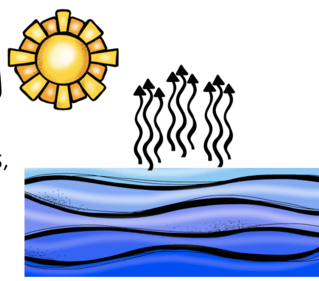
Evaporation, Condensation, Precipitation
Precipitation, Condensation, Evaporation
Condensation, Evaporation, Precipitation
Evaporation, Precipitation, Condensation

The image shows various stages in the water cycle. During which stage does water flow back towards the sea as runoff?
W
X
Y
Z
Rain and snow are two different forms of precipitation that fall on Earth's surface. Which factor is responsible for there being different forms of precipitation?
Evaporation
Run-off
Temperature
Transpiration

What is another name or synonym for the water cycle?
Geologic cycle
Hydrologic cycle
Geosphere
Carbon cycle

What are formed when water vapor condenses?
Clouds
Mountains
Transpiration
Valleys

Water in its gas form is called ____________________,
water vapor
precipitation
ice
air


What process is shown by letter B in the diagram?
condensation
transpiration
evaporation
precipitation
During evaporation, water changes from a _________ to a __________.
solid, liquid
gas, liquid
liquid, gas
liquid, solid
Which part of the water cycle changes liquid water to water vapor?
condensation
evaporation
precipitation
transpiration

What process is show by letter A in the diagram?
condensation
evaporation
accumulation
precipitation
What is the process called when water vapor turns to liquid water?
evaporation
condensation
precipitation
transpiration

What is shown by letter D in the diagram?
runoff
groundwater
melting
vapor
Water that seeps through the soil into the ground is ___.
condensation
evaporation
infiltration
precipitation
Where is the largest amount of water on Earth located?
glaciers
oceans
lakes
streams
What percentage of water on Earth is considered freshwater?
97%
3%
68.9%
78%
Where is most of the freshwater on Earth found?
Groundwater
Ice Caps and Glaciers
Soil
Living things

