
 Worksheets
Unit 5 (Chem) - THE MAIN QUIZ (ADAPTIVE)
Total questions: 72
Worksheet time: 40mins

Two types of hydrocarbons are ________
saturated & unsaturated
saturated & supersaturated
polar & non-polar
saturated & polysaturated

What is the condensed formula of this structure?
CH3CH2CH2OH
CH3COCH3
CH3CH2CHO
CH3OCH2CH3

How many hydrogens are missing from this extended structural formula?
6
7
8
9

Name this compound
(a)

Name this compound
propan-1-ol
2-methlypropan-2-ol
Propan-2-ol
Fill in the blank for Free Radical Substitution:
Initiation >>> (a) >>> Termination
Free Radical: an uncharged molecule (typically highly reactive and short-lived) having an unpaired (a)

What does the "half-headed curly arrow" represent in chemistry?
The movement of 2 electrons
The movement of 1 electron
The movement of a molecule
The movement of a proton
Which is not a reason that cryolite is used in aluminum extraction?
Cryolite dissolves aluminum oxide
Cryolite reduces the melting point of aluminum oxide
Cryolite decreases the cost of aluminum extraction
Cryolite removes impurities from aluminum oxide
What is the name of the ore that contains aluminum
Bauxite
Cryolite
Aluminum oxide
Heamatite
The anode has to be replaced frequently in electrolysis of alumina because....
The oxygen reacts with the carbon anode to form carbon dioxide
Aluminum reacts with the carbon to form aluminum carbide
The anode gets impurities that impact the extraction
The anode is too hot and it will reduce their electrical conductivity
Choose the half-equation that shows the discharge of aluminium ion.
Al3+ - 3e- --> Al
Al2+ + 3e- --> Al
Al3+ + 3e- --> Al
Al3+ --> Al + 3e-
Which word matches this definition "a molecule or other species which can donate a proton (H+) or accept an electron pair in reactions"?
Base
Alkali
Acid
Amphoteric
Which word matches this definition "a molecule or other species which can accept a proton or donate an electron pair in reactions"?
Base
Alkali
Acid
Amphoteric
Which word matches this definition "a soluble substance which can accept a proton or donate an electron pair in reactions"?
Base
Alkali
Acid
Amphoteric
Which word matches this definition "a molecule or other species which can accept a proton or donate a proton"?
Base
Alkali
Acid
Amphoteric
Acids dissociate in water. Which equation below shows the correct dissociation for hydrochloric acid?
HCl (aq) --> H (aq) + Cl (aq)
HCl (aq) --> H+ (aq) + Cl+ (aq)
HCl (l) --> H+ (aq) + Cl- (aq)
HCl (aq) --> H+ (aq) + Cl- (aq)
H+ (aq) + OH- (aq) --> H2O (l)
This ionic equation represents what process/reaction?
Combustiion - Acid and an Alkali
Neutralisation - Acid and an Alkali
Neutralisation - Acid and a solid base
Neutralisation - Base and an Alkali
Which of the following is an amphoteric substance?
HCl
NaOH
KOH
Al2O3
The oxide of a metal was found to react both with hydrochloric acid and with sodium hydroxide solution. Which one of the following is the best description of the oxide?
acidic
basic
neutral
amphoteric
Some industrial companies use a specific chemical for effluent treatment - a process which neutralises acidic waste. What chemical is this?
H2SO4
HCl
Ca(OH)2
Al
The transition elements form a ________ of about 30 Metals in the________ of the Periodic Table.
Block & catalysts
Block & Middle
Catalysts & Coloured
High & Middle

Which block on this periodic table represents the transition metals?
s block
d block
p block
f block
Which of the following best explains the action of a transition element as homogeneous catalyst?
It decreases the enthalpy of reaction
It exhibits a variable oxidation states
It supplies energy to increase the rate of effective collision
It supplies electrons to facilitate adsorption through the formation of temporary bonds
Choose the statement that defines transition elements correctly.
A transition element is one that forms cations with a completely filled d-subshell of electrons
A transition element is one that forms at least one compound with a partially filled d-subshell of electrons
A transition element is one that can speed up then the rate of chemical reactions in industrial processes
A transition element is one whose compounds dissolve in water to form aqueous solutions which are colored
What is a ligand
An atom, molecule or ion that forms a dative covalent bond to a central metal ion in a complex.
An atom, molecule or ion that accepts a pair of electron from a central metal ion in a complex.
A central metal ion with one or more covalent bonds to it
A d-block element that has a partially filled d subshell
Transition metals are added in small amounts to speed up the rate of some chemical reactions. They make them happen quicker but are not used up themselves. What are the transition metals being?
(a)

if less heat energy is released in making bonds in the products than is taken in when breaking bonds in the reactants
Endothermic
Exotermic
Exothermic
Entrothermic
Endothermic:_________:__________
Exothermic:_________:__________
positive:warm
negative:cold
positive:warm
negative:warm
positive:cold
negative:cold
positive:cold
negative:warm
Match the definition below to the correct term.
The enthalpy change that takes place when one mole of a compound is formed from its elements in their standard states under standard conditions.
The enthalpy of neutralisation
The enthalpy of combustion
The enthalpy of formation
The enthalpy of reaction
What does the circle mean in ΔH°?
Standard Conditions (T=298.15 K P=1 atm)
Standard Temperature and Pressure (T=273.15 K P=1 atm)
Degree K
Degree C
Define standard enthalpy of combustion.
Heat released when one mole of substance is burnt completely in excess oxygen.
Heat absorbed when one mole of substance is burnt completely in excess oxygen under standard state.
Heat released when one mole of substance is burnt completely in excess oxygen under standard state.
Heat change when one mole of substance is burnt partially in excess oxygen under standard state.
Which of the equation below refers to the standard enthalpy of formation, ΔHfo?
Na(g) ---> Na+(g) + e- ΔH = -364 kJmol-1
C2H5OH(l) + 3O2(g) ---> 2CO2(g) + 3H2O (l) ΔH = - 1286 kJmol-1
2C(s) + 2H2(g) ---> C2H4 (g) ΔH = - 52.3 kJmol-1
Na+(g) ---> Na+(aq) ΔH = - 364 kJmol-1
Using the equation q = mcΔT, calculate the energy change (J) for the following reaction. 100g of water. Butane is burned underneath. Start temp = 298K; End temp = 318K
Assume c = 4.18J/K/g. Also give your answer a postive or negative sign.
Decide whether your answer should
(a)
How does a catalyst work in speeding up a reaction?
By lowering the activation energy or reaction
by giving them more energy
by making them more available
The minimum amount of energy needed for colliding particles to react is called the
Chemical Energy
Kinetic Energy
Activation Energy
Potential Energy
Which of the following transition elements is used as a catalyst in Haber’s process?
Fe
Ni
Ti
V
Select all the correct terms linked to catalysts
Speed up reaction
Lower the activation energy required
Provide an alternative reaction pathway
They are re-usable
They are always white in colour

What is being represented in stage 1?
Adsorption
Reaction
Desorption
What is being represented in stage 2?
Adsorption
Reaction
Desorption
What is being represented in stage 3?
Adsorption
Reaction
Desorption
Convert
0oC to Kelvin−273 K
273 K
32 K
−32 K
Convert
0 K to Celsius273oC
−273oC
32oC
−32oC
Convert
0 K to Celsius273oC
−273oC
32oC
−32oC
What is the boiling point of water on the Kelvin scale?
0K
373K
100K
212K
The enthalpy change when 1 mole of a compound is completely burned in excess oxygen forming combustion products in their standard states. This is the enthalpy of ....
Combustion
Formation
Ionisation
Atomisation
C (g)+ O2 (g)--> CO2 (g)
Ionisation
Combustion
hydration
solution
Why is the enthalpy change of combustion, ΔHC, always negative?
This is because the reaction is exothermic - more energy is given out creating new bonds in products than is taken in breaking the old bonds in the reactants
This is because the reaction is exothermic - less energy is given out creating new bonds in products than is taken in breaking the old bonds in the reactants
This is because the reaction is endothermic - more energy is given out creating new bonds in products than is taken in breaking the old bonds in the reactants
This is because the reaction is endothermic - less energy is given out creating new bonds in products than is taken in breaking the old bonds in the reactants
The enthalpy change when 1 mole of a compound is formed from its elements in their standard states under standard conditions. This is the enthalpy of.....
Combustion
Formation
Lattice breaking
Ionisation
½ H2 (g) + ½ Cl2 (g) --> HCl (g)
Formation
Combustion
Atomisation
Ionisation
The enthalpy change when 1 mole of aqueous ions is formed from gaseous ions
Formation
Combustion
Hydration
Lattice breaking
Na+ (g) + Cl- (g) --> Na+ (aq) + Cl- (aq)
Formation
Solution
Combustion
Hydration
Why is the enthalpy change of hydration, ΔHC, always negative?
This is because the reaction is exothermic - lots of energy is released when the polar water molecules form attractions/bonds to the positive and negative ions on the substance
This is because the reaction is endothermic - not much energy is released when the polar water molecules form attractions/bonds to the positive and negative ions on the substance
Hess's Law states that...
all reactions are reversible
the enthalpy change of a reaction is independent of the route taken (I.e. Route 1 = Route 2)
the direct route results in a greater enthalpy change
the indirect route results in a lower enthalpy change as energy is lost in the second step
Hess' Law makes use of which principle to calculate the enthalpy change of a reaction?
The law of conservation of energy
The law of conservation of matter
The law that you will always find a lost item in the last place you look for it
Murphy's law

Elements in their standard state always have standard enthalpies of ________.
-396 kJ/mol
33.2 kJ/mol
0.0 kJ/mol
396 kJ/mol

Calculate ΔH
(don't include units - they are assume to be kJ/mol)
(a)
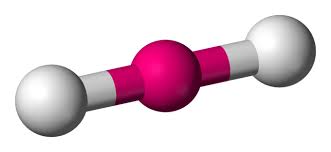
What is the hybridization of a linear molecule?
sp
sp2
sp3
sp3d
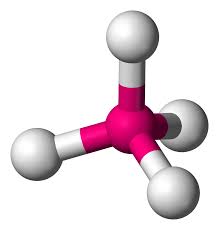
What is the hybridization of this molecule shown.
sp
sp2
sp3
sp4
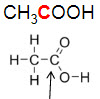
What is the hybridization of the Carbon atom indicated by the arrow?
sp hybridization
sp2 hybridization
sp3 hybridization
dsp3 hybridization
Which of the following images represents a Trigonal Planar molecular geometry?


What is the bond angle for the CH4 molecule?
120°
107°
109.5°
90°

