
 Worksheets
Semester Review #1 Unit 1-4
Total questions: 69
Worksheet time: 2hrs 25mins
Dry ice is solid carbon dioxide, or CO2. Dry ice may be used as a cooling agent and contains two oxygen atoms bonded to a carbon atom. Dry ice is a ___________________ .
pure substance
mixture
Instant coffee is made by dissolving a powder in hot water. Instant coffee is a ___________________ .
pure substance
mixture
Baking soda is the common name for sodium bicarbonate, or NaHCO3. It can be produced through chemical reactions involving carbon dioxide and sodium hydroxide.
pure substance
mixture
Cake batter is a substance that may contain flour, eggs and sugars mixed by hand or with an electric mixer. Cake batter is a ___________________ .
pure substance
mixture
Chalk is a mineral found in rocks. It contains carbon, oxygen and calcium atoms. Chalk is a ___________________ .
element
compound
Nickel has the chemical symbol Ni and atomic number 28. It is a silvery-white metal and cannot be broken down physically or chemically into a more simple substance. Nickel is a ___________________ .
element
compound
The noble gases are a group of six substances with similar properties. They are odorless, colorless gases with low reactivity. They are group 18 on the periodic table. Each noble gas is a(n) _______ .
element
compound
heterogeneous mixture
homogenous mixture/solution
Granite is an igneous rock that contains the minerals quartz, feldspar, mica and others. The exact composition will vary from sample to sample. Granite is a(n) _______ .
element
compound
heterogeneous mixture
homogenous mixture/solution
Mixtures that have the same composition throughout are...
heterogeneous
homogeneous
elements
pure substances
4.5 + 4.32 =
4.5 x 2.34 =
207 + 2 =
Solve, and round using Sig Fig math rules:
12.5-mL + 20.05-mL + 2.69-mL
35 mL
35.2 mL
35.24 mL
35.240 mL
Solve, and round using Sig Fig math rules:
98.7°C - 97.25°C
1 °C
1.4 °C
1.45 °C
1.450 °C

Using correct sig figs, determine the density of an object with a mass of 10.0 grams and a volume of 5.0 mL.
2.00 g/mL
2.0 g/mL
2 g/mL
0.5 g/mL
How many digits past the decimal should you report your answer with?
20.34 + 4.582 +3.2
1
3
2
How would you write the following number using scientific notation?
45,800,000 mL
45.8 ×10⁶
4.58 ×10⁷ mL
4.58 ×10⁷
.458 ×108 mL
How would you write the following number using scientific notation?
0.004506 mL
4.506×10⁻³
4.506 ×10³ mL
4.506 ×10⁻³ mL
4.5 × 10⁻³ mL
Calculate the volume of metal with a mass of 56.7 grams and a density of 4.67 grams per milliliter.
12.1413276231 mL
12.1 mL
12.1
264.789 mLg2
How many significant figures should you report the answer in?
4.583 x 340
4
2
3
6
How many digits past the decimal should you report your answer with?
20.34 + 4.582 +3.2
1
3
2
106.00
0.056
100.5
0.678
0.0005
705000

In a correctly written symbol what would be located in the "Z" position?
number of neutrons
atomic number
number of electrons
mass number
Isotopes of an element have a different number of...
Protons
Neutrons
Electrons
Mass
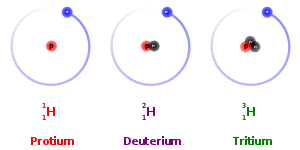

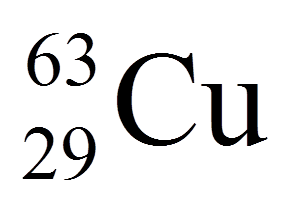
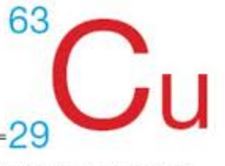
The bottom number in this isotope notation represent
the mass number
the proton number
the element symbol
the neutron number
92235X What is element X
Nobium
Uranium
9 protons and 9 neutrons
Fluorine-18
Fluorine-9
Fluorine-16
Fluorine-18.998
76 protons and 114 neutrons
Osmium-114
Osmium-76
Osmium-190
Osmium-190.23

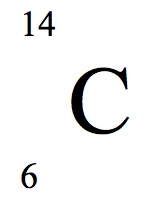
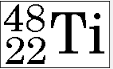


How many neutrons does the isotope have? 89 36Kr
53
36
89
125
If X is the symbol for an element, which of the following two symbols represent isotopes of the same element?
I. 7735X
II. 7733X
III. 8137X
IV. 8135 X
I and II
III and IV
I and IV
I and III
A valence electron is what?
The electron in the outer shell of an atom.
The electron in the inner shell of an atom.
The last electron.
The first electron.
Atoms are electrically neutral when
They have a minimal charge.
They have a balanced number of protons and neutrons.
They have a balanced number of protons and electrons.
They have no valance electrons.
If an electron is removed, an ion becomes
An atom
Positive
Negative
Neutral
If an ion gains an electron, it becomes
Positive
Stable
Atomic
Negative
Cations have what type of charge?
Positive
Negative
An ion has what type of charge?
Negative
Positive
Two objects that are similarly charged will...
attract.
repel.
not experience an electric force.
implode.
A negatively charged object and a positively charged object will...
attract.
repel.
not experience an electric force.
implode.
Metal atoms are most likely to form...
positively charged cations.
negatively charged anions.
neutral molecules.
bations.
Non-Metal atoms are most likely to form...
positively charged cations.
negatively charged anions.
neutral molecules.
bations.
Atoms from family 2A on the Periodic Table are likely to form ions of what charge?
+1
+2
0
−1
−2
Atoms from family 6A on the Periodic Table are likely to form ions of what charge?
+1
+2
0
−1
−2
Valence electrons are those that are
closest to the nucleus.
freely floating between atoms.
in the outermost energy level of the atom.
unable to become involved in chemical bonding.
Oxygen has six valence electrons. When forming an ion, oxygen will
lose six electrons and have a charge of +6.
lose six electrons and have a charge of -6.
gain two electrons and have a charge is +2.
gain two electrons and have a charge of -2.
Look at the periodic table. What should be the charge on the ion formed by calcium?
+1
+2
-1
-2
Most elements are most stable when their outermost energy levels contain ________ electrons.
2
6
8
18
Which of the following tend to gain electrons when forming ions?
metalloids
metals
nonmetals
cations
Which of the following groups on the Periodic Table will only form ions with positive charges?
Group 2
Group 15
Group 17
Group 18
The valence electron can
Cannot interact in a chemical reaction.
Can interact in a chemical reaction.


