
 Worksheets
States of Matter & Phase Changes
Total questions: 70
Worksheet time: 1hrs 11mins
The temperature and pressure conditions at which the solid, liquid, and gas phases of a substance exist at the same time is called the
Critical point
Triple point
Melting point
Boiling point

Which letter on the diagram represents the triple point?
A
B
C
D

What phase change occurs from F to E?
Sublimation
Deposition
Melting
Condensation
What phase change occurs from C to D?
Condensation
Vaporization
Melting
Sublimation
What phase change occurs from E to C?
Sublimation
Freezing
Melting
Vaporization
What phase would this substance be in at 1 atm of pressure and 80°C?
Solid
Liquid
Gas
Choose ALL the exothermic phase changes
condensation
boiling
freezing
vaporization

State of matter that takes the shape of it's container and has a definite volume.
Solid state
Liquid state
Gas state
Plasma state

State of matter that can fill containers with no fixed shape or volume.
Solid state
Liquid state
Gas state
Plasma state

State of matter in which materials have a definite shape and volume.
Solid state
Liquid state
Gas state
Plasma state
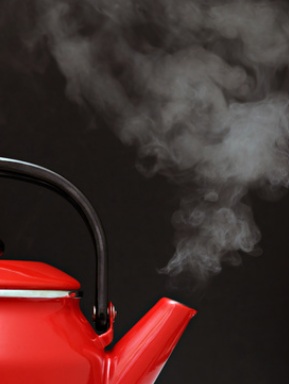
What change of state is taking place in this photograph?
Condensation
Freezing
Vaporization
Melting

What change of state is taking place in this photograph?
Condensation
Freezing
Vaporization
Melting

The diagram shows the changes in state of water (H2O). What is the process Z called?
Condensation
Freezing
Vaporization
Melting

Which of the following is a property of gases?
They have a definite volume.
They are not compressible.
They have no definite shape.
They have no ability to flow.

The diagram shows the way the particles of a solid occupy space. Select the property of a solid that is consistent with this micro-view.
No define shape
Cannot be compressed
No definite volume

Which is NOT a property of a solid?
They do not flow.
Definite volume.
No definite shape.
They are incompressible.

Which state of matter is represented in the following diagram?
Liquid
Liquid and gas
Gas
Solid

Which of the following states is correct?
Gases cannot be compressed.
Solids are easily compressed.
Gases are easier to compress than solids.
Liquids cannot be compressed or expanded.

Which change of state occurs when particles in a solid begin to move slowly past each other?
Melting
Freezing
Condensing
Vaporizing
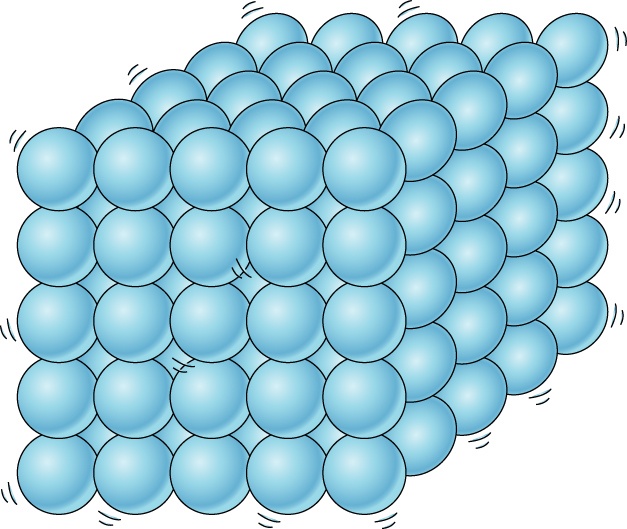
What state of matter?
Solid
Liquid
Gas
Plasma!!!
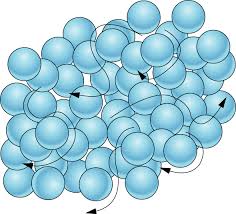
What state of matter?
Solid
Liquid
Gas
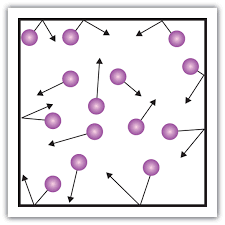
What state of matter?
Solid
Liquid
Gas
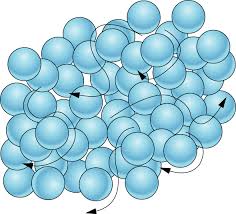
Which is not true about the liquid state of matter?
The liquid state has a definite volume and a definite shape.
The liquid state takes on the shape of its container.
The liquid state has a definite volume and an indefinite shape.
The particles in a liquid can easily move past each other.
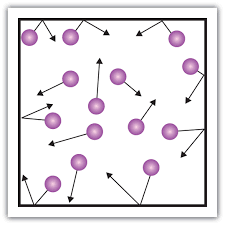
A gas typically consists of:
low energy particles that experience high attractive forces between them.
low energy particles that experience no attractive forces between them.
high energy particles that experience high attractive forces between them.
high energy particles that experience little attractive force between them
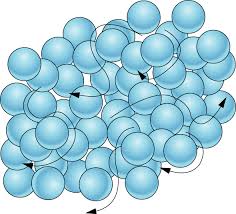
Which of the following statements is true regarding the particle structure of liquids? Particles of a liquid are:
very close together, so the liquid cannot easily change its shape.
fast-moving, so they fill the volume of their container.
relatively close together, so they cannot be easily compressed.
very far apart, so they have plenty of room to move around.
The state of matter in which a material has a definite volume and a definite shape is the:
Solid
Liquid
Gas
Plasma
Which process could cause a material to change state from gas to liquid?
Adding heat
Adding energy
Removing particles
Removing energy
If I add heat to a solid, how will the motion of the particles be affected?
They will move slower
They will stop moving
They will move faster
They will move to a different container
How can you stop the movement of particles?
Increase the temperature
Decrease the temperature
You can't.
Hold them still with your hands.

Which form of matter has a definite shape and takes up space (has definite volume)?
liquid
solid
gas
clay

Plasma can be found in which of the following
Auroras
Lightening
LED light bulbs
Stars
Moons
A plasma can be made in a laboratory by
cooling a gas to very low temperatures
cooling a gas and reducing the pressure
heating a gas to extremely hot temperatures
heating a liquid to the point it turns into a gas
In a plasma the electrons are no longer associated with a particular nucleus.
True
False


A Mixture is defined as
A combination of two or more substances that are not chemically combined
A combination of compounds that are chemically bonded
2 or more elements chemically bonded
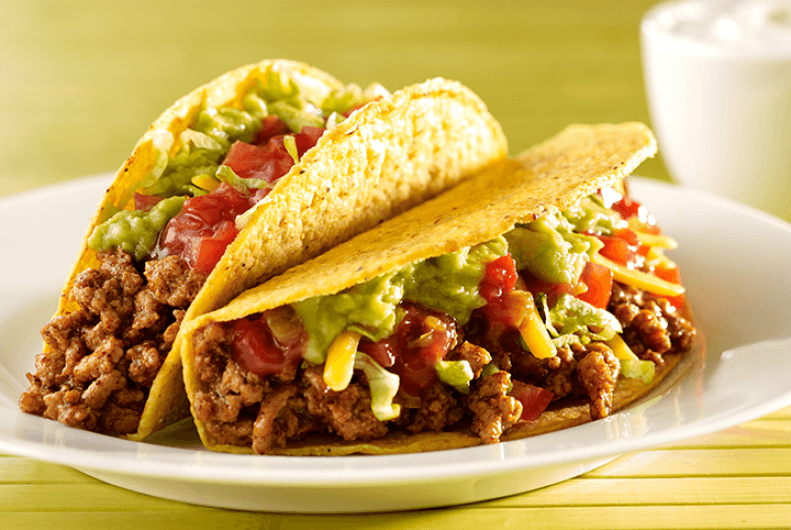
A Taco is an example of a
Homogeneous Mixture
Heterogeneous Mixture
Freezing
endothermic
exothermic
Condensation
endothermic
exothermic
Which of the physical states of water contains particles with the lowest kinetic energy?
Water
Ice
Steam
Melting ice
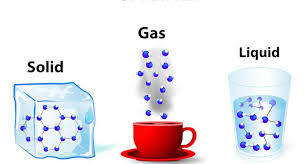
Deposition is the phase change in which a gas turns straight into a ____________ without first turning into a liquid.
liquid
gas
solid
What phase change is occurring when substances like dry ice turn straight from a solid to a gas?
sublimation
deposition
evaporation
freezing
Match the following phase changes
Melting
Solid -> Liquid
Evaporation
Liquid -> Gas
Deposition
Gas -> Solid
Match the following phase changes
Freezing
Liquid -> Solid
Condensation
Gas -> Liquid
Sublimation
Solid -> Gas
Which phase changes are exothermic?
melting
freezing
vaporization
condensation
In an endothermic reaction, energy is _________.
absorbed
released
Sublimation is an __________ process
Endothermic
Exothermic
Condensation
Endothermic
Exothermic
Boiling
Endothermic
Exothermic
Melting
Endothermic
Exothermic
Deposition
Endothermic
Exothermic
Which two phases changes take away energy (heat exits)?
Freezing, Melting
Condensation, Evaporation
Freezing, Condensation
Melting, Evaporation
Endothermic is when heat is (a) ; exothermic is when heat is (b)

Three exothermic phase changes are (a) , (b) , and (c) .

Three endothermic phase changes are (a) , (b) , and (c) .

