wayground logo

Free Printable Worksheets

NEW

Font size

S
M
L
XL
Worksheets

Unit 1 & 2 Practice

Total questions: 65

Worksheet time: 2hrs 10mins

Name
Class
Date
1.
Convert 300 meters to centimeters:
a)
3000 cm
b)
0.3 cm
c)
30,000 cm
d)
3 cn
2.
1000 grams = _____ kilograms
a)
0.0001
b)
1,000,000
c)
10
d)
1
3.
Which lists metric units, in order, from smallest to largest?
a)
milligram, centigram, gram
b)
kilogram, gram, centigram
c)
decagram, hectogram, milligram
d)
kilogram, hectogram, decagram
4.
The appropriate abbreviation of centimeter is..
a)
cm
b)
Cm
c)
cM
d)
CM
5.
7,000 g = ____ kg
a)
70
b)
700
c)
7
d)
0.07
6.
It is a measure of how close measurements come to each other when they are made in the same way
a)
Accuracy
b)
Precision
c)
Error
d)
Extrapolation
7.

How close a measurement is to the accepted value is called..

a)

Accuracy

b)

Precision

c)

Significant

d)

Estimate

8.
This bullseye demonstrates...
a)
High Accuracy & High Precision
b)
High Accuracy & Low Precision
c)
Low Accuracy & High Precision
d)
Low Accuracy & Low Precision
9.
The students measured length during a science experiement, they got 12 cm. But the actual measurement was 14.25 cm. What was the percent error?
a)
15.79%
b)
18.75%
c)
2.25%
d)
18%
10.
What two types of measurements make up DENSITY
a)
Mass and Volume
b)
Temperature and Mass
c)
Grams and Centimeters
d)
Volume and Weight
11.
Jack has a rock. The rock has a mass of 14g and a volume of 2cm3. What is the density of the rock?
a)
7 mL
b)
7 g/cm3
c)
28 g/cm3
d)
1/7 g/cm3
12.
During Mr. Nye's science class, students were expected to identify various substances using physical properties they could easily measure. Mr. Nye gave each of the five groups a green, metal cube and asked them to identify what the cube was made of. Matt's cube, after 5 trials, had an average density of 7.40 g/cm3 . His group's cube was made of
a)
aluminum
b)
gold
c)
nickel
d)
zinc
13.
How many significant figures does the following number have: 0.998005
a)
9
b)
10
c)
6
d)
5
14.
How many significant figures does the following number have: 0.002040
a)
6
b)
4
c)
3
d)
2
15.
How many significant figures does the following number have: 100.00210
a)
7
b)
5
c)
10
d)
8
16.
Round 0.010229 to four sig figs
a)
1022
b)
1023
c)
0.01023
d)
0.01022
17.
Round 1047.78 to three sig figs
a)
104
b)
105
c)
1050
d)
1050.00
18.
Determine the number of Significant Figures in 506020-km.
a)
5
b)
4
c)
3
d)
2
19.
calculate the following to the correct number of sig figs.
13.2017/ 17.10
a)
.772
b)
.7720
c)
.772030
d)
.77
20.
calculate the following to the correct number of sig figs.
32.451 - 21.5
a)
11.0
b)
10.951
c)
11
d)
10.95
21.

Sweet Tea, everything is mixed evenly and looks the same.

a)

Heterogeneous Mixture

b)

Homogeneous Mixture

22.

NaCl

a)

Element

b)

Compound

c)

Mixture

23.

H2

a)

Element

b)

Compound

c)

Mixture

24.

H2 + Mg

a)

Element

b)

Compound

c)

Mixture

25.

MgCl2

a)

Element

b)

Compound

c)

Mixture

26.

Mg

a)

Element

b)

Compound

c)

Mixture

27.

H2O

a)

Element

b)

Compound

c)

Mixture

28.
a)

Element

b)

Compound

c)

Mixture

29.
a)

Element

b)

Compound

c)

Mixture

30.
a)

Element

b)

Compound

c)

Mixture

31.
a)

Element

b)

Compound

c)

Mixture

32.

Which of the following is matched incorrectly.

a)

Air: compound

b)

Steel alloy: homogeneous mixture

c)

Glucose (C6H12O6): compound

d)

Cookies & Cream: heterogenous mixture

33.

What type of matter has an non-uniform existence?

a)

pure substance

b)

homogeneous mixture

c)

heterogenous mixture

d)

All the above

34.
a)
element
b)
compound
c)
mixture of elements
d)
mixture of compounds and elements
35.
a)
element
b)
compound
c)
mixture of elements
d)
mixture of compounds
36.
a)
element
b)
compound
c)
mixture of elements
d)
mixture of compounds
37.
a)
element
b)
compound
c)
mixture of elements and compounds
d)
mixture of compounds
38.
a)
element
b)
compound
c)
mixture of elements
d)
mixture of compounds
39.
Which of the following represents an element?
a)
H2O
b)
H2
c)
NaCl
d)
CaCO3
40.

Which of the following is not a compound?

a)

HCl

b)

Cl2

c)

NaCl

d)

CO2

41.

Two atoms of the same element bonded together

a)

monatomic

b)

element number

c)

diatomic

d)

compound

42.

Is a classification of matter that includes both elements and compounds

a)

pure substances

b)

elements

c)

compound

d)

mixtures

43.

What are the seven diatomic elements?

a)

H2, Cl2, Br2, O2, N2, I2, F2

b)

H2, Cl2, I2, F2, Hg2, Br2, Fe2

c)

H2, Cu2, Ni2, B2, O2, I2, Fe2

44.

Is Fe2 a diatomic element?

a)

Yes

b)

No

45.

Is O2 a diatomic element?

a)

Yes

b)

No

46.
Classify the sample
a)
Pure substance
b)
Mixture
47.
Classify the sample
a)
Pure Substance
b)
Mixture of Elements
c)
Mixture of Compounds
48.

Classify the Sample.

a)

Pure Substance

b)

Mixture of Elements

c)

Mixture of Compounds

d)

Mixture of Elements and Compounds

49.
Which chemical formula could be represented by this sample?
a)
NaCl
b)
H2
c)
C6H12O6
d)
Cu
50.
Ice melting
a)
Chemical Change
b)
Physical Change
51.
Water freezing
a)
Chemical Change
b)
Physical Change
52.

A scientist spilled a few drops of dilute hydrochloric acid (HCl) on a lab table. For safety purposes, the scientist sprinkled some baking soda ( NaHCO3NaHCO_3  ) onto the spill. Which observation would provide the best evidence that a chemical reaction occured?

a)

The baking soda and hydrochloric acid combined, and bubbles formed. 

b)

The baking soda absorbed the hydrochloric acid. 

c)

Some of the baking soda dissolved in the hydochloric acid.

d)

The hydrochloric acid evaporated, leaving only the baking soda. 

53.

A student combines two clear, colorless solutions shown here. When combined, the temperature changed from  25°25\degree  to  23°23\degree  and a white substance rapidly formed and settled at the bottom of the container. What most likely happened to produce these results?

a)

One of the original compounds came out of solution

b)

The solutions reacted chemically

c)

Some of the water froze into ice crystals

d)

Rapid evaporation of water occured, leaving a solid
54.
Evidence of a physical change.
a)
New substance
b)
Shape Change
c)
Light produced
d)
Gas released.
55.
Evidence of Chemical Change.
a)
New Substance 
b)
Size change
c)
State change
d)
Mixture 
56.

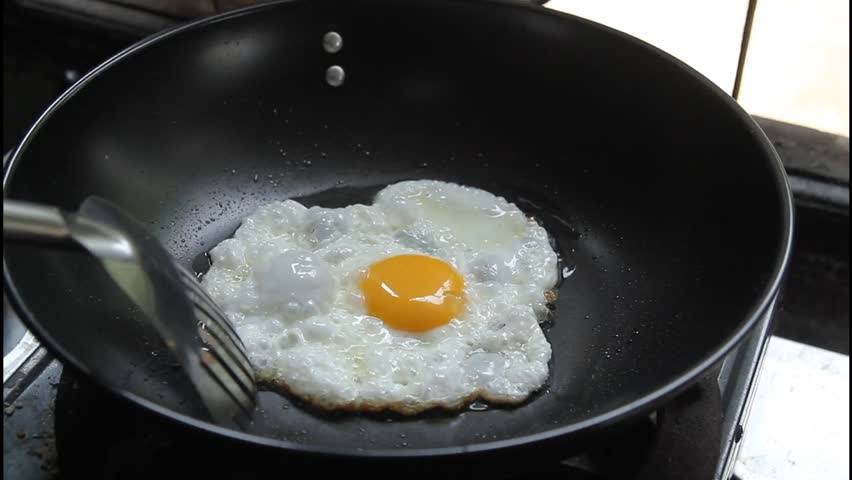
What kind of change is frying an egg?
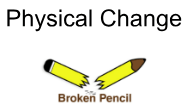
a)
b)
57.

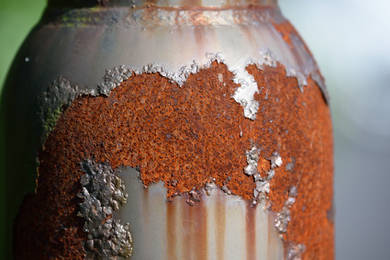
What kind of change is metal rusting?

a)
b)
58.

Which one of the following techniques would best be used to separate soil and water?

a)

cannot be done

b)

distillation

c)

Filtration

d)

Chromatography

59.

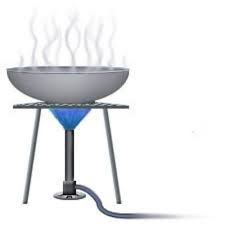
Name the separation technique shown in the diagram.

a)

evaporation

b)

distillation

c)

filtration

60.

The separation technique that involves heating a solution until the liquid changes into a gaseous state, leaving behind a solid is known as

a)

distillation

b)

evaporation

c)

filtration

d)

chromatography

61.

What mixture could you use this tool to best separate that mixture?

a)

Sugar and Salt

b)

Sand and rocks

c)

Apples and grapes

62.
What is a heterogeneous Mixture?
a)
Something that is not uniform all around.
b)
Something that is uniform all around.
c)
Suspensions
d)
Colloids
63.

The air around us is a mixture of gases.

a)

True

b)

False

64.
Lemonade is a special mixture called a 
a)
substance
b)
solution
c)
plasma
d)
ingredient
65.

Ink can be separated by a method of -----------------------------------------------

a)

distillation

b)

filtration

c)

chromatography

d)

sedimentation