wayground logo

Free Printable Worksheets

Font size

S
M
L
XL
Worksheets

Africa History Review

Total questions: 39

Worksheet time: 37mins

Name
Class
Date
1.
How was F. W. de Klerk related to the apartheid movement?

a)
He started the apartheid in South Africa
b)
He helped negotiate the end of apartheid.
c)
He used military force to continue apartheid
d)
He was the first governor elected after apartheid.
2.
What role did Nelson Mandela and F.W. De Klerk play in the evolution of Apartheid in South Africa?
a)
They worked to abolish apartheid.
b)
They created apartheid.
c)
They worked to maintain apartheid.
d)
They enhanced apartheid.
3.
The main goal of Pan-Africanism was to
a)
End any support for the African National Congress
b)
Immediately overthrow all of the ruling governments in Africa.
c)
Get all Africans to become members of the United Nations.

d)
Get Africans to think of themselves as one people and work together
4.
Why did African nations face so many problems following their successful independence movements?
a)
World War II prevented many countries from giving aid
b)
Many countries continued to ship slaves across the Atlantic Ocean
c)
Political and ethnic rivalries within the countries emerged after independence
d)
The United Nations consistently waged war against rulers who they considered war like
5.
How did nationalism affect countries like South Africa, Nigeria, and Kenya in the 1900s?
a)
It led to greater demand for independence.
b)
Nationalism reduced conflicts within these countries.
c)
It prevented these countries from gaining independence.
d)
European countries used it to further their colonization of these countries.
6.
What did the African nationalist movements fight for?
a)
wealth
b)
colonies
c)
independence
d)
new friends
7.
What happened in many African nations soon after they won independence?
a)
Ethnic divisions led to civil wars.
b)
Drought produced widespread famine.
c)
Europeans seized control of the new governments.
d)
Democracy was established, and economic goals were reached.
8.
Following the Berlin Conference, which of the following was true of Africa?
a)
Almost all of Africa was independent.
b)
Nearly every African colony was in revolt.
c)
European nations controlled almost all of Africa.
d)
Most Africans lived in cities.
9.
Why did the Europeans take the land from the Africans with so much ease?
a)
The Africans never fought back.
b)
The Europeans had technology, machinery and weapons that the Africans did not have.
c)
The Europeans paid the Africans lots of money for the land.
d)
The Africans thought they were getting rewarded from the Europeans.
10.
The following cartoon shows what aspect of African history?
a)
The Pan-Africa movement as the people around Africa are seeking to bring pride to Africa.
b)
Apartheid as the picture displays the impacts of apartheid.
c)
The Scramble for Africa among the European countries.
d)
The Slave Trade that impacted the African people
11.
The way European countries partitioned Africa into colonies has had what modern day effect on Africa?
a)
increased conflict
b)
increased cooperation
c)
improved infrastructure
d)
improved use of resources
12.

How does the image represent apartheid?

a)

Apartheid was the creation of new borders by colonizers.

b)

Apartheid was the racial segregation of blacks and whites in South Africa.

c)

Apartheid was the nationalist movement to unite African people regardless of location.

d)

Apartheid used artificial borders to combine Arabs in the the North and Black Africans in the South.

13.

Why was the system of apartheid set up in South Africa?

a)

to give all people of South Africa the right to vote

b)

to create industrial jobs for rural South Africans

c)

to separate the races and discriminate against non-whites

d)

to create an education system that would modernize the country

14.

Why has conflict and civil war occurred in many African nations after independence?

a)

colonial powers tried to re-establish colonies

b)

many leaders in Africa supported Communism

c)

some African leaders tried to conquer all of Africa

d)

European powers set artificial political boudaries

15.
How did the Europeans “partition” Africa?
a)
At the Berlin Conference in 1884 the European countries divided Africa for natural resources.
b)
At the Paris Conference in 1886 the European countries divided Africa for natural resources.
c)
European countries just showed up with their military and took over.
d)
Europe never took anything from Africa.
16.
This movement had 2 primary goals:
1.  To unite people of African descent (still in Africa and around the world), reminding them that they have a common culture and history, so they should work to the same goals.
2.  To end European Colonization in Africa (get all African nations their own political freedom.)
a)
Pan-Africanism
b)
Slavery
c)
Berlin Conference
d)
Partitioning
17.

What were the roles of Nelson Mandela and F.W. de Klerk in the evolution of apartheid in South Africa?

a)

They created apartheid.

b)

They enhanced apartheid.

c)

They worked to abolish apartheid

d)

They helped maintain apartheid

18.

How did the apartheid laws impact people living in South Africa?

a)

They restricted where blacks could live, work, go to the bathroom, sit, travel, eat, etc. Blacks could not participate in government.

b)

The benefitted all people living in South Africa

c)

They created a communist lifestyle in South Africa placing everyone on an equal playing field.

d)

They promoted democratic government, giving all people the right to vote and participate in government.

19.

How did the international community help in ending apartheid in South Africa?

a)

they sent military troops to force and end to apartheid

b)

they sent aid and relief to non-whites in S. Africa during apartheid

c)

they forced the S. African governments to appoint Nelson Mandela as president

d)

they enforced embargoes on S. Africa to influence a change

20.

What caused there to be so much conflict and civil war in Africa?

a)

European countries invaded all nations and forced them to fight.

b)

European countries ignored tribal, ethnic and religious differences when they were creating boundaries in Africa.

c)

African countries were very divided and had conflict and civil war long before European countries colonized the area.

d)

Africa never had conflict or civil war.

21.

Why was the Pan African movement so important?

a)

it forced African countries to become members of the United Nations

b)

it created an ethnic division that led to civil war in many African countries

c)

it granted African countries sovereignty from their European colonizers

d)

it allowed unity to exist among Africans and ignited nationalist movements

22.

Which African country is this?

a)

Democratic Republic of the Congo

b)

Sudan

c)

Angola

d)

Chad

23.

Which African country is this?

a)

Libya

b)

Ethiopia

c)

Egypt

d)

Algeria

24.

Which African country is this?

a)

Ethiopia

b)

Egypt

c)

Libya

d)

Chad

25.

Which African country is this?

a)

Egypt

b)

Ethiopia

c)

Somalia

d)

Sudan

26.

Which African country is this?

a)

Mozambique

b)

Tanzania

c)

Somalia

d)

Kenya

27.

Which African country is this?

a)

Madagascar

b)

Falkland Islands

c)

Canary Islands

d)

Mozambique

28.

Which African country is this?

a)

Niger

b)

Angola

c)

Chad

d)

Nigeria

29.

Which African country is this?

a)

Somalia

b)

Senegal

c)

South Africa

d)

Ethiopia

30.

Which African country is this?

a)

Botswana

b)

Mozambique

c)

South Africa

d)

Zimbabwe

31.

Which African country is this?

a)

Sudan

b)

Somalia

c)

Chad

d)

Democratic Republic of the Congo

32.
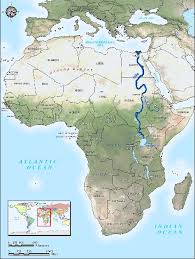
What river is highlighted? This is the longest river on earth from North to South. 
a)
Congo
b)
Zambezi
c)
Nile
d)
Amazon
33.
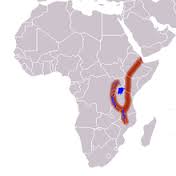
What geographic feature is highlighted? It is a ridge & plate boundary with lots of volcanic activity beneath its surface. Millions of years from now, it will split the continent in half.
a)
Sahel
b)
Transition Zone
c)
Ring of Fire
d)
Great Rift Valley
34.
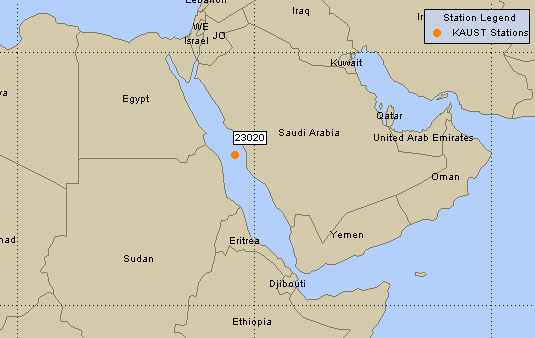
What body of water is shown on the map? It is narrow and separates Africa from the Arabian peninsula (Asia).
a)
Straits of Comoros
b)
Red Sea
c)
Dead Sea
d)
Mediterranean Sea
35.
What geographic feature is shown on the map? It marks the transition between Sahara Desert and the more hospitable savanna region.
a)
Great Rift Valley
b)
step
c)
Sahel
d)
Atlas Mountains
36.
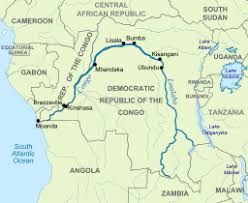
What river is highlighted? It flows through heavily forested regions in the center of the African continent.
a)
Congo
b)
Zambezi
c)
Kasai
d)
Nile
37.
What is the main geographic feature of Central Africa?
a)
The Congo River Basin & rainforest
b)
Nile River Valley
c)
Kalahari Desert
d)
Sahel region
38.
How do the majority of people in a typical landlocked country on the steppes of Africa, Chad, make their living?
a)
herding cattle
b)
subsistence farming
c)
fishing
d)
tourism
39.
Which country depends on hydro-electric power from the Congo River?
a)
The Democratic Republic of the Congo

b)
Cameroon
c)
Nigeria
d)
Angola