
NEW
Font size
S
M
L
XL
 Worksheets
SOUND
Total questions: 30
Worksheet time: 17mins
Name
Class
Date
1.
Which of the following scenarios would result in sound being produced?
a)
Taking a nap
b)
Sharpening your pencil
c)
Looking out a window
d)
Thinking about your homework
2.
Which of the following scenarios shows an increase in volume?
a)
Plucking a rubber band, tightening it, and then plucking the rubber band again
b)
Plucking different strings on a guitar
c)
Turning a radio up louder to hear your favorite song
d)
Singing a song that contains high and low notes
3.
__________________________ is the back-and-forth motion of an object.
a)
vibration
b)
sound wave
c)
frequency
d)
amplitude
4.
_____________________________ is an area of particles that moves outward in all directions from a vibrating object.
a)
frequency
b)
sound wave
c)
pitch
d)
intensity
5.
______________________________ is the highness or lowness of a sound as determined by its vibration.
a)
vibration
b)
sound wave
c)
volume
d)
pitch
6.
__________________________ is the number of times a sound wave vibrates in a given time.
a)
intensity
b)
frequency
c)
vibration
d)
amplitude
7.
__________________________ is the distance from the top of one wave to the top of the next wave.
a)
frequency
b)
pitch
c)
wavelength
d)
crest
8.
Sound will travel fastest through which of the following forms of matter?
a)
water
b)
air
c)
wall
d)
coffee
9.
Sound will travel slowest through which of the following forms of matter?
a)
milk
b)
desk
c)
air
d)
door
10.
How are sound and light similar?
a)
Both are forms of energy.
b)
Sound and light waves can curve around solid objects.
c)
Both can be transformed into heat energy.
d)
Sound and light are made up of vibrations.
11.
What effect is produced by plucking a thin rubber band that has been pulled tightly?
a)
The rubber band will vibrate slower and produced a lower pitch.
b)
The sound you hear will increase in volume if the rubber band is pulled tightly.
c)
Sound waves will be absorbed by your hand when you pluck the rubber band.
d)
The rubber band will vibrate faster and produce a higher pitch.
12.
Which object will vibrate faster if tapped with a metal spoon?
a)
A metal can
b)
A glass jar
c)
A plastic cup
d)
A wooden bowl
13.
Why is sound able to travel faster through a solid than a gas?
a)
Gas molecules are packed tightly.
b)
Sound does not travel faster through a solid than a gas.
c)
Solid molecules are packed tightly.
d)
Gas molecules move slowly.
14.
When Mr. Sinyard yells his name in a cave, the sound reflects off the walls of the cave and travels back to his ears. What is this called?
a)
refraction
b)
amplitude
c)
pitch
d)
echo
15.
__________ is the loudness or softness of a sound.
(Hint: Think about our sound song.)
(Hint: Think about our sound song.)
a)
Echo
b)
Volume
c)
Pitch
d)
Vibration
16.
__________ means to move back and forth quickly.
a)
Pitch
b)
Amplitude
c)
Vibration
d)
Echo
17.
Sound waves travel the FASTEST through _____________.
a)
gases
b)
liquids
c)
solids
18.
If a sound has a high amplitude then it also has a ____________!!!
a)
fast echo
b)
slow pitch
c)
high volume
d)
low volume
19.
Sound waves travel the SLOWEST through _____________.
a)
gases
b)
solids
c)
liquids
20.

Sound is a form of?
a)
energy
b)
pitch
c)
volume
21.
Sound does not travel in space because
a)
Distance is too far away.
b)
There is no matter in space.
c)
It is too dark.
d)
Space has planets.
22.
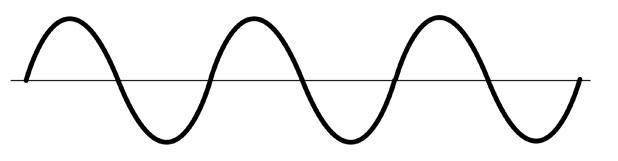
What is frequency?
a)
the number of vibrations per second
b)
how high or low a sound is
c)
the loudness or softness of a sound
d)
the back and forth movement of matter
23.
Why do we see lightning before we hear the thunder?
a)
Lightning is an illusion.
b)
Light travels faster than sound
c)
Sound travels faster than light.
24.
What happens to our hearing if we listen to loud noises all the time?
a)
we appreciate music better
b)
we get a ringing in our ears
c)
we start to experience hearing loss
25.
The volume of a sound is measured in units called ________
a)
decibels
b)
hertz
c)
frequency
d)
amplitude
26.
Sound travels through the air as waves.
a)
True
b)
False
27.
Matter that carries sound waves is called a _________
a)
particle
b)
object
c)
medium
d)
matter
28.
The ______ of a sound depends on the medium through which it's moving.
a)
pitch
b)
vibration
c)
speed
d)
loudness
29.
Two identical strings are the same length. One of the strings is pulled tightly and the other string is more loose.
Identify which string will produce a higher-pitched sound when the strings are plucked
Identify which string will produce a higher-pitched sound when the strings are plucked
a)
the tight string
b)
the loose string
30.
Sound waves are all of the following EXCEPT
a)
it requires a medium
b)
high and low
c)
soft or loud
d)
only high frequency
Reset

