
 Worksheets
Chemistry Part One (re:2026) Use with Periodic Table
Total questions: 44
Worksheet time: 44mins
The Periodic Table is arranged how?
By element's discovery
By Atomic Number
Alphabetically
By Physical Properties
What is the difference between Atomic Number and Atomic Mass
Atomic Number is the number protons and Atomic Mass is the average of isotopes
Atomic Number is the average of isotopes and Atomic Mass is the number of protons
Atomic Number is the number of electrons and Atomic Mass is the actual mass of an atom
Atomic Number is the order of discovery and Atomic Mass is the number of protons
Which side of the Periodic Table is most reactive?
Left side
Right side
Top half
Bottom half

Of the four atoms below, which two would be in the same Group?
1 & 2
1 & 4
1 & 3
2 & 3

Here is a portion of the periodic table. Which two elements are most likely to have similar physical properties?
copper and zinc
copper and silver
cadmium and indium
gallium and cadmium
Which two elements are in the same Period? (Use your Periodic Table)
Lithium and Magnesium
Boron and Carbon
Potassium and Sodium
Zinc and Nitrogen
An atom has 18 protons and 8 valance electrons. Which statement would best identify this
element? (Use your Periodic Table)
The element is highly reactive with eight electrons in its outer shell
The element has an atomic mass of 18
The element is “happy” or stable because it outer energy level is filled
The element is a metal
What are the three main classifications of elements on a Periodic Table?
Metals, Nonmetals, Metalloids
Solid, Liquid, Gas
Ductile, Malleable, Brittle
Positive charge, Negative charge, No charge
What is the smallest unit of matter that makes up a substance?
mass
atom
carbon
compound
What are the three subatomic parts of an atom
Neurons, plasma, electrons
Neutrons, protons, quarks
Protons, neutrons, plasma
Electrons, protons, neutrons
Protons have what kind of charge?
Positive Charge
No Charge
Negative Charge
Electrons have what kind of charge?
Positive Charge
No Charge
Negative Charge
Neutrons have what kind of charge?
Positive Charge
No Charge
Negative Charge
An atom in its natural state has what kind of charge?
Positive Charge
No Charge
Negative Charge
What is at the center of every atom?
An electron
A compound
A molecule
A nucleus
Which two subatomic particles make up the nucleus of an atom?
Protons and Electrons
Protons and Neutrons
Molecules and Compounds
Neutrons and Electrons

What is the atomic mass of Neon?
10
20
10.18
9.82


Number of electrons

What is the atomic mass of Gold?
79
197
117
275

How many periods are on the Periodic Table?
6
7
9
5
How may groups are on the Periodic Table?
8
7
18
9
What does the group number of the Main Group elements represent?
The number of energy levels or electron shells
The number of valence electrons
The number of properties each element has
The total number of electrons
What does the period number represent on the Periodic Table?
The number of energy levels or electron shells
The number of chemical properties each element has in that period
the number of valence electrons
The total number of electrons
In order for anything to be called matter they must have two physical properties
height and weight
length and volume
mass and volume
density and volume
What are valence electrons?
The total number of electrons around the nucleus
The electrons in the outer energy level or electron shell
The electrons closest to the nucleus
The electrons that give the element mass
What are energy levels or electron shells?
The energy that give elements color
The levels that give elements their common properties
The way atoms power up
The number of electron rings or orbits around the nucleus
Identify the element that is in Period 4 Group 2 (Use your Periodic Table)
Potassium
Calcium
Magnesium
Sodium
Define an Element
Made up of two or more different kinds of atoms
Made up of two or more atoms that can be either the same or different
Made up of all the same kind of atoms
Has a definite and constant composition so you can take a sample anywhere and get the same chemical composition
Define a Compound
Made up of two or more different kinds of atoms
Made up of two or more atoms that can be either the same or different
Made up of all the same kind of atoms
Has a definite and constant composition so you can take a sample anywhere and get the same chemical composition
Define a Molecule
Made up of two or more different kinds of atoms
Made up of two or more atoms that can be either the same or different
Made up of all the same kind of atoms
Has a definite and constant composition so you can take a sample anywhere and get the same chemical composition

Identify this element (Use your Periodic Table)
(a)
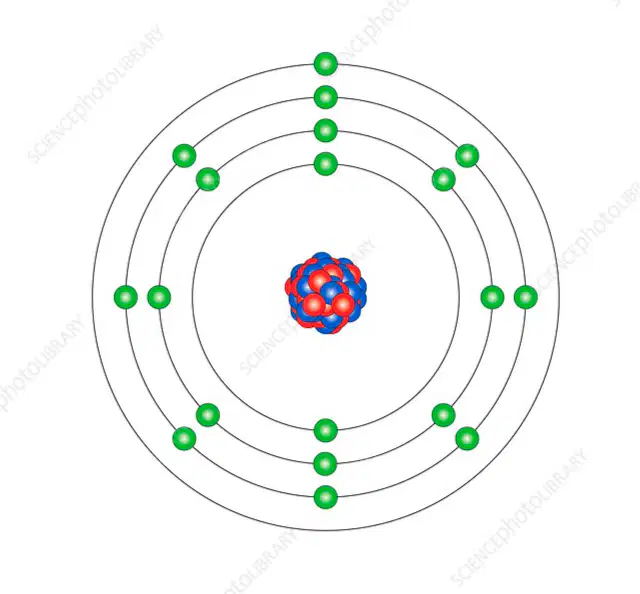
Identify this element (Use Your Periodic Table)
(a)

This is an example of
molecules
compound
pure substance
an element
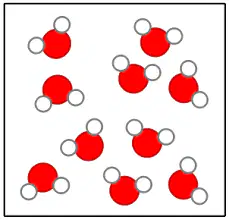
This is an example of
(check all that applies)
molecules
compound
an element

This is an example of
molecules
compound
an element
What determines an element's identity?
Number of Electrons
Number of Neutrons
Number of Protons
Number of Isotopes
Why is Group 18 so special?
(a)

How many atoms total are there in this molecule of
10
9
6
8

