wayground logo

Free Printable Worksheets

NEW

Font size

S
M
L
XL
Worksheets

Chemistry Semester 1 Review

Total questions: 75

Worksheet time: 3hrs 30mins

Name
Class
Date
1.
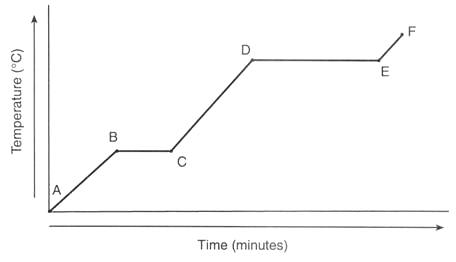
What line segment represents only the solid state?
a)
A-B
b)
B-C
c)
C-D
d)
D-E
2.
Which process takes the longest to occur?
a)
melting
b)
boiling
c)
freezing
d)
heating the solid
3.
What state(s) of matter are present at D-E?
a)
Solid-liquid
b)
Liquid
c)
Liquid-gas
d)
Gas-Solid
4.
Between which points is the temperature of the substance remaining constant?
a)
A-B only. 
b)
A-B, C-D, E-F
c)
B-C only. 
d)
B-C, D-E
5.
Between which points is the temperature of the substance increasing?
a)
A-B only. 
b)
A-B, C-D, E-F
c)
B-C only. 
d)
B-C, D-E
6.
Between which points is the substance changing state?
a)
A-B only. 
b)
A-B, C-D, E-F
c)
B-C only. 
d)
B-C, D-E
7.
The phase change from water vapor to liquid water is known as...
a)
evaporation
b)
precipitation
c)
condensation
d)
sublimation
8.
Change from Gas to Solid is called........
a)
Sublimation
b)
Deposition
c)
Fusion
d)
condensation
9.
During a phase change what happens to temperature?
a)
it increases
b)
it decreases
c)
depends; if being heated it increases, if being cooled it decreases
d)
stays constant
10.

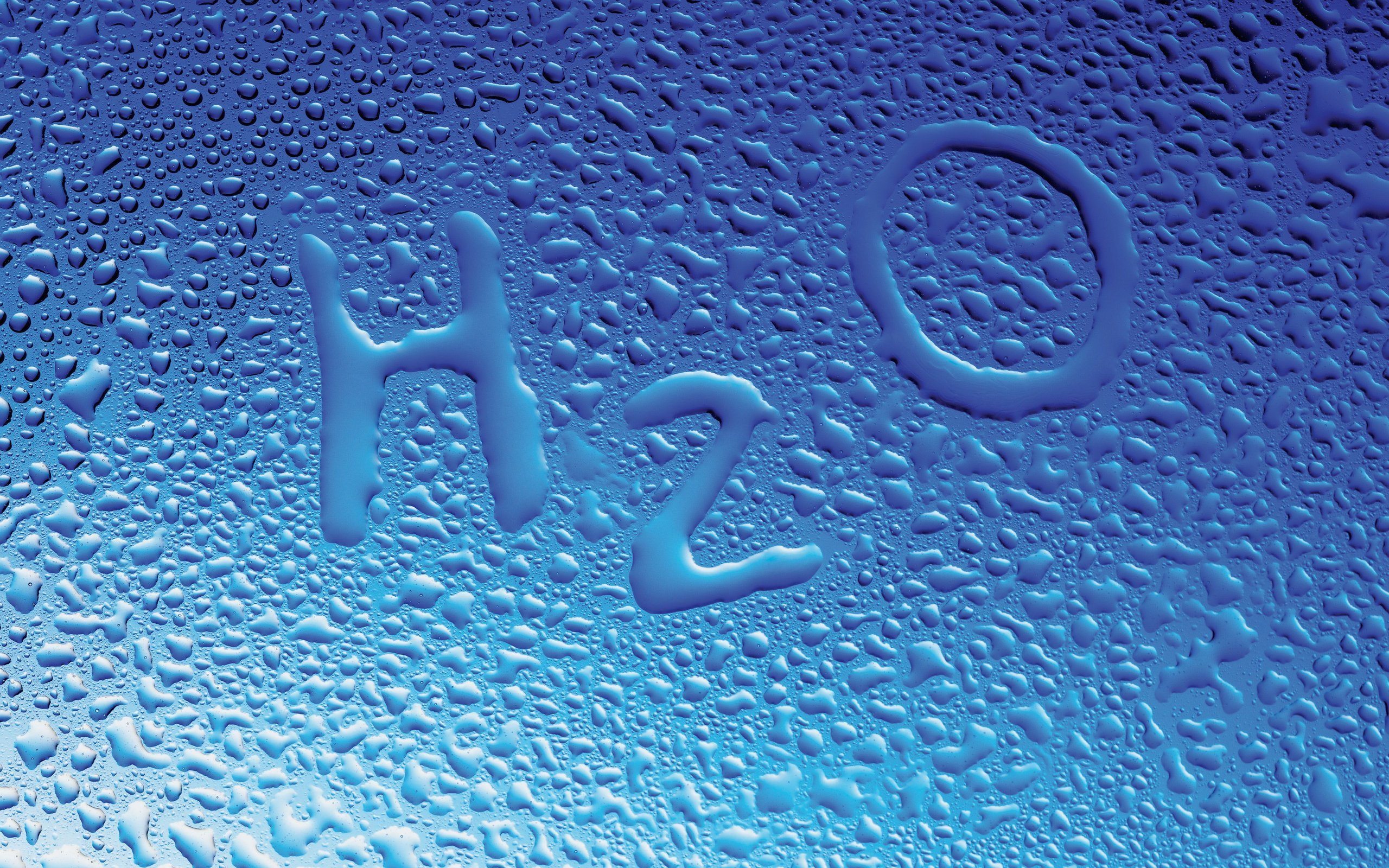
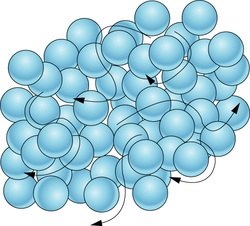
Which state of matter does this picture show?

a)

Solid

b)

Liquid

c)

Gas

11.

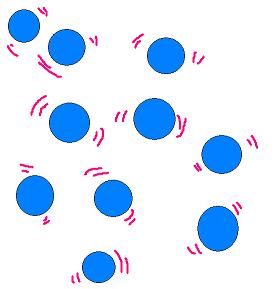
What state of matter does this picture show?

a)

Solid

b)

Liquid

c)

Gas

12.

Which state of matter does this picture show?

a)

Solid

b)

Liquid

c)

Gas

13.

As temperature increases, what happens to particles?

a)

They speed up

b)

They slow down

14.

Which will heat up faster?

a)

copper

b)

granite

c)

iron

d)

basalt

15.

Which of the following best explains why the sand at the beach is hotter than the water?

a)

Sand has a higher specific heat than water.

b)

Sand has a lower specific heat than water.

c)

There is more water than sand at the beach.

d)

There is more sand than water at the beach.

16.

The amount of energy required to raise the temperature 1ºC for every gram is called____?

a)

Thermal Energy

b)

Specific Heat

c)

Temperature

d)

Kinetic Energy

17.
What  is the formula to calculate heat energy required to raise the temperature of any substance?
a)
Q=mc∆t
b)
Q=mc
c)
Q= ½mv
d)
m=QC
18.

The specific heat of platinum is 0.133 J/g°C. How much heat(Q) is released when a 10 g piece of platinum cools from 100°C to 50°C?

a)

66.5 J

b)

665 J

c)

0.0266 J

d)

0.665 J

19.

Which color has the longest wavelength?

a)

Yellow

b)

Red

c)

Green

d)

Purple

20.

What is the saying that can help you remember the order of the visible spectrum?

a)

ROYGBIV

b)

RYOBIVG

c)

ROYBVIG

d)

RIBYOVG

21.

What color has the shortest wavelength and highest frequency?

a)

Violet

b)

Orange

c)

Red

d)

Blue

22.

A wave with a large wavelength will have a ______ frequency and _____ energy

a)

high, low

b)

high, high

c)

low, high

d)

low, low

23.

If short wavelength has more ENERGY than long wavelength, which color Lightsaber is the most dangerous, or powerful?

a)

Red

b)

Orange

c)

Blue

d)

Green

24.
High frequency waves have _________ wavelength.
a)
varying
b)
high
c)
the same
d)
low
25.
What atom matches this electron configuration?
1s2s2p3s2
a)
Neon
b)
Magnesium
c)
Aluminum
d)
Potassium
26.
Which is the electron configuration for an oxygen atom?
a)
1s22s22p63s23p64s2
b)
1s22s22p4
c)
1s22s22p6
d)
1s22s22p63s23p6
27.
How many valence electrons are represented here?
a)
7
b)
5
c)
2
d)
8
28.
How many electrons can the d sublevel hold?
a)
8
b)
10
c)
2
d)
4
29.
What is this element? 
1s22s22p63s23p6
4s23d104p6
a)
Argon
b)
Krypton
c)
Selenium
d)
Bromide
30.
What is the shorthand electron configuration for Sulfur atom?
a)
[Ar] 3p4
b)
[He] 3s23p4
c)
[Ne] 3s23p4
d)
[Na] 3s23p3
31.
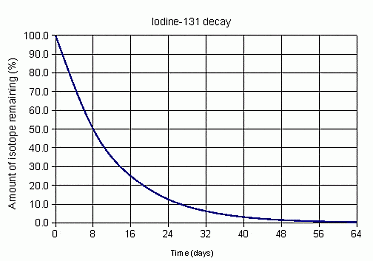
If 10 mg of iodine 131 is given to a patient, how much is left after 24 days? The half-life of iodine-131 is 8 days.
a)
1.25mg
b)
1.25g
c)
10g
d)
10mg
32.

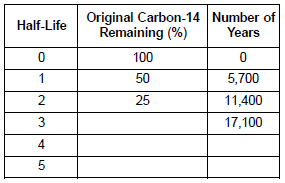
After 22,800 years, approximately what percentage of the original carbon-14 remains?

a)

15%

b)

12.5%

c)

6.25%

d)

3.125%

33.
What is the half-life of iodine-131?
a)
32 days
b)
8 days
c)
16 days
d)
24 days
34.

The % of the parent isotope remaining after 2 Half Lives.

a)

50%

b)

25%

c)

12.5%

d)

6.25%

35.
The process of nuclear change in an atom of radioactive material is called... 
a)
nuclear decay
b)
nuclear mass
c)
isotopes
d)
radon
36.
When a nucleus undergoes nuclear decay by gamma rays, the atomic number of the element....
a)
remains the same
b)
  decreases by one.
c)
increases by one.
d)
increases by two.
37.
The three types of nuclear radiation in increasing order of penetrating power are ____.  
a)
  alpha, beta, gamma 
b)
X ray, beta, gamma
c)
alpha, gamma, beta 
d)
X ray, gamma, beta 
38.

What type of nuclear decay is shown here

13756Ba →→ 13756Ba + γ rays

a)

alpha

b)

beta

c)

gamma

39.

What type of decay is shown here

23892U ---> 23490Th + 42He.

a)

alpha

b)

beta

c)

gamma

40.

Finish this equation

20983Bi--> _______ + 20581Tl

a)

42He

b)

0-1e

c)

y

41.
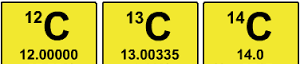
What do these isotopes of carbon all have in common?
a)
neutrons & mass number
b)
atomic number and neutrons
c)
atomic number and electrons
d)
protons, atomic number, and mass number
42.
How many neutrons does the isotope of lithium have?
a)
8
b)
3
c)
4
d)
5
43.
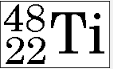
How many protons does this isotope of titanium have?
a)
48
b)
22
c)
26
d)
70
44.
In a correctly written symbol what would be located in the "A" position?
a)
number of neutrons
b)
atomic number
c)
number of electrons 
d)
mass number
45.
What quantities vary between isotopes of an element?
a)
protons, electrons, and atomic mass
b)
protons, electrons, and atomic number
c)
neutrons and electrons
d)
neutrons and atomic mass
46.
This is a correct dot diagram for oxygen (O)
a)
true
b)
false
47.
This is a correct dot diagram for fluorine (F)
a)
true
b)
false
48.
This could be the dot diagram of
a)
Mg
b)
Cl
c)
C
d)
O
49.
This could be the dot diagram of
a)
O
b)
B
c)
Li
d)
Ne
50.

Light is emitted when electrons

a)

move from one atom to another.

b)

collide with one another, releasing energy.

c)

move from a lower energy level to a higher energy level.

d)

move from a higher energy level to a lower energy level.

51.

Which occurs if an electron transitions from n = 5 to

n = 2 in a hydrogen atom?

a)

Energy is absorbed, and visible light is emitted.

b)

Energy is released, and visible light is emitted.

c)

Energy is released, and visible light is not emitted.

d)

Energy is absorbed, and visible light is not emitted.

52.

Which energy level change by an electron of a

an atom will have the greatest amount of energy emitted?

a)

n = 2 to n = 4

b)

n = 2 to n = 5

c)

n = 4 to n = 2

d)

n = 5 to n = 2

53.
Which wavelength of visible light has the lowest energy?
a)
Red
b)
Yellow
c)
Orange
d)
Blue
54.

Emitted light will be due to electrons

a)

moving toward nucleus

b)

moving away from nucleus

c)

not moving

55.

Absorbed light will cause electrons to

a)

move toward nucleus

b)

move away from nucleus

c)

not move

56.

A. electron transition from n=3 to n=2

B. electron transition from n=5 to n=1

Which electron transition (A or B) will have low energy light emitted?

a)

A

b)

B

c)

They both will not have any light emitted.

d)

They both will have the same type of energy emitted.

57.

Nonmetals tend to

a)

gain electrons

b)

lose electrons

58.

Metals tend to

a)

gain electrons

b)

lose electrons

59.
If my charge becomes 2+ what does that say about me?
a)
I am stealing 2 electrons
b)
I am losing 2 electrons
c)
I am in period 2
d)
I have an atomic # of 2
60.
If I gain electrons I become
a)
Positive because I've added to my atom
b)
negative because I've added electrons
c)
same because i'm balanced
d)
equal because now I have electrons
61.
When metals bond with non-metals they form what type of bonds
a)
covalent
b)
ionic
c)
cooperative
d)
lewis
62.
How do the following two elements bond together?
Na1+  F1-         
a)
NaF
b)
NaF3
c)
Na3F
d)
Na1F2
63.
How do the following two elements bond together?
Cr3+  O2-         
a)
CrO
b)
Cr3O2
c)
Cr2O3
d)
CrO3
64.

When a nonmetal gains electrons, it becomes this type of ion.

a)

Anion

b)

Cation

65.

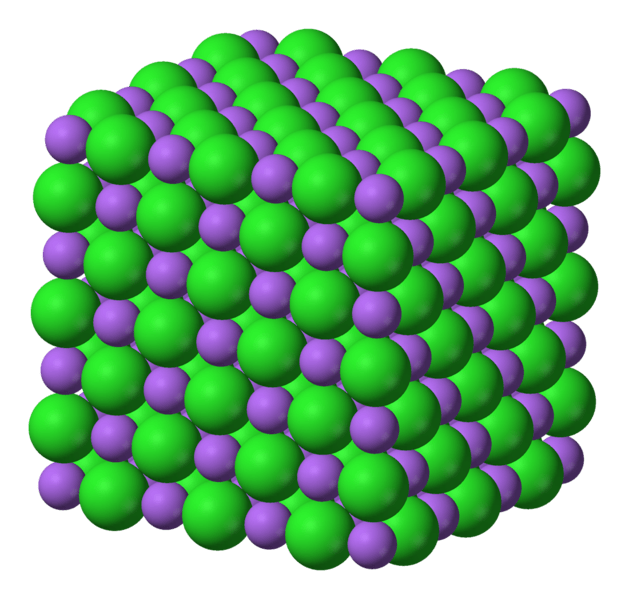
Is this compound ionic or covalent?

a)

Ionic

b)

Covalent

66.
A ________ is a model of an atom in which each dot represents a valence electron.
a)
Valence electron
b)
Electron dot diagram/Lewis dot structure
c)
Lewis bond structure
67.
How many valence electrons does nitrogen have?
a)
3
b)

2

c)
5
d)
1
68.
How many valence electrons does hydrogen have?
a)
3
b)
2
c)
5
d)
1
69.
Where are the non-metals located on the periodic table?
a)
All over
b)
On the left side of the "staircase"
c)
On the right side of the "staircase"
70.
A covalent bond involves a __________ of electrons.
a)
sharing
b)
borrowing
c)
exchanging
d)
switching
71.
Name CCl4
a)
carbon carbon tetraiodide
b)
carbon tetrachloride
c)
monocarbon tetrachloride
d)
water
72.
Name BCl3
a)
boron chloride
b)
boron (III) chloride
c)
boron trichloride
d)
boron chlorine
73.
What is the correct name for C4H6?
a)
Carbon Hexahydride
b)
Pentacarbon Pentahydride
c)
Hexacarbon Tetrahydride
d)
Tetracarbon Hexahydride
74.
PBr5
a)
Phosphorus Bromide
b)
Phosphorus Pentabromide
c)
Pentaphosphorus bromide
d)
Phosphorus Bromine
75.
The covalent compound N2O5 would be named
a)
nitrogen oxide.
b)
dinitrogen oxide.
c)
nitrogen pentoxide.
d)
dinitrogen pentoxide.