
 Worksheets
Chemical Kinetics
Total questions: 10
Worksheet time: 16mins
Consider this reaction:
2SO2(g) + O2(g) → 2SO3(g)
The rate of disappearance of SO2 is 1.6 gL-1 min-1. What is the rate of formation of SO3 in molL-1min-1? [Molar mass SO2: 64.0 gmol-1]
0.035
0.025
0.120
0.050
For the reaction, A(g) + B(g) → 2C(g), the rate equation is:
Rate = k[A]2[B]
If the concentration of reactant A is increase by triple at constant temperature, by what factor will the rate of reaction change?
2
6
4
9
Given the following rate law,
rate = k[A]2[B]
if [A] were doubled, what must happen to [B] to keep the rate constant?
[B] must quadruple
[B] must double
[B] must be havled
[B] must be quartered

The following data were measured for the reaction
BF3(g) + NH3(g) ⟶ F3BNH3(g)
What is the rate law for the reaction?
rate = k[NH3]
rate = k[BF3]2[NH3]
rate = k[BF3][NH3]
rate = k[BF3][NH3]2

What is the rate law for this mechanism?
rate = k[A][B]2
rate = k[B][X]2
rate = k[A]0.5[B]1.5
rate = k[W][Y][Z]
Collision
Big Bang
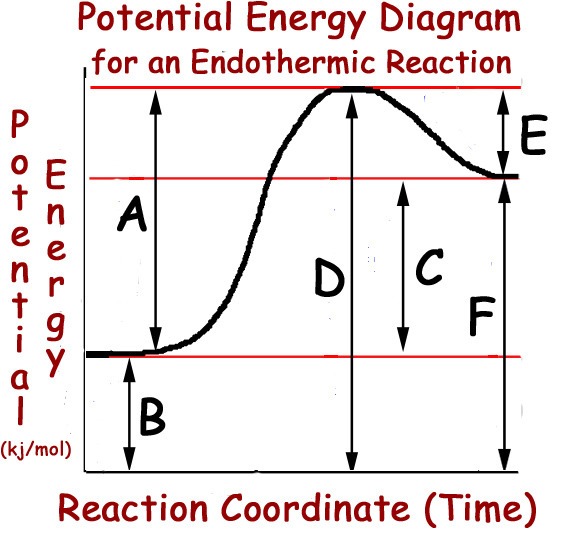
What letter represents the activation energy?
A
B
C
D
The rate equation for the dimerization of NO2 is
Δt−Δ[NO2]=k[NO2]2
Which of the following changes will change the value of the rate constant, k?
Adding an inert gases to the mixture
Adding more NO2 to the reaction mixture
Increasing the temperature of the reaction vessel
Decreasing the volume of the reaction vessel
The rate constant is doubles on the increasing temperature from 310K to 350K. What is the activation energy (in kJ mol-1) for this reaction?
12.3
15.6
25.8
29.2
The rate of reaction between X and Y in the reaction, 2XY + Y3 → XY2 +XY3 is given as,
Rate = k[XY][Y3]2
Which of the following mechanism is consistent with the above rate equation?
XY +Y3 → XY2 + Y2 (slow) XY + Y2 → XY3 (Fast)
XY + Y3 → XY2 + Y2 (Slow) XY + Y2 → Y3 (Fast)
XY +2Y3 → XY2 + Y5 (Slow) XY + Y5 → XY3 +Y3 (Fast)
XY+2Y3 → XY2 +Y5(Fast) XY + Y5 → XY3 + Y3 (Slow)

