wayground logo

Free Printable Worksheets

Font size

S
M
L
XL
Worksheets

Module 4: Chemical Rxns Quizizz

Total questions: 56

Worksheet time: 1hrs 4mins

Name
Class
Date
1.
Is burning wood a chemical or physical change?
a)
chemical
b)
physical
2.
Is glass breaking a chemical or phyiscal change?
a)
chemical
b)
physical
3.
Is hammering wood together to build a house a chemical or physical change?
a)
chemical
b)
physical
4.
Is a a rusting bicycle a chemical or physical change?
a)
chemcial
b)
physical
5.
Is melting butter for popcorn a chemical or physical change?
a)
chemical
b)
physical
6.
Is spoiling food a physical or chemical change?
a)
phyiscal
b)
chemical
7.
Is moldy cheese a chemical or physical change?
a)
chemical
b)
physical
8.
Green bananas turning yellow on their own as they ripen.
a)
Chemical Change
b)
Physical Change
9.
A change in the size, shape, or state of matter.
a)
chemical change
b)
physical change
c)
chemical reaction
d)
electron change
10.
Baking a cake by mixing flour, sugar, chocolate powder, eggs, and milk, and then heating them in the oven.
a)
Chemical Change
b)
Physical Change
11.
Which of the following is NOT an example of a physical change?
a)
crumpled paper
b)
pencil sharpening
c)
shrunken clothing
d)
sour milk
12.
A change in which NEW substances are formed.
a)
Chemical change
b)
Physical change
c)
Casual change
d)
Formal change
13.
Which of the following is NOT an example of chemical change?
a)
sour milk
b)
burning wood
c)
breaking a pencil
d)
rust
14.
Which of the following IS a physical change?
a)
Getting a haircut
b)
Rusty metal
c)
sour milk
d)
A compound
15.
Which of the following IS a chemical change
a)
using chalk
b)
water freezing
c)
slicing cheese
d)
digestion
16.
What characteristic defines all chemical changes?
a)
There is a change of state.
b)
Electricity is produced.
c)
A new material is formed.
d)
Bubbles are produced. 
17.

A substance that is formed as the result of a chemical reaction is a __________________

a)

Product

b)

Reactant

c)

Starters

d)

Enders

18.

According to the law of conservation of mass, matter cannot be created or (a)  

19.

True or False: In a complete chemical equation, there must be the same number of atoms of each element on the reactants and products side.

a)

True

b)

False

20.

In a chemical reaction, atoms (a)   and form new bonds.

21.

Look at the chemical equation.


How many atoms of mercury (Hg) are in the reactants?

(a)  

22.

Look at the chemical equation.


How many atoms of oxygen (O) are in the reactants?

(a)  

23.

Look at the chemical equation.


How many atoms of nitrogen (N) are in the products?

(a)  

24.

Look at the chemical equation.


How many atoms of carbon (C) are in the reactants?

(a)  

25.

Look at the chemical equation.


How many atoms of hydrogen (H) are in the products?

(a)  

26.

Why are chemical equations always balanced? Select ALL that apply.

a)

Matter cannot be created.

b)

Matter cannot be destroyed.

c)

Matter can only be rearranged/conserved.

d)

Matter doesn't matter.

27.

In a chemical reaction, if the reactants are heated, the reaction usually happens

a)

slower

b)

faster

c)

at the same rate

d)

in a smaller volume

28.

What does it mean for a reaction to be endothermic? Choose 2 of the following.

a)

When two substances react, the temperature of the mixture decreases.

b)

When two substances react, the temperature of the mixture increases.

c)

There is less energy going into the reactant to break the bond than there is energy leaving the product.

d)

There is more energy going into the reactant to break the bond than there is energy leaving the product.

e)

The amount of energy entering and leaving is the same.
29.

What does it mean for a reaction to be exothermic? Choose 2 of the following.

a)

When two substances react, the temperature of the mixture decreases.

b)

When two substances react, the temperature of the mixture increases.

c)

There is less energy going into the reactant to break the bond than there is energy leaving the product.

d)

There is more energy going into the reactant to break the bond than there is energy leaving the product.

e)

The amount of energy entering and leaving is the same.

30.
Why does ice float?
a)
Liquid water is less dense than solid water.
b)
Solid water is less dense than liquid water.
c)
Gaseous water is less dense than solid water.
d)
Liquid water is less dense than gaseous water.
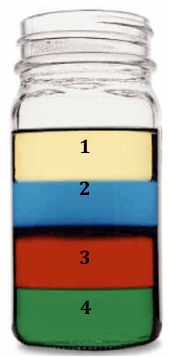
31.
Put the liquids in order from most dense to least dense?
a)
4, 3, 2, 1
b)
1, 2, 3, 4
c)
3, 4, 2, 1, 
d)
4, 3, 1, 2
32.
Frank has an eraser. It has a mass of 4g, and a volume of 2cm3. What is its density?
a)
8 g/cm3
b)
2 g/cm3
c)
1/2 g/cm3
d)
24 g/cm3
33.
Jack has a rock. The rock has a mass of 14g and a volume of 2cm3. What is the density of the rock?
a)
7 mL
b)
7 g/cm3
c)
28 g/cm3
d)
1/7 g/cm3
34.
Why do some substances float on water?
a)
they are warmer than water
b)
they are cooler than water
c)
they are more dense than water
d)
they are less dense than water
35.
What is the measuring unit for mass?
a)
centimeter 
b)
millimeter 
c)
grams 
d)
pounds
36.
What is this tool to get mass?
a)
triple beam balance
b)
ruler
c)
thermometer
d)
graduate cylinder
37.
Which is an example of a solute?
a)
Egg whites
b)
Sugar
c)
Water
d)
Acetone
38.
Which is an example of a solvent?
a)
Salt
b)
Egg whites
c)
Water
d)
Sugar
39.

What is a solvent

a)

A liquid that will dissolve a solid solute

b)

Another word for solution

c)

A thing that make drinks change colour

d)

Usually the solid about to be dissolved

40.

The ___ is the thing being dissolved.

a)

solute

b)

solvent

c)

mixture

d)

solution

41.

Define the term soluble.

a)

Can dissolve in water

b)

Cannot dissolve in water

c)

Partially dissolves in water

42.

Define the term insoluble.

a)

Can dissolve in water.

b)

Cannot dissolve in water.

c)

Partially dissolves in water.

43.
__________ are made up of solutes and solvents.
a)
Solutions
b)
Suspensions
c)
Heterogeneous Mixtures
d)
Pure Substances
44.
In an exothermic reaction, heat is ...
a)
taken in
b)
given out
45.

In an endothermic reaction, heat is ...

a)

taken in

b)

given out

46.
If a chemical reaction is EXOTHERMIC, the temperature would....
a)
Stay the same
b)
Increase
c)
Decrease
47.
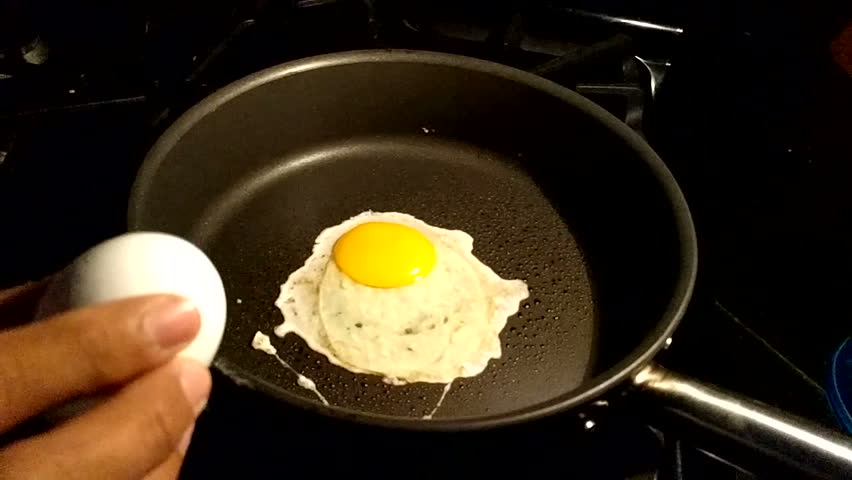
Baking bread and cooking an egg are examples of....?
a)
Endothermic processes
b)
Exothermic processess
c)
None of these 
48.

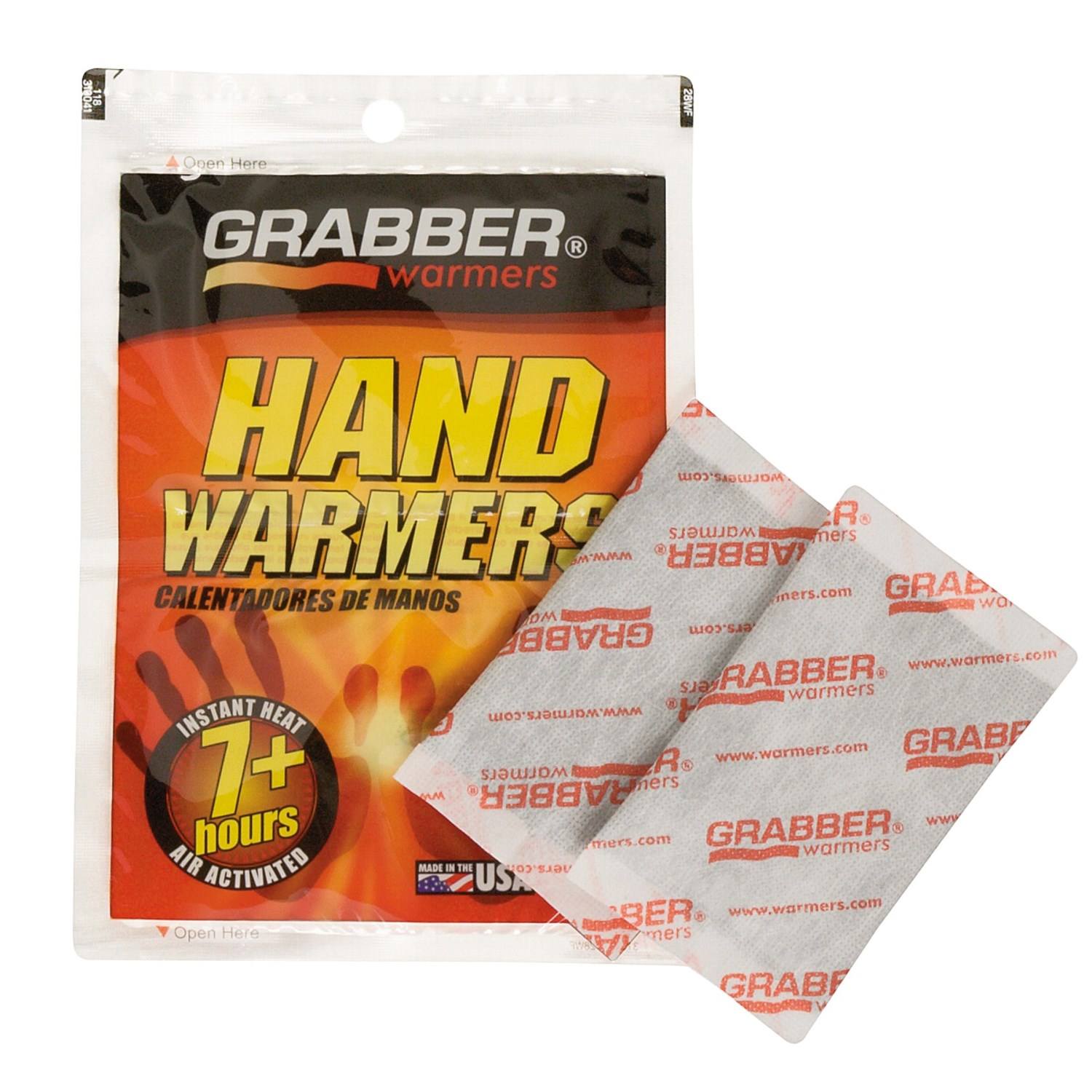
What type of reaction occurs in a hand warmer?

a)

exothermic

b)

endothermic

49.

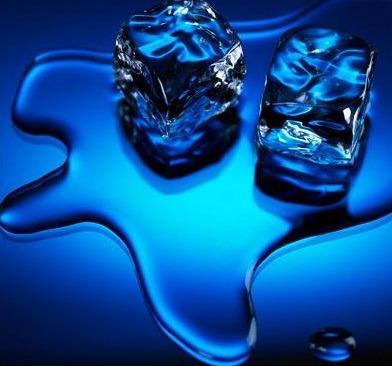
____ reactions usually feel cold.

a)

endothermic

b)

exothermic

50.
The pH scale is a range from:
a)
1-7
b)
0-14
c)
1-5
d)
1-20
51.
A(n) ______ is a substance with a pH less than 7
a)
Acid
b)
Alkaline
c)
Base
d)
Buffer
52.
A(n) _______ is a substance with a pH greater than 7.
a)
Base
b)
Acid
c)
Buffer
d)
Water
53.
What is the only substance with a neutral pH of 7?
a)
Milk
b)
Orange Juice
c)
Water
d)
Blood
54.
Complete the sentence.
A substance that is more basic has a _____ pH than a substance that is acidic.
a)
lower
b)
higher
c)
the same
d)
none of the above
55.

In a test of pH levels, a baking soda has a pH of 9 and bleach has a pH of 12. What is true about there relationship?

a)

Both of the solution are Bases

b)

Both of the solution are Acids

c)

The Baking soda is an acid and the Bleach is a base

d)

The baking soda is a base and the Bleach is an Acid.

56.
If you have a substance with a pH of 7.1 it is a(n).....
a)
Acid
b)
base