wayground logo

Free Printable Worksheets

Font size

S
M
L
XL
Worksheets

7.1 and 7.2 Test-Characteristics of Life/Cell Theory/Prokaryotic vs Eukaryotic

Total questions: 52

Worksheet time: 26mins
Name
Class
Date
1.
Which of the following is not a characteristic of a Prokaryotic cell?
a)
unicellular
b)
floating DNA
c)
very small
d)
complex
2.
Which of the following is a characteristic of both Eukaryotic and Prokaryotic cells?
a)
ribosomes
b)
nucleus
c)
membrane bound organelles
d)
simple
3.
Prokaryotic cells include bacteria.
a)
True
b)
False
4.
Which of the following is not a characteristic of a Prokaryotic cell?
a)
unicellular
b)
floating DNA
c)
very small
d)
complex
5.
Eukaryotic cells are complex.
a)
true
b)
false
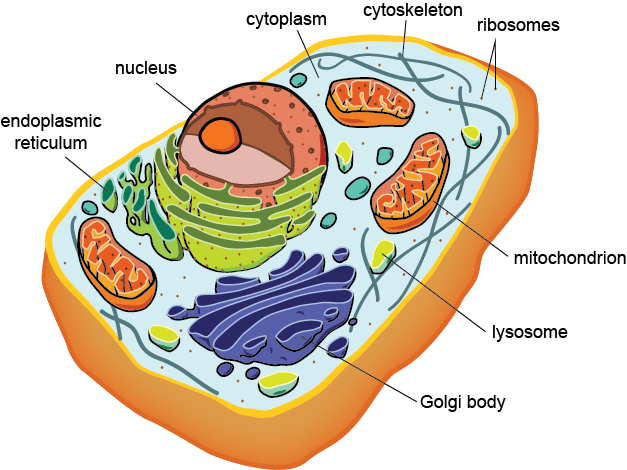
6.
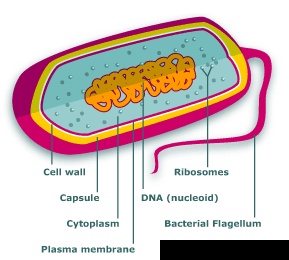
Which type of cell?
a)
Prokaryote
b)
Eukaryote
7.
Which of the following is found inside a prokaryote?
a)
cytoplasm
b)
DNA
c)
ribosomes
d)
all of these
8.
Both prokaryotes and eukaryotes have a nucleus.
a)
True
b)
False
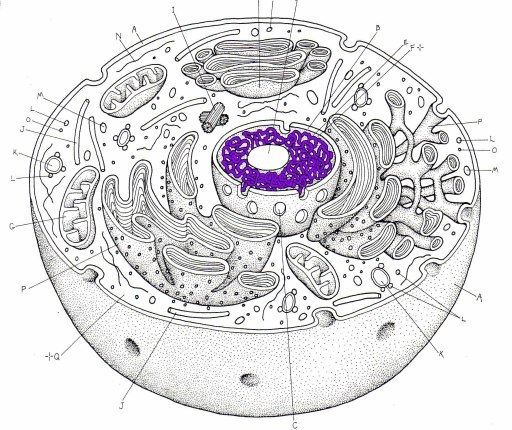
9.
What kind of cell is this?
a)
Eukaryotic
b)
Prokaryotic
10.
All living things are made of...
a)
atoms 
b)
cells 
c)
bacteria 
d)
plants 
11.
All cells come from other...
a)
cells 
b)
plants 
c)
nucleus 
d)
microscopes 
12.
These cells have DNA surrounded by a nuclear membrane...
a)
Eukaryotic
b)
Prokaryotic
c)
Neither
d)
Both prokaryotic and eukaryotic
13.
Animal, fungi, plant, and protista cells are all examples of which type of cell?
a)
Eukaryotic
b)
Prokaryotic
c)
Both prokaryotic and eukaryotic
14.
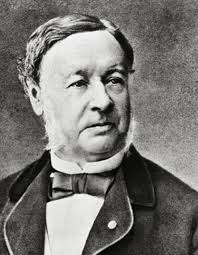
Which of the following scientists concluded that all animals are made of cells?
a)
Rudolf Virchow
b)
Matthais Schleiden
c)
Robert Hooke
d)
Theodor Schwann
15.

Which of the following scientists was the first to observe bacteria and other living cells?

a)

Anton van Leuwenhoek

b)

Matthais Schleiden

c)

Robert Hooke

d)

Theodor Schwann

16.
Which of the following statements is not part of the cell theory?
a)
Cells are the basic unit of structure and function in all living things.
b)
All cells are produced from other cells.
c)
Only animal cells are composed of cells.
d)
All living things are composed of cells.
17.
What is one way in which all living things on Earth are alike?
a)
All living things have hair.
b)
All living things are made of cells and come from other cells.
c)
The cells of all living things have chloroplast.
d)
All living things can move. 
18.
Which statement reflects one of the major components of the cell theory?
a)
All living things are multi-cellular.
b)
Organs are the basic unit of structure and function for all living things.
c)
All cells come from previously existing cells.
d)
Every organism has a reproductive system to ensure survival of the species.
19.
When cells are damaged, new cells are created by cell division. How does the cell theory support this fact?
a)
It states that all cells have a nucleus which divides.
b)
It states that all living things are made up of one or more cells.
c)
It states that cells come from previously existing cells.
d)
 It states that the basic units of structure and function are cells.
20.
What is the most basic unit of life?
a)
cell
b)
tissue
c)
organ
d)
organ system
21.
Which of these is not true about all organisms?
a)
all living things have many cells
b)
all living things need water
c)
all living things respond to stimuli
d)
all living things reproduce
22.
What is another way of saying organism?
a)
living thing
b)
organ system
c)
tissue team
d)
critter
23.
Most single-celled organisms...
a)
reproduce asexually
b)
reproduce sexually
c)
have complex tissues
d)
can be seen without a microscope
24.
When a baby kitten becomes an adult cat, this is an example of...
a)
energy metabolism
b)
growth and development
c)
response to stimuli
d)
having cells
25.

If an organism is made entirely of one cell it is called...

a)

Multicellular

b)

Prokaryotic

c)

Unicellular

d)

Eukaryotic

26.

Reproduction that only involves one parent and all offspring are identical; for example, binary fission of bacteria or amoebas.

a)

Asexual

b)

Sexual

c)

Division

d)

Addition

27.

Reproduction that involves two cells from different parents unite to produce the first cell of a new organism.

a)

Asexual

b)

Sexual

c)

Budding

d)

Division

28.

For single-celled organisms, _____ is

mostly an increase in size.


Multicellular organisms go through a

process called __________, where cells

divide and differentiate into different

kinds of cells.

a)

Evolve, respond to stimulus

b)

Expansion, progress

c)

Growth, development

d)

Production, evolution

29.
A baby song bird hatches from its egg with both parent songbirds watching.
a)
All living things reproduce
b)
All living things maintain homeostasis
c)
All living things use energy
d)
All living things grow
30.
Rocks are not living because
a)
they never move
b)
they aren't needed for humans
c)
they are not made of cells
d)
they don't break down
31.
A worm turns away from light is an example of a worm
a)
reproducing
b)
doing cellular respiration
c)
having cells
d)
responding to its environment
32.

A caterpillar hibernates in a cocoon and emerges as a butterfly. Which characteristic of life is this?

a)

All living things adapt to their environment

b)

All living things use energy

c)

All living things respond to their environment

d)

All living things grow

33.
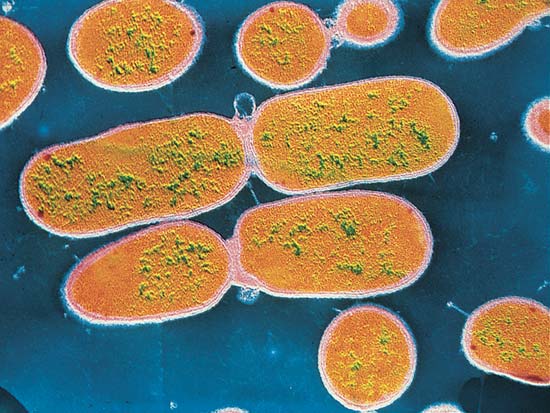
An amoeba is a unicellular organism. Which characteristic of life is this?
a)
All living things use energy
b)
All living things contain cells
c)
All living things respond to their environment
d)
All living things grow
34.

A tulip opens in the morning at sunrise and closes in the evening at sunset. Which characteristic of life is this?

a)

All living things have cells

b)

All living things use energy

c)

All living things respond to their environment
d)

All living things grow

35.
The roots of a plant grow towards a source of ground water.
a)
All living things use energy
b)
All living things reproduce
c)
All living things respond to their environment
d)
All living things grow
36.

YOU are a multi-celled organism but an amoeba is a single celled organism. Which characteristic of life is this?

a)

All living things have cells

b)

All living things grow

c)

All living things use energy

d)

All living things respond to their environment

37.
How many parents does asexual reproduction involve?
a)
one 
b)
two
c)
three
d)
four
38.
The offspring from asexually reproduced organisms are?
a)
Different than their parents
b)
Identical to parents
c)
Like a combination from both parents
d)
A different species
39.
If two organisms reproduce sexually, then their offspring will exhibit a genetic makeup that is -
a)
identical to only one parent
b)
identical to all of its siblings
c)
a unique combination of traits
d)
the recessive traits of each parent
40.
Prokaryotes (bacteria) reproduce asexually via -
a)
spore formation
b)
bud creation
c)
vegetative propagation
d)
binary fission
41.
Provided is a table of organisms and some data on their characteristics. Based on the information in the table, which organism is likely to produce offspring with the greatest genetic diversity?
a)
Black mold
b)
Bell tree dahlia
c)
Spruce
d)
Hydra
42.
All of the offspring of an organism have the same genetic material, which is identical to the parent organism. From this, we can conclude that this organism -
a)
makes its own food
b)
is unicellular
c)
live in a marine habitat
d)
reproduces asexually
43.
When comparing the offspring of sexually and asexually reproducing organisms, we would expect the genetic material (DNA) of the sexually reproducing organism to -
a)
contain fewer mutations
b)
be lesser in quantity
c)
be simpler overall
d)
show more variation
44.
The genetic material of an offspring of sexually reproducing organisms is best described as–
a)
identical to that of the other offspring
b)
a copy of the genetic material of the mother
c)
a copy of the genetic material of the father
d)
genes from both parents, in unique combinations
45.

Robert Hooke named the small compartments that made up the cork __________after the rooms monks lived in.

a)

organelles

b)

membranes

c)

mocroscopes

d)

cells

46.

Cell theory states that...

a)

cells are the basic building block of life

b)

cells are cool

c)

cells are microscopic

d)

cells cannot be destroyed

47.

Lastly cell theory states....

a)

cells don't do much

b)

cells are microscopic

c)

all living things are made up of cells (either unicellular or multicellular)

d)

bacteria aren't cells

48.

Cell theory also states that...

a)

bacteria are eukaryotic cells

b)

animals are prokaryotic cells

c)

cells come from other cells (cell division or splitting apart)

d)

cells are awesome!

49.
All plants are made of cells.  This was discovered by....
a)
Matthias Schleiden
b)
Rudolf Virchow
c)
Robert Hooke
d)
Aristotle
50.
"All animals are made of cells". This fact was discovered by...
a)
Matthias Schleiden
b)
Theodor Schwann
c)
Robert Hooke
d)
Rudolf Virchow
51.

Which scientist helped to contribute to the idea that "all cells come from other cells"?

a)

Redi

b)

Pasteur

c)

Remak

d)

Virchow

e)

All of the above

52.

Who is credited with the invention of the microscope?

a)

Robert Hooke

b)

Anton Van Leeuwenhoek

c)

Zacharias and Hans Janssen

d)

Louis Pasteur