wayground logo

Free Printable Worksheets

NEW

Font size

S
M
L
XL
Worksheets

Energy Unit Review

Total questions: 54

Worksheet time: 54mins

Name
Class
Date
1.
Energy...
a)
is the ability to do work or cause a change
b)
is all the movement in the universe
c)
cannot be created or destroyed
d)
all of the above
2.
Matter... 
a)
all the material "stuff" in the universe
b)
is anything that has mass and takes up space
c)
cannot be created or destroyed
d)
all of the above
3.
What is kinetic energy?
a)
Thermal energy
b)
Nuclear energy
c)
Energy in motion
d)
Stored energy
4.
What is potential energy?
a)
Thermal energy
b)
Nuclear energy
c)
Energy in motion
d)
Stored energy
5.
Which is an example of potential energy?
a)
A car sitting at the top of a hill
b)
A kite flying in the air
c)
A fox chasing a mouse
d)
A bowling ball rolling
6.
Which is an example of kinetic energy?
a)
A book sitting on a shelf
b)
A marble rolling down a ramp
c)
A parked car
d)
An elastic band
7.
What type of energy is stored inside a battery?
a)
elastic potential energy
b)
gravitational potential energy
c)
chemical potential energy
d)
kinetic energy
8.
Which type of energy is increased when an object is raised above the ground? 
a)
Gravitational potential
b)
Elastic potential
c)
Kinetic
d)
Heat
9.
What type of energy is the girl storing in the bow?
a)
Light Energy
b)
Elastic Potential Energy
c)
Chemical Potential Energy
d)
Thermal Energy
10.
What type of energy does this roller coaster car have?
a)
Mostly potential
b)
Mostly kinetic
c)
No energy
d)
Solar energy
11.
An energy transformation is when...
a)
energy turns into a robot
b)
energy changes from one form to another
c)
energy is created
d)
energy is used up
12.
Energy is the ability to do  ___________.
a)
Nothing
b)
Work
c)
Energy
d)
Change
13.
The sun’s energy used by green plants to produce food is an example of light energy being converted to what other form of energy?
a)
kinetic energy
b)
heat energy
c)
mechanical energy
d)
chemical 
14.
The Law of Conservation of Energy states that...
a)
energy can be destroyed
b)
energy can not be created or destroyed
c)
energy can only be destroyed using the force
15.
Which skier will have a greater potential energy? 
a)
Skier 1
b)
Skier 2
16.
What object can change electrical energy into light energy?
a)
A candle
b)
A fire
c)
A lamp
d)
A radio
17.
Energy of motion is which type of energy?
a)
Potential
b)
Kinetic
c)
Sound
d)
Gravitational
18.

When plants convert the sun's energy into food, which is the correct transformation of energy?

a)

kinetic to chemical

b)

radiant to chemical

c)

thermal to mechanical

d)

chemical to radiant

19.
What kind of energy is represented in this picture?
a)
Thermal
b)
Potential
c)
Nuclear
d)
Mechanical
20.
The ultimate source of energy is:
a)
The sky
b)
The sun
c)
Plants
d)
Movement
21.
On a roller coaster, where is maximum kinetic energy?
a)
At the bottom of a big hill
b)
When going around a corner
c)
When going upside down
d)
At the top of a big hill
22.

This is a measure of the average kinetic energy of the molecules in an object.

a)

heat

b)

thermal energy

c)

temperature

d)

calories

23.

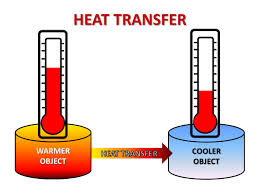
The transfer of thermal energy from a warmer object to a cooler object.

a)

temperature

b)

heat

c)

thermal energy

d)

calories

24.

In this state of matter the molecules are spaced very far apart from each other and move freely through space.

a)

liquid

b)

solid

c)

plasma

d)

gas

25.

In this state of matter the molecules are in constant contact with one another, but they can move around freely.

a)

liquid

b)

solid

c)

plasma

d)

gas

26.

In this state of matter the molecules vibrate in place, but they do not change positions relative to each other.

a)

liquid

b)

solid

c)

plasma

d)

gas

27.

In this state of matter molecules move the fastest.

a)

liquid

b)

solid

c)

plasma

d)

gas

28.

When molecules in an object move faster, they have more _______.

a)

potential energy

b)

kinetic energy

c)

mass

d)

volume

29.

The more kinetic energy ...

a)

the higher the temperature.

b)

the lower the temperature.

c)

the slower the object will move.

d)

the more likely the object will reach absolute zero.

30.

Temperature is a measure of only the _____ of an object’s atoms or molecules, not the thermal energy.

a)

potential energy

b)

kinetic energy

c)

kinetic and potential energy

d)

mass

31.

Which glass in the chart has the most thermal energy?

a)

Glass A

b)

Glass B

c)

Glass C

d)

Glass D

32.

A process of heat transfer in which the molecules in substances directly transfer kinetic energy to each other through contact.

a)

conduction

b)

convection

c)

radiation

d)

thermal

33.

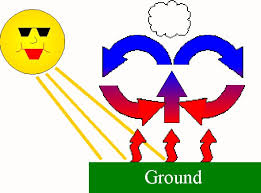
A process of heat transfer in which warmer and cooler fluids, such as water, air (gases) or magma, move due to differences in density.

a)

conduction

b)

convection

c)

radiation

d)

thermal

34.

A process of heat transfer using electromagnetic waves.

a)

conduction

b)

convection

c)

radiation

d)

thermal

35.

This type of heat transfer is the only type that requires no contact.

a)

conduction

b)

convection

c)

radiation

d)

thermal

36.
Heat transfer in the image.
a)
conduction
b)
convection
c)
radiation
37.
Heat transfer in boiling water.
a)
Conduction
b)
Convection
c)
Radiation
38.
The heat transfer in the image is by
a)
convection
b)
conduction
c)
radiation
39.
On a cold rainy day a baby is touching a cold window.  It feels so cold. Which way is the heat moving moving? 
a)
Cold is moving from the window to the hand.
b)
Heat is moving from the hand to the window.
c)
Heat doesn't move.
d)
It moves in currents
40.
Heat transfer in wind.
a)
conduction
b)
convection
c)
radiation
41.
When you use a microwave, what is the main way that heat is transferred?
a)
Convection
b)
Conduction
c)
Radiation
42.
The Gulf Stream is a current that brings warm ocean water from the south to the north. What type of heat transfer is this?
a)
conduction
b)
convection
c)
radiation
d)
insulation 
43.
Heat transfers from an area of ____temperature to an area of ___ temperature.
a)
high to low
b)
low to high
c)
high to high
d)
It can travel high to low and low to high. 
44.
The baby chickens are kept warm from the heat lamps demonstrates this type of heat transfer. 
a)
conduction
b)
convection
c)
radiation
45.
Warm air rises and the cool air sinks demonstrates this type of heat transfer. 
a)
conduction
b)
convection
c)
radiation
d)
Insolation 
46.
An iron bar is placed in a flame, as shown, and is heated until the end glows.The other end of the iron bar soon becomes hot, too.  Which of the following statements best describes why the iron bar becomes hot to the touch?
a)
a convective flow of energy is set up inside the iron bar.
b)
energy is conducted from atom to atom along the length of the iron bar.
47.
Heat transfer occurs
a)
in many directions
b)
both from warm objects to colder ones and from cold objects to warmer ones.
c)
only from warm objects to colder ones.
d)
only from cold objects to warmer ones.
48.
A cup of tea with a temperature of 80 degrees Celsius is placed on a table in a 20 degree Celsius room.  What happens to the thermal energy and the molecular motion of the tea when it is left on the table?
a)
The thermal energy increases and the molecules move faster.
b)
The thermal energy decreases and molecules move more slowly.
c)
The thermal energy increases and the molecules move more slowly.
49.

Hot things have ____________ thermal energy than cold things

a)

more

b)

less

c)

same

d)

potato

50.

Objects with MORE MASS have______________

a)

lower potential energy

b)

lower number of atoms

c)

higher thermal energy

d)

higher temperature

51.
What is the freezing point on the celsius scale?
a)
0
b)
32
c)
100
d)
-100
52.
No more energy can be removed from matter at:
a)
its freezing point
b)
0°C
c)
absolute zero
d)
273 K
53.
When you touch something that feels cold, 
a)
heat from your hand moves into the cold substance.
b)
coldness moves from the cold substance into your hand.
c)
it melts.
d)
it freezes.
54.

An object with a higher temperature can have less thermal energy than an more massive object with a lower temperature.

a)

True

b)

False