
 Worksheets
Chemical Science
Total questions: 140
Worksheet time: 2hrs 19mins
What are valence electrons?
Any of an atom's electrons
Electrons located on the first energy level
Electrons not attached to any atom
electrons located on the outer energy level
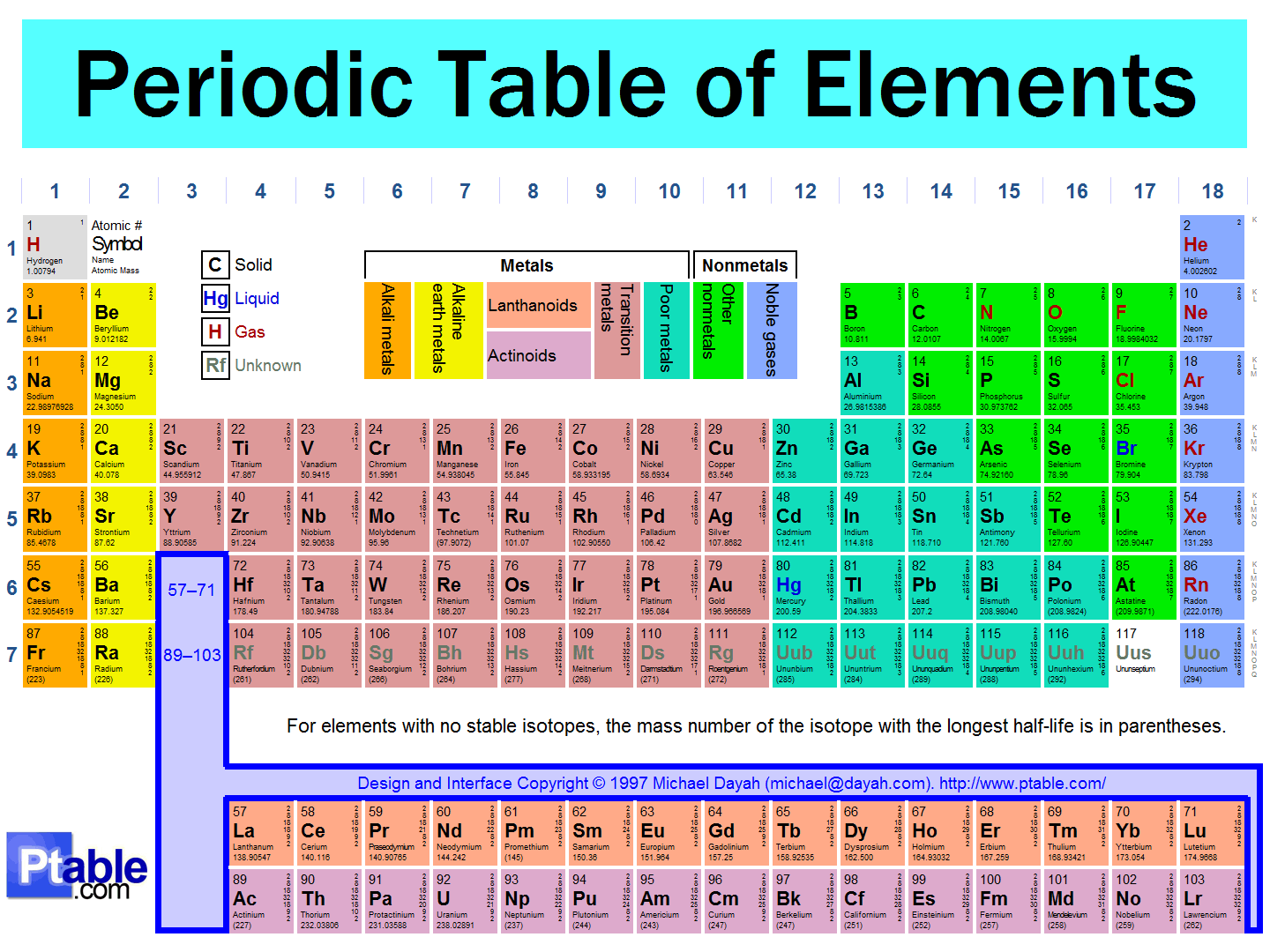
what is the biggest group on the table
metals
nonmetals
metaloids
halogens
how many rows are on the table
4
5
6
7
how many groups/families are on the table
15
16
17
18
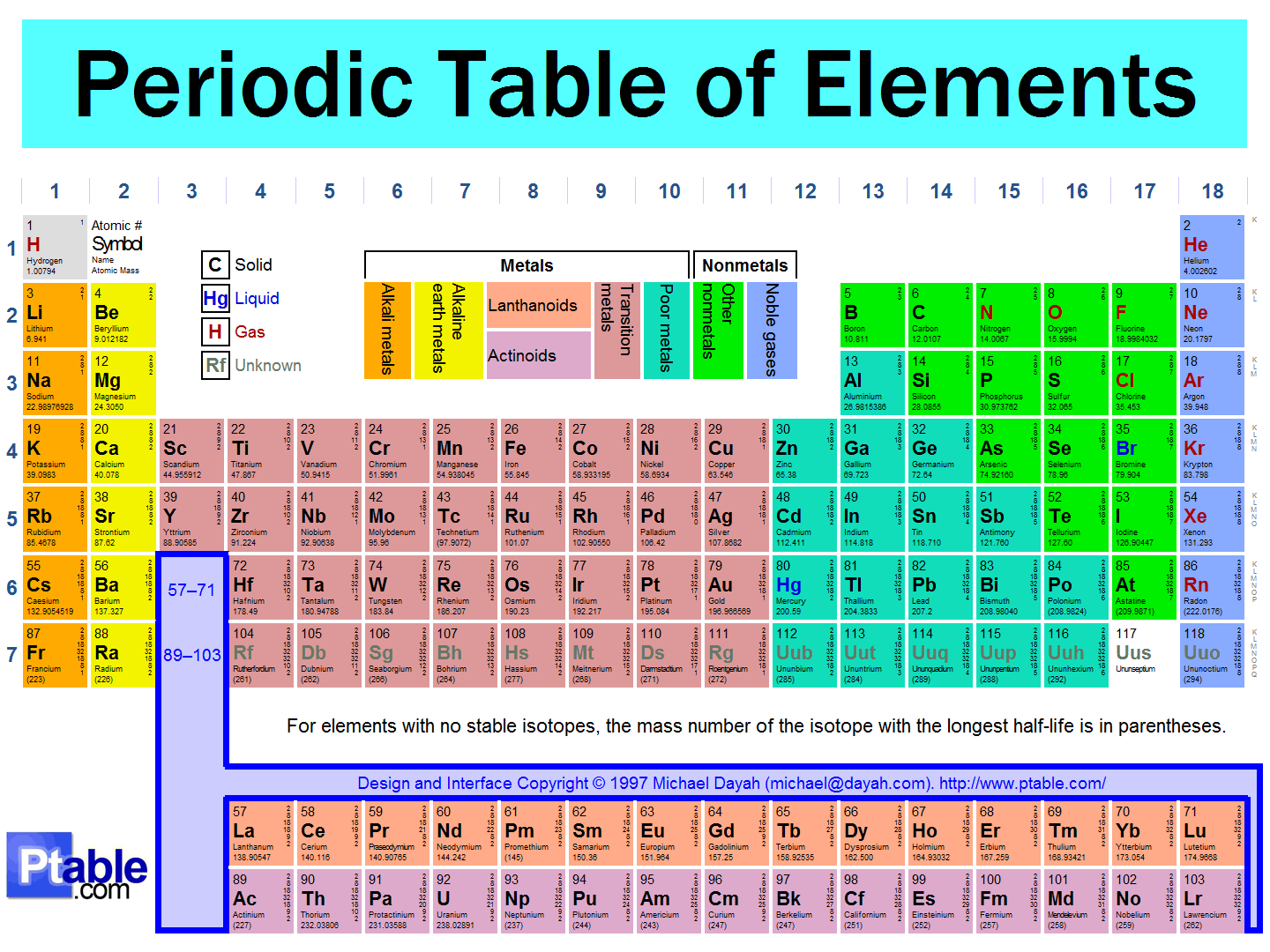
Who invented the Periodic Table?
Mendeleev
Bohr
Lewis
Democritus
As you move left to right on a row or period what happens?
Atomic number increases by 1
Electrons decrease
Number of shells decrease
Nothing
What happens to the number of shells as you move down a group?
They decrease by 1
They increase by 1
Nothing
Valence means......
inside
outside
full
We use M.A.N. to find the number of .....
Protons
Electrons
Neutrons
Shells

A.P.E. tells us the number of Protons & Neutrons.
True
False
What do all elements in the same period have?
same number of shells
same number of electrons
belong in the same family
What is the smallest piece of matter that still has properties of that matter?
element
atom
proton
Negatively charged particle
proton
neutron
electron
Neutral charge particle
proton
neutron
electron
Positively charge particle
proton
neutron
electron

What do protons, electrons and neutrons make?
element
compound
atom
The word "periodic" means
repeating
Grouping
ordering
what does an Atomic number tells you?
Number of neutrons in nuclei
Number of protons in nuclei
Number of electrons
Elements which are shiny, can be bent, conduct electricity and heat are called
Which one will glow if an electric current is passed through them?
Metal
Non-metal
Metalloid
Noble gas
Elements in the same group or family have __________
Similar physical and chemical Properties
Same number of shells
Similar Mass
How many known elements are there?
116
118
106
108
Semimetals (Metalloids) have the properties of
metals
non-metals
metals and non-metals
An atom that gains or loses an electron becomes
an isotope
a new element
an ion
a molecule
How many different elements are in the C6H12O6
3
6
12
24

What is an element molecule?
When different atoms are bonded together
When the same two atoms are bonded together
When three or four atoms are bonded together
When atoms share protons.

What is a compound molecule?
When the same two atoms bond together
When different atoms bond together
When molecules make a compound structure
When several atoms don't do their homework

What part of the atom makes a bond?
Electrons
Protons
Neutrons
Any subatomic particle

Hydrogen atoms come together to form a _________________
Dancing bear
Hydrogen molecule
Carina molecule
Artemis molecule

What is the octet rule?
Elements just are
Elements keep electrons to make changes
Elements keep electrons to stay the same
Elements gain or lose electrons to fill their outer shell with 8 electrons

Why do elements want to bond?
Because bonding is super cool.
Only nerdy elements need bonding
To be like the noble gases which are stable with full valence elecron shells.
This is a hard question, Ms. Hunt
Is H2O2 an element or a compound?
element
compound
Which type of bonds create compounds?
covalent bonds
ionic bonds
metallic bonds
all type of bonds
How many total atoms are in C6H1206
3
6
12
24
Are the atoms more stable when they are bonded together or when they are apart?
Bonded Together
Apart
Ionic Bonding involves:
The transfer of protons
The transfer of neutrons
The transfer of electrons
None Of the above
What do atoms that form positive ions tend to do?
Tend to lose electrons
Tend to lose protons
Tend to gain electrons
Tend to gain protons
What usually forms the positive ion?
Metal
Nonmetals
None
What usually forms the negative ion?
Nonmetals
Metal
None
Covalent compounds:
Share electrons
Transfer electrons
Neither
What charges attract?
Opposite
Same
What charges repel?
Same
Opposite
What elements generally make an ionic bond?
metal and nonmetal
2 or more nonmetals
metal
none of the above
What is the number of valence electrons for Calcium (Group 2)?
1
2
3
4
What is the number of valence electrons for Carbon (Group 14)?
1
2
3
4
What is the number of valence electrons for Neon and the other Noble Gases?
5
6
7
8
If an atom transfers an electron to another atom, those atoms form which bond?
Ionic Bond, which is stronger than a covalent bonds
Covalent Bond, which is stronger than ionic bonds
If I was trying to determine if two atoms will bond, what would be helpful to know:
Valence electrons, found by group number
Whether the elements are metals or nonmetals
The electronegativity of the atoms
All of the above, all of which can be found on the Periodic Table
Mendeleev could able to predict scientists would discover more elements in future.
True
False
The Modern Periodic Table of Elements are arranged by

semimetals/metalloids
If you know the atomic number of an element, you will know the element's
number of protons
number of neutrons
number of electrons
mass number
Which two elements are liquids at room temperature?
Molybdenum and Bohrium
Mercury and Bromine
Germanium and Iodine
Which are TRUE about Molecules?
A molecule is a group of two or more atoms that are chemically joined.
Each molecule act as a single unit.
Size of the molecule can be small or big
Atoms give-up their outermost loose electron to become
positively charged Cations
negatively charged Anions
positively charged Anions
Negatively charged Cations
Atoms of the same element that have a different number of neutrons are called
Molecular compound
Isotopes
Mixtures
The lowest energy levels are the rings __________ to the nucleus and can hold up to ______ electrons.
farthest, 8
closest, 2
closest, 8
farthest ,2

What is the BEST definition of a chemical reaction?
A change in matter that produces one or more NEW substances
When two things combine and EXPLODE.
A substance that is formed as the result of a chemical reaction is a __________________
Product
Reactant
Starters
Enders
Which of the following is an example of a chemical change?
water freezes to form ice
sugar dissolves in water
gasoline burns in a car engine
a piece of metal expands when it is heated
A change in the shape of an object is an example of _________________.
a chemical change
energy
an endothermic change
a physical change
Which one shows that a chemical reaction has occurred?
dissolving
melting
formation of a gas
bending
A chemical change is different than a physical change because in a chemical change
chemicals are used
molecules do not physically touch
a new substance is formed and in a physical no new substance is formed
the change can be seen but in a physical change it cannot
Which of the following 2 are chemical reactions?
sugar dissolving in water
water turning into steam
burning wood
mixing baking soda and vinegar
tearing paper

Why are chemical equations always balanced? Select ALL that apply.
Matter cannot be created.
Matter cannot be destroyed.
Matter can only be rearranged/conserved.
Matter doesn't matter.

In a chemical reaction, if the reactants are heated, the reaction usually happens
slower
faster
at the same rate
in a smaller volume
Which of the following is a common sign that a chemical change has occurred?
A chemical has turned a different color, bubbled, and/or changed temperature.
A chemical has changed to a different state of matter, such as a liquid to a solid.
A chemical has changed size.
A chemical has become a different shape.


In chemical reactions, what does the Law of Conservation of Matter mean?
Matter is not created or destroyed.
The total mass of the reactants is greater than the total mass of the products.
The total mass of the reactants is less than the total mass of the products.
Matter is not changed.

CH2Cu8 - How many Copper atoms are in this formula?
1
2
8
16
What is the coefficient for this formula? 9NaCl2
9
2
1
11
This tells you how many atoms of an element you have in a chemical formula
coefficient
subscript
chemical symbol
atomic number
This tells you the number of molecules you have of a substance
coefficient
subscript
exponent
chemical formula
Is this equation balanced?
2H2O yields H2 + 2O2
Yes
No
This equation is not balanced. Which element has more atoms on one side than the other?
2HCl + CaCO3 yields CaCl + H2O + CO2
Cl
Ca
H
O
Is this equation balanced?
C + 2H2 yields CH4
No
Yes
How many total atoms are in this formula? 3Zn2O3H
6
9
18
three hydrogen (H)
one sulfur (S)
four oxygen (O)
How many elements are in C6H12O6?
1
2
3
4
Which of the following could be an organic compound? Hint: organic means it contains Carbon!
NH3
H2O
CaCl2
CH4
Which of the following chemical equations follows the Law of Conservation of Mass? Hint: which is balanced?
CO2 + H2O --> C6H12O6 + O2
C6O + H12O --> C6H12O2
CO2 + H2O --> C6H12O6 + O2
CO2 +H2O --> C6H12O6 +O2
Al2
A single atom
Elemental Molecule
Compound Molecule
None of these
Does this follow the Law of Conservation of Mass? (is it balanced?)
Mg + Cl2 --> MgCl2
No
Yes
Which of the following is a physical change?
What happens in a Chemical Reaction?
a) Chemical bonds are formed
b) Chemical bonds are broken
both a & b
None

How many Carbons are present on the reactant side?
1
2
3
4


How many atoms are represented in the reactants of this equation?
6
12
24
36

How many Oxygens are on the product side of this chemical equation?
1
2
3
4
Alloy is a ...
A chemical compound with combination between metal and non-metal
A salt contain of two or more elements where the main element is non-metal
Mixture of two or more elements where the main element is metal
What is a solvent
A liquid that will dissolve a solid solute
Another word for solution
A thing that make drinks change colour
Usually the solid about to be dissolved
The substance being dissolved in a solution is the?
solution
solute
solvent
mixture
Which one loses its identifying characteristics
Which one does not lose its identifying characteristics
As temperature increases, what happens to particles?
They speed up
They slow down
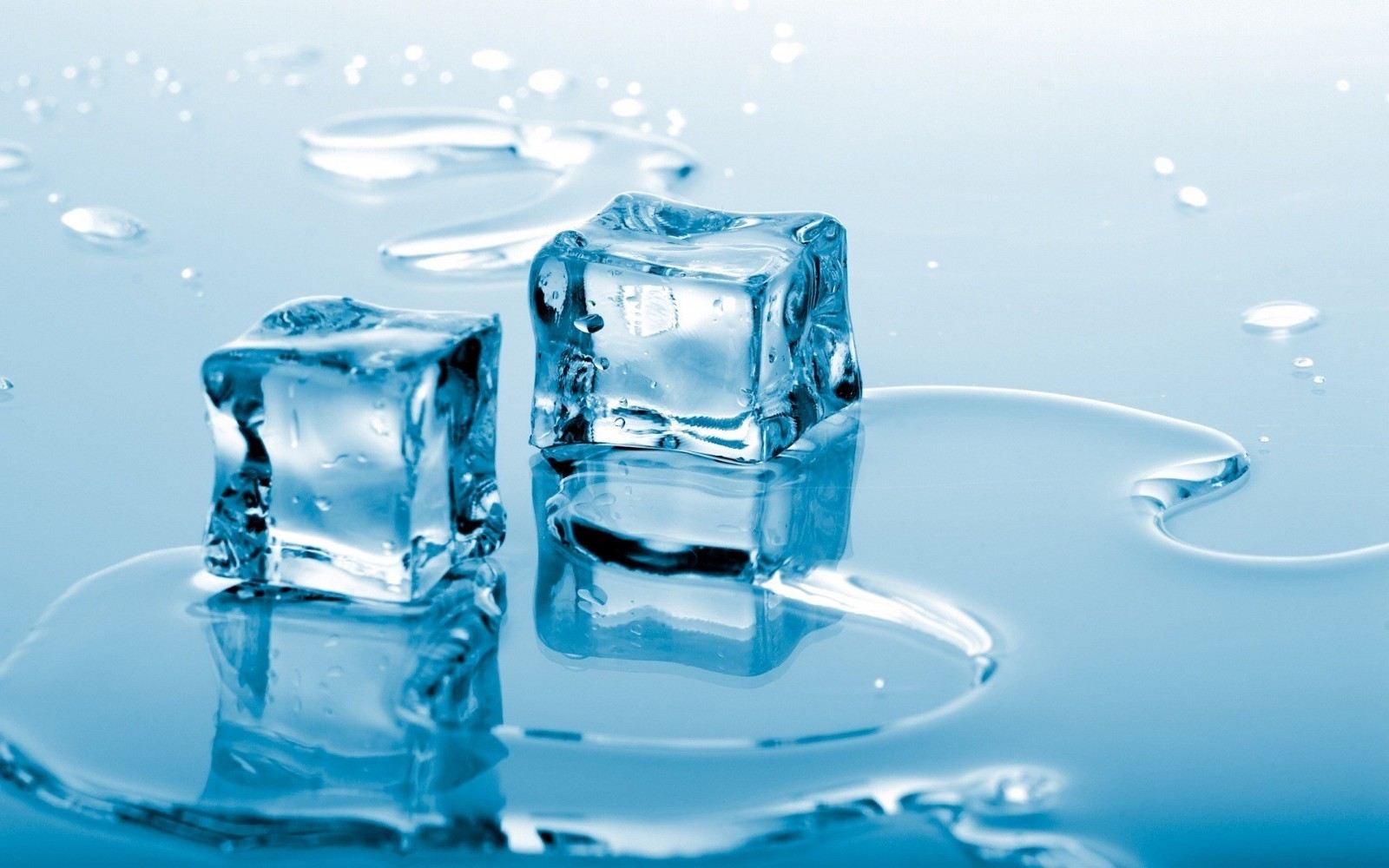
What is happening in this picture of ice melting?
Molecules are speeding up
Molecules are slowing down

What is happening in this picture of water boiling?
Molecules are speeding up
Molecules are slowing down
Condensation
A gas changes into a liquid
A liquid changes into a gas
A solid changes into a liquid
A liquid changes into a solid
Evaporation
A gas changes into a liquid
A solid changes into a liquid
A liquid changes into a gas
A liquid changes into a solid
Solubility depends on
Temperature of solute
pressure & concentration of solvent

