
 Worksheets
Imperialism Review
Total questions: 60
Worksheet time: 2hrs 59mins
Before 1898, most American had opposed imperialism. Why did imperialism suddenly become more popular in the US by the end of the century?
Americans felt it was against the principles of democracy to rule over others.
Americans wanted to sell goods to new markets and buy raw materials for new industries.
Americans wanted to rule others because America had once been a British colony.
Americans feared imperialism would bring the United States into conflict with other powers.
Why is the Spanish American War of 1898 often considered a major turning point in US history?
It revealed the US had become a world power.
It marked the first American victory over a European country.
It demonstrated the need for better communications in wartime.
It showed American support for European economic interests in East Asia.

Which exiled Cuban leader raised money in Ybor City and other cities in Florida to organize a new revolt against Spanish rule in Cuba?
Enrique Dupuy de Lome
Vicente Martinez Ybor
Emilio Aguinaldo
Jose Marti
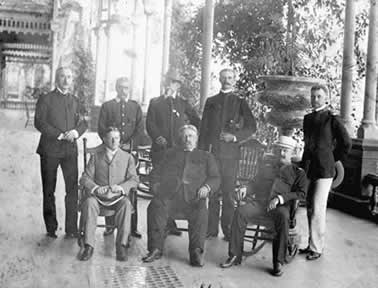
Which Florida city served as the main port of embarkation for the "Rough Riders" and other American forces sent to Cuba during the Spanish-American War?
Orlando
Jacksonville
Tampa
Miami
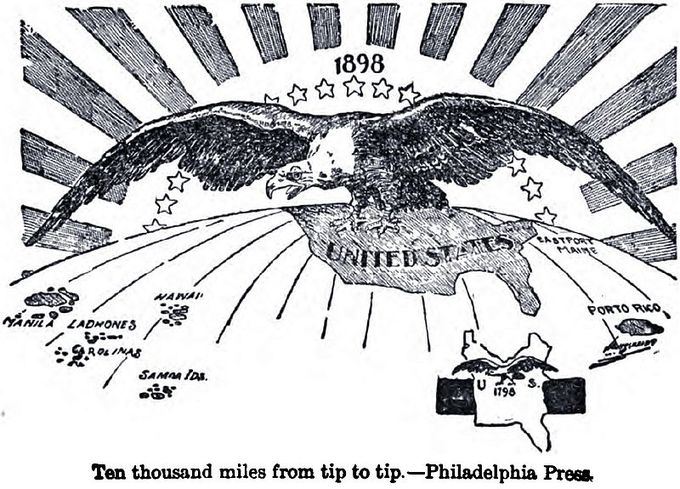
This image is a representation of...
US Exploration
US Diplomacy
US War Relations
US Imperialism

President Theodore Roosevelt said “Speak softly and carry a big stick.” His big stick was a reference to
a. joining military alliances to carry out foreign policy goals
using the navy to accomplish foreign policy goals
a. using the national forests to stimulate building projects
a. supporting woman suffrage to expand civil rights


What is the type of sensational reporting where writers exaggerated or even invented stories?
muckraking
yellow journalism
journalism
reporting
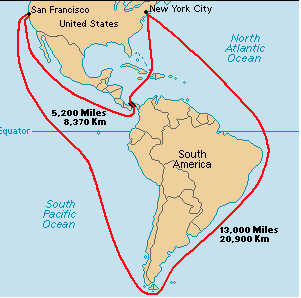

Why did the United States acquire Hawaii?
The US wanted volcanoes
To use the islands as a naval base, and for its sugar
to create a naval base during World War II
to assist Queen Liliuokalani take control of the islands

What was a result of headlines like the one above?
World War I begin
The Spanish-American War
The US entered World War I
The Union defeated the Confederacy
What were the two main locations of fighting during the Spanish-American War?
Alaska and Hawaii
Puerto Rico and Guam
Cuba and the Philippines
Spain and the United States
After the Spanish American War, the U.S. Directly controlled all of the following territories EXCEPT
The Philippines
Guam
Puerto Rico
Cuba
Which policy gave US the right to be the "policemen of the Western Hemisphere"
Roosevelt Corollary
Good Neighbor Policy
Open Door Policy
Marshall Plan

Why did Theodore Roosevelt help support a revolt against Columbia?
Columbia refused to comply with trade agreements
He wanted to establish a naval base in Columbia
He wanted to establish a colony in Columbia
He wanted to build the Panama Canal
In what year did the United States begin its rise as a world power?
1898
1941
1914
1929
What territories did the United States acquire as a result of the Spanish-American War in 1898?
Hawaii & Puerto Rico
Puerto Rico, Guam, &
the Philippines
Japan, Puerto Rico & Guam
Puerto Rico, Hawaii & the Philippines
The American victory in this war helped establish the U.S. as an imperial power.
Vietnam War
WWII
Spanish American War
WWI
What were some economic effects of the Spanish-American War?
Increased economic success
New inovations
Industrialization & Urbanization
natural resources & new markets for trade

What passage way, built by T. Roosevelt, made shipping and transportation more efficient between the Atlantic & Pacific Oceans?
Panama Canal
Big Stick Policy
National Park Service
Open Door Policy

This person advocated for oversea expansion and the development of a large navy.
FDR
Alfred T. Mahan
Sandford B. Dole
Teddy Roosevelt

This individual pushed for the annexation of Hawaii.
FDR
Alferd T. Mahan
Sandford B. Dole
Teddy Roosevelt

This president pushed for increasing the size of the navy and the building of the Panama Canal.
Sandford B. Dole
FDR
Ronald Reagan
Theodore Roosevelt
What are some other terms associated with the acquisition of territory?
Ceced
Annexation, expansion,
cession
Nativism & Communism
Impeachment & Resigning
The extent of a nation’s power over other lands
exploit
annex
indigenous
imperialism
to make use of meanly or unfairly for one’s own advantage; to take advantage of
exploit
annex
indigenous
racism
to incorporate into an existing political unit, such as a city or a country; to add to
exploit
annex
indigenous
racism
native to a region
annex
exploit
indigenous
imperialism
the belief that race determines a person’s traits or capabilities
racism
exploit
indigenous
imperialism
The United States backed a rebellion to secure construction of this Central American waterway, which opened in 1914
Panama Canal
Mohandas Gandhi
indirect rule
direct rule
Under this policy, the United States claimed the right to intervene in Latin American countries considered guilty of misconduct
Roosevelt Corollary to the Monroe Doctrine
direct rule
indirect rule
none of these
European nations began to search for new overseas colonies after 1880 to
find who would work in European factories for low wages
promote a free exchange of ideas between Eastern and Western cultures
bring the economic benefits of industrialization to underdeveloped nations
obtain raw materials for their industries and open new markets for their products
Imperial economic policies in Latin America resulted in
the decline of middle sectors of society
regional dependence on exports to Western powers
widespread land redistribution to poor farmers
the generally peaceful transition to democratic forms of government
Which European power controlled most of west Africa?
United States
Great Britain
France
Italy
Which country gained control over Cuba and the Philippines after the Spanish American War?
United States
Great Britain
France
Italy
Which of the following phrases describes the threat of force using a strong navy?
“Captain’s Catch”
“Captain Crunch”
“Gunboat diplomacy”
“What’s A Madda with My Armada”
Which country controlled French Indochina?
United States
Great Britain
France
Italy
Why did many industrialized or advanced countries need to takeover less advanced countries?
For better climate and cleaner environment
To create a democratic government
To teach the local population about recycling
To claim or takeover natural resources located in those countries
Imperialism is __________.
when a powerful nation uses its resources to help a weaker nation
when a weaker nation invites a powerful nation to help it industrialize
when a powerful nation takes control of the economy and government of a weaker nation
when weak nations join together to fight a strong nation
Why were European countries interested in colonizing Africa during the Age of Imperialism?
They wanted Africa's natural resources
They wanted land to develop new types of ships
They wanted to create a perfect society
They wanted to learn new languages
Which of the following is true about the Boxer Rebellion?
The rebellion took place in Japan.
The Boxers were trying to keep Christianity in China.
The Boxers were defeated by the foreign countries of Russia, Japan, United States, France, Great Britain, and Germany.
The Boxers were able to drive out the foreigners from China.
Which two states were gained as a result of imperialism?
Arizona and California
Arizona and Hawaii
Alaska and California
Alaska and Hawaii
The Open Door Policy gave _______________ rights to China.
Great Britain
France
the USA and every other country
Germany
The Monroe Doctrine prevented Europe from taking over countries in __________________
North America only
South America only
Asia
North and South America

What is "annexation"?
When a country takes control of new territory.
When a country frees territory that it controls.
When a country frees another group of people from imperialist rule.
When a country rebels against it's imperial rulers.
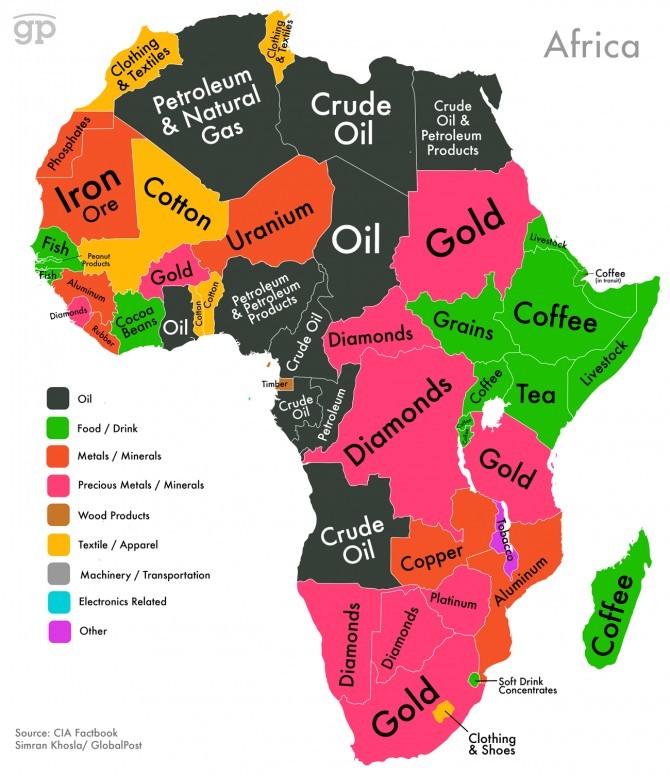
Why did pro-imperialism Americans want to expand our territories?
To spread freedom and democracy.
To spread Christianity.
To scare other nations into doing what we wanted.
To gain raw materials and a market for our products.

What US document threatened war against any European nations that tried to create new colonies in the Western Hemisphere?
The Monroe Doctrine
The US Constitution
The Declaration of the Rights of Man
The Treaty of Kanagawa

Imperialism is __________.
when a powerful nation uses its resources to help a weaker nation
when a weaker nation invites a powerful nation to help it industrialize
when a powerful nation takes control of the economy and government of a weaker nation
when weak nations join together to fight a strong nation

What territories did the US gain as a result of its victory over Spain in the Spanish-American War?
Philippines, Puerto Rico, Panama
Philippines, Puerto Rico, Guam, Cuba
Puerto Rico, Panama, Haiti

Become a world power
Economic motive
Political motive
Imperial motive
Religious motive

A form of sensationalist writing used as propaganda
red journalism
yellow journalism
enquiring journalism
investigative reporting

The leader of the Rough Riders that captured San Juan Hill
McKinley
Coolidge
Roosevelt
Adams

