wayground logo

Free Printable Worksheets

Font size

S
M
L
XL
Worksheets

simple machine, force work and energy

Total questions: 107

Worksheet time: 3hrs 42mins

Name
Class
Date
1.
Rubbing your hands together is a simple example of ___.
a)
friction
b)
work
c)
potential
2.

A push or pull that acts on an object is called

a)

Work

b)

Force

c)

Energy

d)

Momentum

3.

When we throw a ball up, it falls down to the ground because of force of

a)

Gravity

b)

Friction

c)

Magnetic

d)

Electric

4.

When we use force to move things, we do?

a)

Work

b)

Energy

5.

A force that tries to stop a moving object is known as?

a)

Gravitational force

b)

Force of friction

c)

Mechanical force

d)

Electrical force

6.

Ability to do work is known as?

a)

Energy

b)

Work

c)

Force

d)

Machine

7.

Identify the simple machine

a)

Wheel and axle

b)

Lever

c)

Pulley

d)

Wedge

8.

Identify whether work is done or not in the picture

a)

Yes

b)

No

9.

A football is kicked by a boy. It rolls on the ground to some distance and stops. The force which stops the ball is _______.

a)

muscular force

b)

gravitational force

c)

mechanical force

d)

frictional force

10.

Read the statements carefully and choose the correct option.


Statement A: We get energy from food we eat.

Statement B: We need energy to do work.

a)

Statement A. is correct B is wrong

b)

Statement B is correct A is wrong.

c)

Both the statements are correct.

d)

Both the statements are wrong.

11.

A push or pull that acts on an object is called

a)

Work

b)

Force

c)

Energy

d)

Momentum

12.

When we throw a ball up, it falls down to the ground because of force of

a)

Gravity

b)

Friction

c)

Magnetic

d)

Electric

13.

Friction occurs when the object rubs against a

(a)  

14.

When we use force to move things, we do?

a)

Work

b)

Energy

15.

Burning of fuels to produce energy causes pollution. Should we use them?

a)

No

b)

Yes

c)

Can use

d)

None 9f the above

16.

We can calculate the work done by using the formula

a)

Force × Energy

b)

Force × Distance

17.

Energy is the ability to do work.

a)

True

b)

False

18.

What is the main source of our energy?

a)

Planets

b)

Comets

c)

Moon

d)

Sun

19.

Electricity generated from water is called

(a)  

20.

Door knobs and screwdrivers are examples of which kind of simple machine?

a)

Pulley

b)

Lever

c)

Wheel and axle

21.
Flagpole
a)
wedge
b)
pulley
c)
incline plane
d)
wheel and axle
22.
Lightbulb
a)
wedge
b)
pulley
c)
incline plane
d)
screw
23.
Stairs
a)
wedge
b)
pulley
c)
inclined plane
d)
wheel and axle
24.
Gravity is the force objects put on each other because of their ______.
a)
Mass
b)
Friendliness
c)
Acceleration
d)
Speed
25.
Velocity is 
a)
speed
b)
direction
c)
speed with a direction
26.
A sloping force, like a ramp, that reduces the mount of force required to lift an object.
a)
screw
b)
wheel and axle
c)
inclined plane
27.
Pedals, handle bars and handbrakes on a bicycle
a)
wedges
b)
pulleys
c)
incline planes
d)
levers
28.
This device
a)
wedge
b)
lever
c)
incline plane
d)
wheel and axle
29.
This device
a)
wedge
b)
lever
c)
incline plane
d)
wheel and axle
30.
What type of simple machine is this?
a)
wheel and axle
b)
gear
c)
lever
d)
inclined plane
31.
A ______ is a grooved wheel with a rope running along the groove.
a)
lever
b)
pulley
c)
screw
32.
A simple machine that can split things apart or hold a door open.
a)
wedge
b)
screw
c)
lever
33.
A simple machine that is made up of an incline plane wrapped around a cylinder. It is often used to hold things together.
a)
lever
b)
screw
c)
wedge
34.
Scissors are an example of a compound machine. What simple machines are used to make up this compound machine?
a)
2 levers and 2 inclined planes
b)
2 levers and 2 pulleys
c)
2 pulleys and 2 inclined planes
35.
A fishing pole is an example of a compound machine. What simple machines are used to make up this compound machine?
a)
lever, wheel and axle, pulley
b)
wheel and axle, inclined plane, pulley
c)
wheel and axle, pulley, inclined plane
36.
A simple machine is a device that helps to reduce the amount of _____ required to work.
a)
force
b)
energy
c)
work
37.
What are the two things that must be measured in order to find an objects velocity?
a)
speed and direction
b)
acceleration and speed
c)
direction and time
d)
distance and rate
38.
Speed is equal to 
a)
Distance/Time
b)
Time/Distance
c)
Time x Distance
d)
Acceleration
39.
Speed is different from velocity because
a)
Velocity has a direction
b)
Speed uses Distance /Time
c)
Velocity doesn't include time
d)
Velocity doesn't include distance
40.
Which liquid is the most dense?
a)
corn syurp
b)
water
c)
glycerine
d)
corn oil
41.
An object that floats in water is __________.
a)
more dense than water
b)
same density as water
c)
less dense than water
d)
must be in the shape of a cube
42.
What causes an object to sink in a water?
a)
if the object's density is less than the water's density.
b)
if the object's density is the same as water's density.
c)
if the object's density is greater than water's density.
d)
if the object's density is zero
43.
What property do these tools measure?
a)
volume
b)
mass
c)
length
d)
temperature
44.
What is volume of the water? 
a)
10 mL
b)
15 mL
c)
20 mL
d)
25 mL
45.

mass per unit of volume

a)

density

b)

volume

c)

weight

d)

mass

46.

Amount of matter in an object is called its ______.

a)

density

b)

volume

c)

weight

d)

mass

47.

Frank has a wooden box. It has a mass of 4kg, and a volume of 2l. What is its density?

a)

8 kg/l

b)

2 kg/l

c)

1/2 kg/l

d)

24 kg/l

48.
The mass of an object is 30 g.  The volume is 5 mL.  What is the density of this object?
a)
6 g/cm
b)
6 g/mL
c)
6
49.
The upward force exerted by a liquid on an object immersed in or floating on the liquid
a)
pressure
b)
buoyant force
c)
normal force
d)
gravity
50.
When the weight of an object is greater than the buoyant force, the object will ... 
a)
Sink
b)
Float 
c)
Expand
d)
Shrink
51.
What direction is the buoyant force in?
a)
Downward
b)
Left
c)
Right
d)
Upward
52.

If a body is immersed in water, it will weigh ______.

a)

more than weight in air

b)

less than weight in air

c)

same as weight in air

d)

may be more or less depending on impurities in water

53.

According to Archimedes, loss in weight is equal to

a)

weight of liquid

b)

weight of the body

c)

weight of the liquid displaced by the immersed part of the body

d)

density of liquid

54.

The weight of an object in water is called its ________.

a)

Apparent volume

b)

Apparent weight

c)

Apparent loss

d)

density

55.

An object weighs 30 kg in air and 26 kg in water . What is the apparent loss in weight?

a)

56 kg

b)

780 kg

c)

4 kg

d)

8 kg

56.

An object displaces 3 l of water and weighs 6kg in air .What is its apparent weight?

a)

18 l

b)

3 kg

c)

3 l

d)

18 kg

57.

2 kg sugar and 2kg chips are kept in two containers.

a)

Both will have the same volume .

b)

Volume of sugar will be more.

c)

Volume of chips will be more.

d)

none

58.

Two containers with same volume contain rice and cornflakes in them.Which one will weigh more?

a)

Rice will weigh more

b)

Cornflakes will weigh more

c)

Both will weigh the same

d)

Rice will weigh less

59.

The density of an object is 2 kg/l.Will its float or sink in water?

a)

It will sink.

b)

It will float

60.
What property do these tools measure?
a)
volume
b)
mass
c)
length
d)
temperature
61.
What is volume of the water? 
a)
10 mL
b)
15 mL
c)
20 mL
d)
25 mL
62.
Water displacement is used to find what?
a)
Density
b)
Mass
c)
Volume
d)
Weight
63.
What is the volume of the rock?
a)
30cm3
b)
10cm3
c)
40cm3
d)
20cm3
64.
What does the scale read?
a)
9.4 g
b)
9.6 g
c)
49.4 g
d)
49.6 g
65.
Metric unit used to record mass.
a)
cm3
b)
grams (g)
c)
miliLiter
d)
liter (L)
66.
Which liquid has the least density?
a)
Water
b)
Glycerine
c)
Corn Oil
d)
Corn Syurp
67.
What is this?
a)
scale
b)
graduated cylinder
c)
triple beam balance
d)
massonater
68.
Volume is __________.
a)
how many atoms
b)
how much matter is in an object
c)
how  much something weighs
d)
how much space an object takes up
69.
The metric unit used to measure the volume of a solid objects.
a)
grams
b)
miliLiter
c)
cm3
d)
Liter (L)
70.
Matter is anything that has
a)
length width and hieght
b)
anything that has mas and volume
c)
a definite shape
d)
energy
71.
Which liquid is the most dense?
a)
corn syurp
b)
water
c)
glycerine
d)
corn oil
72.
An object that floats in water is __________.
a)
more dense than water
b)
same density as water
c)
less dense than water
d)
must be in the shape of a cube
73.
What are the 3 states of matter?
a)
ice rock and desk 
b)
solid liquid and gas 
c)
matter volume density
d)
hard soft medium
74.
What causes an object to float in a water?
a)
if the object's density is less than the water's density.
b)
if the object's density is the same as the water's density
c)
if the object's density is greater than the water's density
d)
if the object's density is zero
75.
What causes an object to sink in a water?
a)
if the object's density is less than the water's density.
b)
if the object's density is the same as water's density.
c)
if the object's density is greater than water's density.
d)
if the object's density is zero
76.
a)
waxing crescent
b)
waning gibbous
c)
first quarter
d)
waning crescent
77.
a)
full moon
b)
waning gibbous
c)
first quarter
d)
new moon
78.
The phases of the moon when the light is increasing and the light is on the right side of the moon. 
a)
waning
b)
quarter
c)
waxing
d)
gibbous
79.
The phases of the moon when the light is decreasing and the light is on the left of the moon. 
a)
waxing
b)
waning
c)
crescent
d)
quarter
80.
The phases of the moon when half of the moon is lit.
a)
crescent
b)
gibbous
c)
quarter
d)
waxing
81.
The phases of the moon when less than half of the moon is lit. 
a)
quarter
b)
crescent
c)
gibbous
d)
waning
82.
The phases of the moon when more than half the moon is lit. 
a)
crescent
b)
gibbous
c)
waxing
d)
quarter
83.
An entire lunar cycle takes ____. 
a)
24 hours
b)
365 days
c)
29.5 days
d)
12 hours
84.
How many phases are there in a complete lunar cycle?
a)
4
b)
8
c)
12
d)
6
85.
a)
last quarter
b)
first quarter
c)
full moon
d)
half moon
86.
a)
full moon
b)
new moon
c)
last quarter
d)
waxing crescent
87.
a)
waxing crescent
b)
waning crescent
c)
waxing gibbous
d)
waning gibbous
88.
Which moon phase is when you can't see the moon at all?
a)
Waning crescent
b)
Full moon
c)
Waxing gibbous
d)
New moon
89.
The cycle of the moon lasts about a _.
a)
day
b)
year
c)
week
d)
month
90.
Which of the following words describe the phases of the moon?
a)
none, quarter, half, three quarters, full
b)
new, crescent, quarter, gibbous, full
c)
dark, light, half, quarter, blue
d)
first quarter, second quarter, third quarter, fourth quarter
91.
What is the difference between a gibbous moon and a crescent moon?
a)
The gibbous shows more than half of the bright side of the moon.
b)
The crescent shows more than half of the bright side of the moon.
c)
The gibbous shows less than half of the bright side of the moon. 
92.
How many phases does the moon go through?
a)
4
b)
8
c)
10
d)
16
93.
The moon ____________ or goes around the Earth.
a)
orbits
b)
cries
c)
climbs
94.
Changes in the moon's appearance are
a)
phases
b)
eclipses
c)
stages
d)
cycle
95.
Define Gibbous
a)
Less than half of moon visible
b)
More than half of moon visible
c)
All of moon visible
d)
None of moon visible
96.
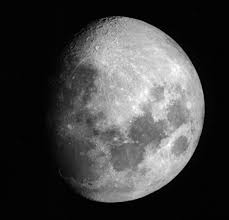
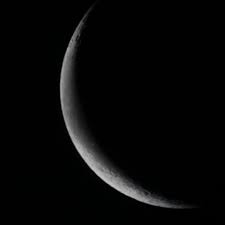
Name the moon phase
a)
Waning Crescent
b)
Waxing Crescent
c)
Waning Gibbous
d)
Waxing Gibbous
97.
The 1st Quarter moon is lit on the:
a)
Left Side
b)
Right Side
98.
Name the moon phase
a)
waning crescent
b)
waxing crescent
c)
waning gibbous
d)
waxing gibbous
99.
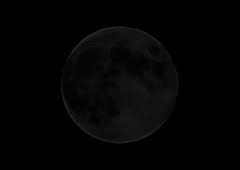
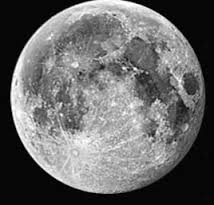
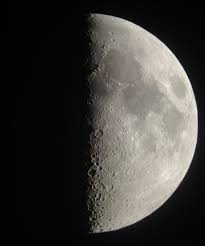
Name the moon phase
a)
First Quarter
b)
Last Quarter
c)
New Moon
d)
Full Moon
100.
Name the moon phase
a)
First Quarter
b)
Last Quarter
c)
New Moon
d)
Full Moon
101.
Name the moon phase
a)
First Quarter
b)
Last Quarter
c)
New Moon
d)
Full Moon
102.
Name the moon phase that would come AFTER this moon.
a)
waning crescent
b)
waxing crescent
c)
waning gibbous
d)
waxing gibbous
103.
Name the phase of the moon for letter a
a)
First Quarter
b)
Last Quarter
c)
Waxing Gibbous
d)
Waning Gibbous
104.
Name the phase of the moon for letter f
a)
Waning Gibbous
b)
Waxing Gibbous
c)
Waning Crescent
d)
Waxing Crescent
105.
What is illuminating the Moon?
a)
Nuclear Fusion
b)
Sunlight
c)
Mirrors
d)
Flood Lights
106.
Name the moon phase
a)
waning crescent
b)
waxing crescent
c)
waning gibbous
d)
waxing gibbous
107.
Name the moon phase
a)
waning crescent
b)
waxing crescent
c)
waning gibbous
d)
waxing gibbous