wayground logo

Free Printable Worksheets

NEW

Font size

S
M
L
XL
Worksheets

Ionic vs. Covalent

Total questions: 25

Worksheet time: 27mins

Name
Class
Date
1.

Covalent Compounds HAVE positive (+) and negative (-) charges 

a)
True
b)
False
2.

Ionic Compounds HAVE positive (+) and negative (-) charges

a)
True
b)
False
3.

NaCl is what type of compound?

a)
Ionic
b)
Covalent
4.

CO2 is what type of compound?

a)
Ionic
b)
Covalent
5.
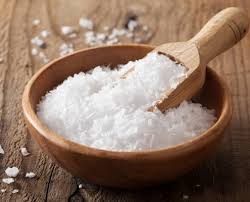
Why does K become positive when it bonds to Cl to form KCl?
a)
Because it loses an electron to have a full valence shell 
b)
Because it gains an electron to have 2 valence electrons
c)

Because Cl gives away its 7 electrons to K to form an equal charge 
6.

MgCl2 is what type of compound?

a)
Ionic
b)
Covalent
7.

Ozone or O3 is what type of compound?

a)
Covalent
b)
Ionic
8.
The octet rule means that all valence shells want to have the number...... 
a)
1
b)
9
c)
8
d)
16
9.
All atoms/elements bond in order to ....
a)
Have a full valence shell
b)
Give away electrons or take electrons
c)
Only share electrons
d)
To create electrical currents for human use 
10.
If pure water has no charge, why is it dangerous to stay in a thunderstorm
a)
B/c rain water has other (ionic) compounds mixed with it, giving it a charge
b)
B/c rain water is the same thing as pure water 
c)
B/c water is a polyatomic ion with a small charge
d)
B/c pure water and rain water together create another ionic bond 
11.
Why is it not safe to be in or near the ocean during a thunderstorm? 
a)
B/c salt water has NaCl inside of it, which is a charged Ionic compound 
b)
B/c salt water creates an uncharged particle
c)
B/c salt water itself is an ionic bond
d)
B/c pure water and salt water are the same thing 
12.

Why does the ionic compound, NaCl have different charges? 

a)
The metal gives away an electron to the nonmetal
b)
The metal and the nonmetal equally share electrons
13.
Why does CO2 not have a charge? 
a)
The metal gives away an electron to the non-metal
b)
The non-metals equally share electrons
14.
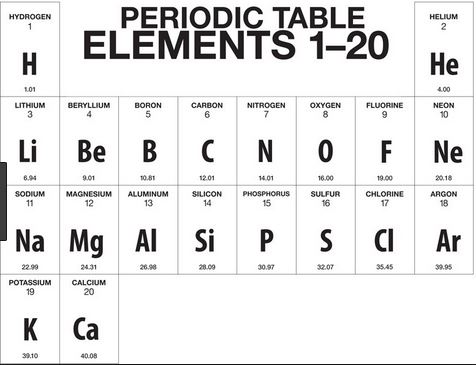
How many valence electrons does calcium have?
a)
2
b)
4
c)
6
d)
7
15.
How do covalent bonds form?
a)
Donating & receiving valence e- between atoms.
b)
Opposite slight charges attract each other between compounds.
c)
Scientists are still not sure how they form.
d)
Sharing valence e- between atoms.
16.
What two types of atoms make a covalent bond?
a)
2 Nonmetals
b)
1 Nonmetal and 1 Metal
c)
2 Metals
d)
2 Noble Gases
17.
In a covalent bond, one or more electrons are? 
a)
shared 
b)
lost 
c)
gained 
d)
transferred 
18.

If an atom has no charge, which of the following must be true?

a)

It has more neutrons than protons or electrons.

b)

There are only neutrons inside the atom.

c)

Its number of protons is equal to its number of electrons.

d)

The neutrons in the atom outnumber the electrons and protons.

19.
Ionic compounds are formed when one or more valence electrons are transferred from _____
a)
a nonmetal atom to a metal atom
b)
a nonmetal atom to a nonmetal atom
c)
a metal atom to a nonmetal atom
d)
a metal atom to a metal atom
20.

Why don't noble gases form bonds?

a)

Noble gases do form bonds

b)

They all have a full octet

c)

They only bond with each other

21.

In ionic bonds, metals tend to

a)

share valence electrons

b)

gain valence electrons

c)

lose valence electrons

d)

keep their electrons

22.

The chemical bond between a metal and a non-metal will be a _____ bond.

a)

metal

b)

ionic

c)

covalent

d)

polar

23.

How many valence electrons does Aluminum Have?

a)

1 Valence electron

b)

2 Valence electron

c)

3 Valence electron

d)

4 Valence electron

e)

5 Valence electron

24.

How many valence electrons does Fluorine Have?

a)

4 Valence electron

b)

5 Valence electron

c)

6 Valence electron

d)

7 Valence electron

e)

8 Valence electron

25.

How many valence electrons does Phosphorus Have?

a)

1 Valence electron

b)

2 Valence electron

c)

3 Valence electron

d)

4 Valence electron

e)

5 Valence electron