Wayground logo

Free Printable Worksheets

Font size

S
M
L
XL
Worksheets

Free body diagrams quiz

Total questions: 25

Worksheet time: 27mins
Name
Class
Date
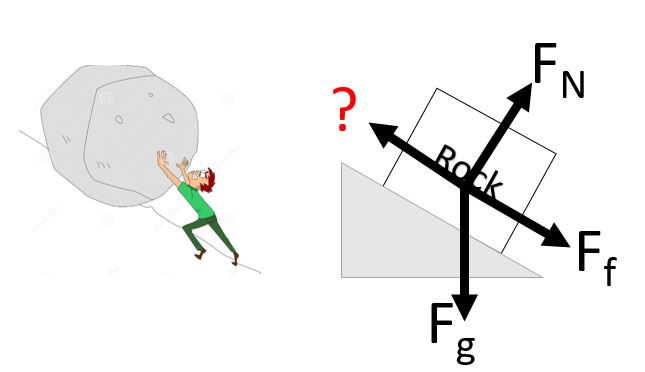
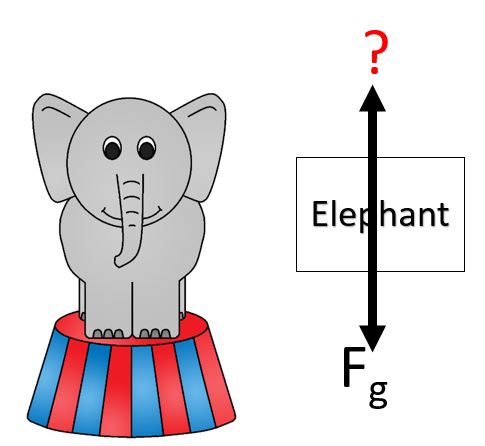
1.
Name the missing force....
a)
weight force
b)
normal force
c)
frictional force
d)
tension force
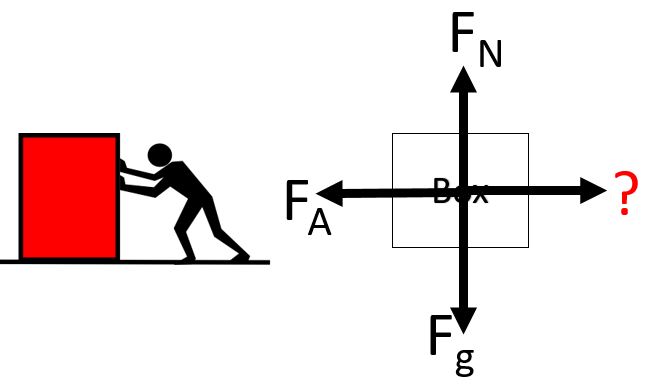
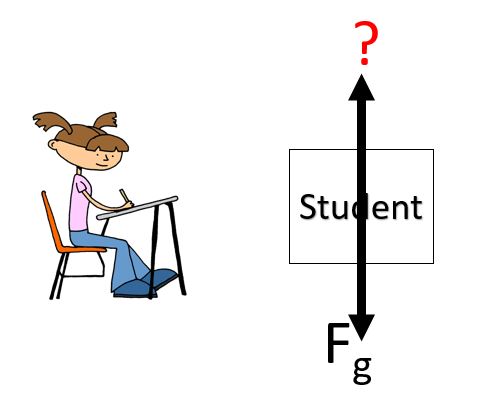
2.
Name the missing force...
a)
applied force
b)
weight force
c)
lift
d)
normal force
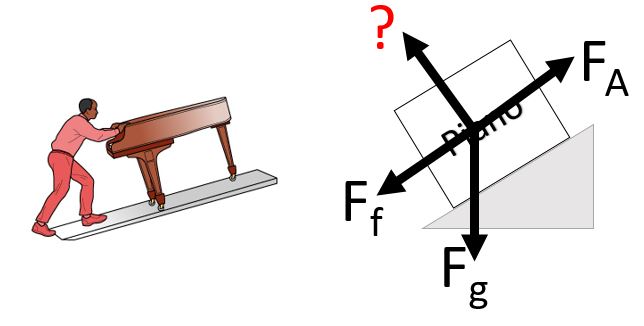
3.
Name the missing force...
a)
frictional force
b)
weight force
c)
thrust
d)
buoyant force
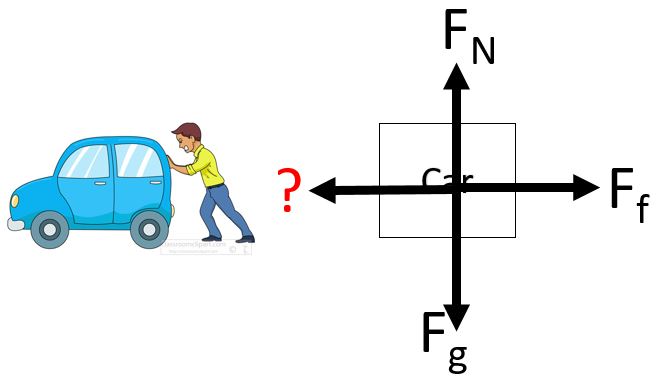
4.
Name the missing force...
a)
normal force
b)
applied force
c)
frictional force
d)
tension force
5.
Name the missing force...
a)
applied force
b)
weight force
c)
tension force
d)
drag
6.
Name the missing force...
a)
weight force
b)
normal force
c)
applied force
d)
frictional force
7.

Whenever an object is moving, there is always this force opposing the motion:

a)

inertia

b)

momentum

c)

friction

d)

applied force

8.

If an object is moving to the right, this force is pushing or pulling to the left:

a)

friction

b)

applied

c)

normal

d)

tension

9.

The force that keeps objects on top of surfaces instead of letting them sink into the surface is known as:

a)

normal

b)

abnormal

c)

static

d)

inertia

10.

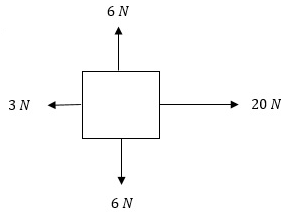
What is the NET FORCE of this diagram?

a)

17 N, right

b)

17 N, left

c)

23 N, right

d)

12 N, up

11.
The Free body diagram shown represents
a)
An upward force of 7N, a force to the right of 6 N and a force to the left of 5 N
b)
An upward force of 6N, a force to the right of 6 N and a force to the left of 6 N
c)
An upward force of 7N, a force to the right of 6 N and a force to the left of 3 N
d)
An upward force of 8N, a force to the right of 6 N and a force to the left of 5 N
12.

Determine the net force and direction of motion:

a)

16 N Right

b)

16 N Left

c)

0 N not moving

d)

0 N left

13.

In a force diagram, or free-body diagram, the size/length of the arrow tells you this about the force:

a)

magnitude

b)

distance

c)

direction

14.

In a force diagram, or free-body diagram, the pointy-end of the arrow tells you this about the force:

a)

magnitude

b)

distance

c)

direction

15.

What is the appropriate way to indicate Gravity in a diagram?

a)
b)
c)
d)
16.

The best way to label a push or a pull on a diagram is to use

a)
b)
c)
d)
17.

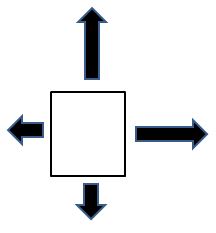
The down-arrow in this diagram is most-likely:

a)

gravity

b)

normal

c)

a push or pull

d)

friction

18.

If this object were moving right, the left-arrow in this diagram is most-likely:

a)

gravity

b)

normal

c)

a push or pull

d)

friction

19.

Which diagram best shows person pushing a couch (accelerating) across the floor?

a)
b)
c)
d)
20.

The rate at which velocity CHANGES is:

a)

a

b)

s

c)

d

d)

v

21.

velocity =

a)

a

b)

s

c)

v

d)

d

22.

Δ (delta) means

a)

distance or displacement

b)

difference or change

c)

a triangle

d)

approximately

23.

distance

a)

a

b)

x

c)

d

d)

t

24.

The arrow above means

a)

scalar

b)

vector

c)

to the right

d)

changing

25.
Which statement describes a vector?
a)
It has magnitude but no direction
b)
It has direction but no magnitude
c)
It has both direction and magnitude
d)
It has constant magnitude but no
 direction