
 Worksheets
Unit 1 Practice Test for Midterm
Total questions: 60
Worksheet time: 1hrs 7mins
Scarcity is a basic economic problem because
resources are limited
governments limit production
opportunity costs limit demand
people have trouble making choices
The basic idea of choice presents which of the problems in economics?
People get to decide what they want.
Businesses can sell what they want.
Decisions produce costs
Choice is a way of life.
In a free-market society, the answer to the question about how much to produce is determined by
census data
profit projections
consumer demand
government quotes
Which of the following represents the capital needed to start a tailoring or garment making business?
Dressmakers
Building space
Marketing team
Sewing machines
Which resource would be considered the factor of production called land?
(Natural Resources)
Coal
Factory
Money
Tractor
What is the factor of production called that is responsible for coordinating all other factors of production in order to make goods and services?
Entrepreneur
Land Resource
Labor Resource
Capital Resource
Jenny wants to buy a computer and a new television before she leaves for college. She only has enough money to purchase the computer. Which of the following is the opportunity cost of purchasing the computer?
College tuition money
Moving expenses
A new television
A new computer
Paying rent instead of purchasing tickets to a concert is an example of
Scarcity
Property Rights
Opportunity Cost
Circular Flow Model

If a point lies on the curve this means the company/country/individual is being efficient. If a point lies inside the curve, what does that tell?
They are being over efficient
They are being inefficient
It is not impossible with the given resources
They are still efficient, just at another point

What does point B represent?
Production at greater than the country's minimum potential
Production is less than the country's minimum potential
Production is greater than the country's maximum potential
Production at the country's maximum potential
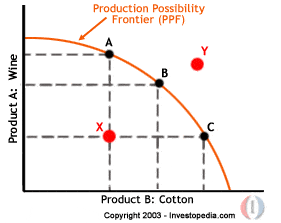
What is the abbreviation for PPC?
Possibility Production Curve
Production Possibility Curve
Production Possible Choice
Possibility Production Frontier
For markets to work efficiently, _________________ need to be well defined and enforced by law, otherwise trade would break down.
competition
private property rights
voluntary exchange
consumer soverignty
What is a common phrase used in capitalism?
freedom of the market
there’s nothing better than money
survival of the fittest
taxation without representation
What is a characteristic of a market economy?
markets
private property
competition
all of the above
Cuba has no shortage of fertile farmland, but the country spends $1.5 billion a year importing about 70 percent of its food.
The communist government's chronic struggle to get farmers to produce more is forcing authorities to grudgingly accept a greater role for market principles and the profit motive.
Now authorities seem willing to go another step further, tolerating the rise of what might be described as Cuba's "free-est" market.
This market, on the edge of Havana, only exists at night, appearing after sundown every day in a muddy vacant lot. Scores of battered, sputtering Chevy farm trucks and ancient Ford tractors arrive loaded with onions, squash, papayas and cabbage. It must be the largest gathering of 50-year-old American farm equipment anywhere on the planet.
The market doesn't have any signs, or even bathrooms, adding to the impression that Cuban authorities haven't quite accepted its permanence. Sales are done in cash under the faint glow of cellphone screens and lanterns. Even the police, who are ubiquitous elsewhere in Cuba, seem absent here.
Wholesale produce markets like this one exist all over Latin America, of course, where farmers can drive to the city and freely sell their crops. But in Cuba, there hasn't been anything like this in a half-century.
—“In Farmers Market, A Free Market Rises In Cuba,” Nick Miroffk, December 07, 2012
www.npr.org (accessed July 24, 2014)
Based on the information in the excerpt, in what way is the economy in Cuba changing —
free markets are emerging
food shortages have disappeared
farmers are responding to government incentives
government authorities are accepting new markets
Which of the following is NOT part of the product market?
chair
movie
chicken nuggets
workers
Who owns the resources in the Circular Flow Matrix in a free market?
businesses
households
government
TRUE or FALSE: A store can be in both the Resource Market and the Product Market.
True
False
In the public sector, which group "runs" the economy?
businesses
households
government
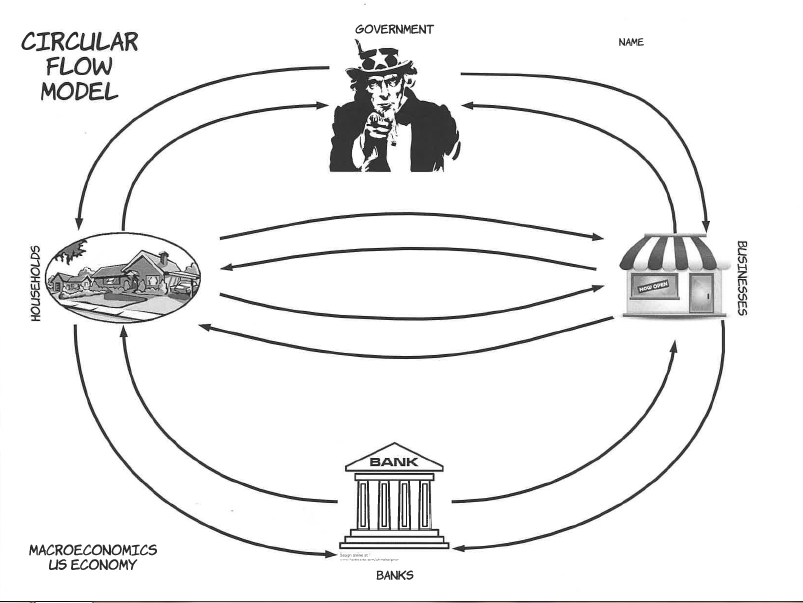
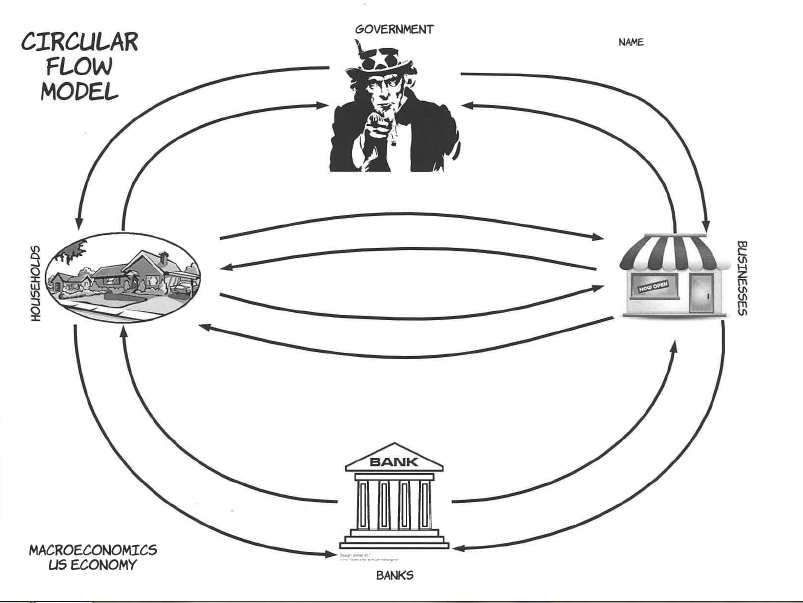
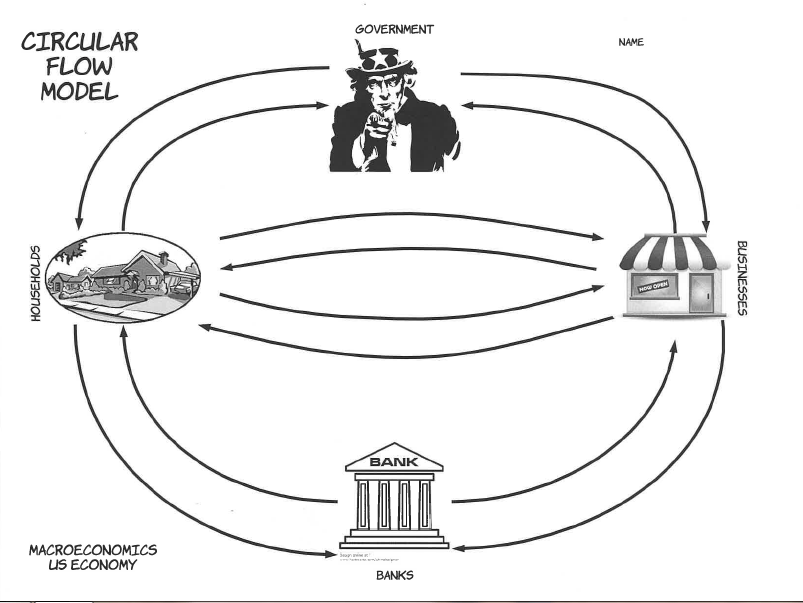
Two sector economy consists of:
households, firms
firms, foreign sector
households, government
firms, government
If a country places a tax on imports of food, which group in the country is most likely to benefit?
A consumers
B farmers
C food importers
D supermarkets
A
B
C
D
What is a tax paid on imports?
Tariff
Embargo
Subsidy
Quota
What is a limit on imports?
Export
Quota
Embargo
Subsidy
Goods and services produced in other countries and sold domestically.
import
export
Goods and services produced domestically and sold in other countries.
import
export
A ban on trade with a country or group of countries, usually for political reasons; a type of trade barrier.
Protective Tariff
Import Quota
Trade Embargo
VER
The value of one currency in terms of another.
Exchange Rate
Term Currency
Currency Term
Which of the following is a form of trade barrier?
Quota
Tarrif
Embargo
All of the above
The exchange of goods and services between countries is know as?
Domestic trade
International trade
Export
Commerce
What is an exchange rate?
The rate at which goods are exchanged between two countries
The price of one nation's currency in terms of another's
How many US dollars you can exchange for RMB at Travelex
The price of goods in terms of a foreign currency


A firm operating at 'X' produces 70 whips and 60 saddles. It changes production to 'Y' producing 20 whips and 90 saddles. The opportunity cost of this production change is
20 whips
30 saddles
50 whips
60 saddles
The production possibility curve shows
alternative combinations of two goods that an economy is capable of producing.
the actual levels of production of two goods that the economy is achieving.
alternative combinations of productive resources that can be used to produce two goods.
the total value of two goods produced in one time period.

