
 Worksheets
AP World History Period 3
Total questions: 56
Worksheet time: 29mins
Which movement in the 1700s promoted reason, liberty, and self determination?
The Scientific Revolution
The Renaissance
The Enlightenment
The American Revolution
Which philosopher believed people were born with unalienable rights and that the government should protect them?
Thomas Hobbes
John Locke
Robert Owen
Voltaire
What is the name of the movement that promotes the interests of a particular nation due to intense pride?
A revolution
Protestantism
Enlightenment
Nationalism
Which TWO nations unified due to nationalistic movements?
Italy
America
Germany
France
Which nation was the first to industrialize?
Britain
France
Germany
Japan
All of the following helped countries to industrialize EXCEPT
Access to waterways
Natural resources like coal
Access to foreign resources and markets
Being colonies of other nations
Select ALL of the following that characterized the Second Industrial Revolution.
Oil
Electricity
Steam
Steel
After Britain industrialized, all of these nations followed suit EXCEPT
Japan
United States
Russia
India
Select ALL of the accurate social effects of the Industrial Revolution.
Poor working and living conditions for the lower class
Increased standard of living for middle and upper classes
Lower class families working closer together in their homes
More accessible and cheaper goods
Mexico was liberated from
the United States
the Spanish
the Portuguese
the Brazilians

Bolivar envisioned
a Grand Colombia, which united all the liberated South American states
a united Portugal and Spain
a Spanish takeover of Portuguese Brazil
a loosely knit confederation of South American States
Toussant L'Ouverture
was a member of the Committee of Public Safety under Robespierre
rose to the rank of General under Napoleon
was a complete revolutionary failure
helped free slaves in Haiti

Some of the machines invented in the 18th and 19th centuries are:
telephones, geographic positioning system, radios, airplanes
steam engine, railroads, flying shuttle, phonograph, steam ships, light bulb
sailboats, automobiles, wheel barrels, clocks, word processors
automatic washer, hair dryer, rockets, space shuttles

Select ALL of the following that are considered an impact of industrialization during the 18th and 19th centuries.
Increased competition between industrialized nations
Rise of global inequalities
Transformation of society.
Decolonization of Africa

Capitalism is
An economic system in which the means of production are privately owned and money is invested to make profits.
An economic system in which the means of production are owned by the public (government) and operate for the welfare of all.
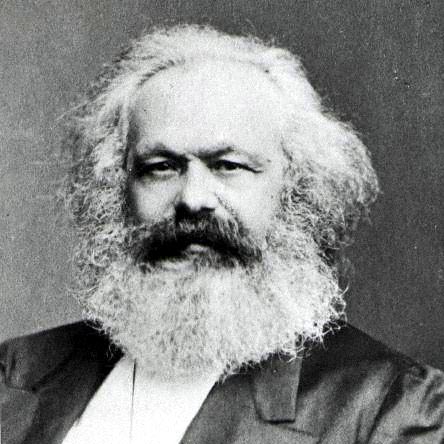
Which of the following scientific concepts had the greatest role in providing a justification for imperialism in the late 19th and early 20th centuries?
Louis Pasteur's germ theory of disease
Charles Darwin's theory of evolution
Albert Einstein's theory of relativity
Marie Curie's theory of radio activity
Which of the following was the most important cause of discontent among the French peasantry in the decades leading up to the French Revolution?
The failure of the government to encourage significant emigration to Canada
The efforts by many landowners to revive various kinds of taxes and feudal dues
The spread of Enlightenment critiques of organized religion
The drafting of large numbers of peasants to serve in the French army
The creation of large numbers of robe nobles by the French monarchy


Under the Tokugawa Japan was
a major trading nation
rapidly industrializing
bankrupt
isolated

Commander Perry is connected to
the opening of Japan for trade
the attack on China during the Opium wars
Russia's rapid growth as a power
the defeat of the Napoleon

Which country had the largest sphere of influence in Latin America during the Age of Imperialism?
United States
Spain
Mexico
England

Select ALL of the following tactics used in the Scramble for Africa.
Racially segregated concentration camps
European diplomacy through the Berlin Conference
Militarization of European troops
Equal opportunity trading alliances with local leaders

The economic system that prevailed from c. 1750-1900 was
Capitalism
Communism
Socialism
Mercantilism

What caused the Taiping and Boxer rebellions?
Foreign economic involvement in China
British selling opium to China
Indians refusing to touch the gunpowder pouches
Americans moving into West North America

What was Japan's response to foreign interference in the nineteenth century?
Adapt to Western politics and culture (Meiji Restoration)
Isolate themselves further by resisting and fighting
Became allies with the Chinese to become the dominant power in the region
Adapt to the ideas of the islanders and tribal people to resist

Which was a state regulation of immigration during the nineteenth century?
Chinese Exclusion Acts
Congo Free State
White New Zealand Policy
Jim Crow Laws

Which of the following was the primary reason that immigrants created ethnic enclaves?
Support and safety
Refusal to assimilate
Difficulty finding work
Segregation by the government

Which of the following descriptions is an accurate change over time in the period c. 1750-1900?
Once the leader in scientific and economic development, China fell behind Europe
Once the leading producer of porcelain, China fell behind India
Once a country that maintained an isolationist policy, China participated in the Scramble of Africa
Once a country that actively sought foreign converts to Buddhism, China became an atheist state

Which of the following resulted in colonies due to the Age of Imperialism?
A sense of independent nationalism
Planned invasions of European powers
Women's suffrage
A hesitation to industrialize

Why, in the time period c. 1750-1900, did European states fight to acquire overseas colonies?
To acquire raw materials to fuel their industrialization
To spread Enlightenment ideas
To abolish slavery worldwide
To stop the spread of Islam throughout the world

Who had to take on new societal roles as men left to find work in other countries?
Women
Eldest children
Grandparents
Uncles

Why did anti-colonial movements struggle to overthrow the imperial rule?
Social divisions
Less technological advancement
Loss of culture
Syncretism of religions

How were people able to migrate cheaper and faster?
New more affordable methods of transportation
Horses became more affordable for the common people
The elite paid for the lower class to migrate out of their country
Free trade policies made people wealthy in the countries

Which company took over other European states colonies in India?
British East India Company
British West India Company
Dutch East India Company
French East India Company

Why did European powers turn to indentured servants for labor?
The abolition of the slave trade
The shift in control in India to the British
The growth of industrialization in China
The success of the Atlantic revolutions

What did imperial powers sometimes try to impose on the natives they controlled?
European national identity
Resource native to Europe
Marxist ideas from Germany
European social hierarchy

In the time period c. 1750-1900, where did migrant workers typically seek work?
Industrial cities
Tropical plantations
Small grain farms
Uncharted territory, such as the Great Plains
What was a negative effect of migrants moving to new societies looking for work?
They would receive prejudice and racism from the people
They would lose their culture because of enclaves
They would return to their home societies after saving enough money
They would loss their connections to their home societies

Select all of the accurate pairings of imperialism in Southeast Asia.
Netherlands: Dutch East Indies
France: Indochina
Great Britain: Philippines
United States: Malaya

