wayground logo

Free Printable Worksheets

Font size

S
M
L
XL
Worksheets

States of matter

Total questions: 60

Worksheet time: 47mins
Name
Class
Date
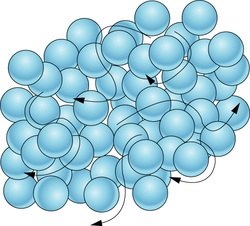
1.

Which state of matter does this picture show?

a)

Solid

b)

Liquid

c)

Gas

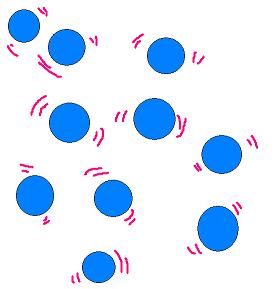
2.

What state of matter does this picture show?

a)

Solid

b)

Liquid

c)

Gas

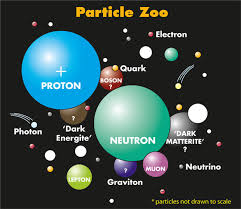
3.

Which state of matter does this picture show?

a)

Solid

b)

Liquid

c)

Gas

4.

What is the best definition of temperature?

a)

How hot or cold something is

b)

A measure of how fast the molecules are moving in a substance

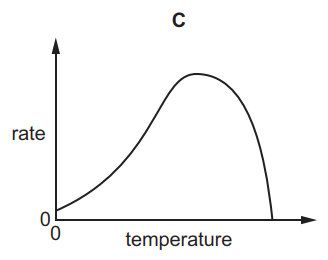
c)

How hot or cold something feels to a person

5.

As temperature increases, what happens to particles?

a)

They speed up

b)

They slow down

6.

As temperature decreases, what happens to particles?

a)

They speed up

b)

They slow down

7.

What is happening in this picture of water boiling?

a)

Molecules are speeding up

b)

Molecules are slowing down

8.

What is happening in this picture of this lake freezing?

a)

Molecules are speeding up

b)

Molecules are slowing down

9.
Which form of matter does not take the shape of its container?
a)
liquid
b)
gas
c)
solid
d)
air
10.
How is a gas defined?
a)
Indefinite shape, indefinite volume
b)
Definite shape, definite volume
c)
Found in stars
d)
Definite volume, indefinite shape
11.
What term describes a solid changing to a gas?
a)
Deposition
b)
Sublimation
c)
Evaporation
d)
Freezing
12.
What term describes a liquid changing to a solid?
a)
Deposition
b)
Sublimation
c)
Evaporation
d)
Freezing
13.
Particles of a liquid
a)
are tightly packed together and stay in a fixed position.
b)
have no viscosity.
c)
decrease in volume with increasing temperature.
d)
are free to move around one another but still touch.
14.
Particles (molecules) in a ______________________ have more energy than the other states of matter.
a)
gas
b)
solid
c)
liquid
15.
______________________ takes place when a liquid changes to a solid.
a)
freezing
b)
melting
c)
boiling
d)
sublimation
16.
Molecules are closest together in a 
a)
Solid
b)
Liquid
c)
Gas
17.
a)
It remains the same.
b)
It changes greatly.
c)
It changes minimally.
d)
Unable to tell.
18.
The state of matter that has no definite size or shape is
a)
Solid
b)
Liquid
c)
Gas
19.
Which state of matter has the lowest compressibility?
a)
Solid
b)
Liquid
c)
Gas
d)
Plasma
20.
Water can be a solid, liquid, and a gas.
a)
True
b)
False
liquid
21.
Define a liquid.
a)
Indefinite shape, indefinite volume
b)
Definite shape, definite volume
c)
Found in stars
d)
Definite volume, indefinite shape
22.
When is it OK to eat or drink in the lab?
a)
Always
b)
Never
23.
What should you do if you break glass in the lab?
a)
Tell the teacher.
b)
Sweep up the glass.
c)
Pick up the glass with your hands.
d)
Ignore it; the teacher will clean it up when she sees it later.
24.
When should you tie back long hair or baggy clothing?
a)
When working with chemicals
b)
When working with a Bunsen burner
c)
When doing dissections.
d)
Any time you are working in the lab.
25.

You are starting a lab and you notice the cord on the hot plate looks like this...what should you do?

a)

Plug it in and use it since it must have worked before.

b)

Don't use it and tell the teacher immediately.

c)

Plug it in and let the teacher know when they come around during the lab.

d)

Don't plug it in, it is obviously damaged, and share the hot plate with the group beside yours.

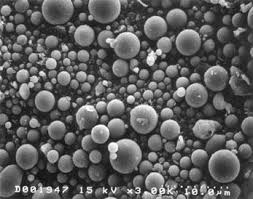
26.

You enter the lab to begin your experiment and your lab station looks like this...What is wrong with this lab station?

Select the correct answers (up to all four answers may be selected)

a)

The lab counter is dirty.

b)

The sink is clogged.

c)

There are unknown chemicals spilled on the counter.

d)

The lab station was left dirty by the previous class and was not checked to be clean by the teacher.

27.
How do gases behave in a container?
a)
Cluster together
b)
form a solid
c)
They take the shape of their container
d)
leak out 
28.
Which states allow easy flow of particles
a)
Gas and Solid
b)
Gas and Liquid
c)
Solid and Liquid
d)
Gas only
29.
How do materials change from one state of matter to another?
a)
They gain or lose energy
b)
They break appart
c)
The particles get stickyer
d)
They are magnetised to themselves
30.

Which of the following is not a state of matter

a)

Ice

b)

Gas

c)

Liquid

d)

Solid

31.

Which is not a change of state

a)

Melting

b)

Boiling

c)

Sublimation

d)

Frosting

32.

Which is true of liquids?

a)

Particles arranged in an ordered manner

b)

Particles are not touching one another.

c)

Particles are quite closely packed

d)

Particles can vibrate but not move around

33.
What is the formula to solve for the neutron?
a)
Mass + Atomic Number= Neutrons
b)
Mass x Atomic Number = Neutrons
c)
Mass - Atomic Number = Neutrons
d)
Mass + Number of Protons = Neutron
34.
How many neutrons does oxygen have?
a)
16
b)
15.99
c)
8
d)
Doesn't contain any neutrons
35.
An atom with 19 protons, and 19 electrons and a mass of 39 has how many neutrons?
a)
19
b)
39
c)
20
d)
58
36.
Is burning wood a chemical or physical change?
a)
chemical
b)
physical
37.
Is melting ice a chemical or physical change?
a)
chemical
b)
physical
38.
what is the definition of physical change?
a)
any change that results in the formation of new chemical substances. 
b)
rusting
c)
changes affecting the form of a chemical substance, but not its chemical composition.
d)
any property that is measurable, whose value describes a state of a physical system
39.

What is physical change?

a)

How two chemicals react with one another when combined

b)

A property that we can measure or observe with our 5 senses or other tools

c)

When two chemicals react with one another to form a new substance

d)

When a change occurs but it does not result in the formation of a new substance

40.

What is chemical change?

a)

How two chemicals react with one another when combined

b)

A property that we can measure or observe with our 5 senses or other tools

c)

When two chemicals react with one another to form a new substance

d)

When a change occurs but it does not result in the formation of a new substance

41.

When you increase the energy by heating a liquid what happens to the motion of the molecules

a)

They slow down

b)

They speed up

c)

Heat doesnt change the motion of the molecules

42.

Why does a higher temperature increase the rate of a reaction?

a)

it increases both the frequency and energy of particle collisions

b)

it only increases the frequency of particle collisions

c)

it only increases the energy of particle collisions

d)

it reduces the activation energy of the reaction

43.

Grinding a effervescent tablet into powder increases the rate of reaction due to increased

a)

concentration

b)

surface area

c)

temperature

d)

reactants

44.

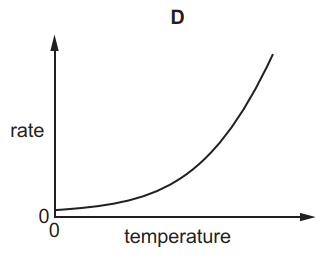
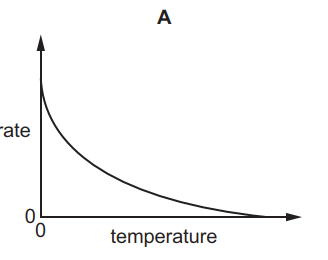
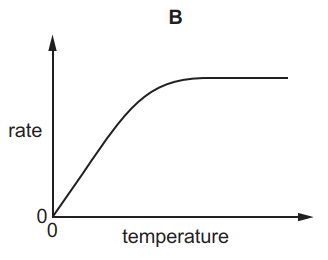
Which graph shows the effect of increasing temperature on the rate of reaction of calcium carbonate with dilute hydrochloric acid?
a)
b)
c)
d)
45.
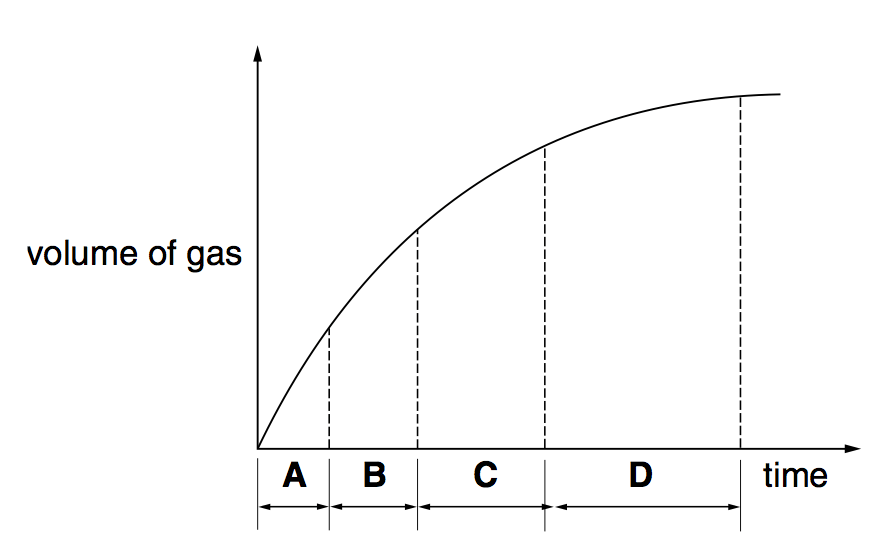
The graph shows how the total volume of a gas given off from a reaction changes with time. In which time interval is least gas given off? 
a)
A
b)
B
c)
C
d)
D
46.
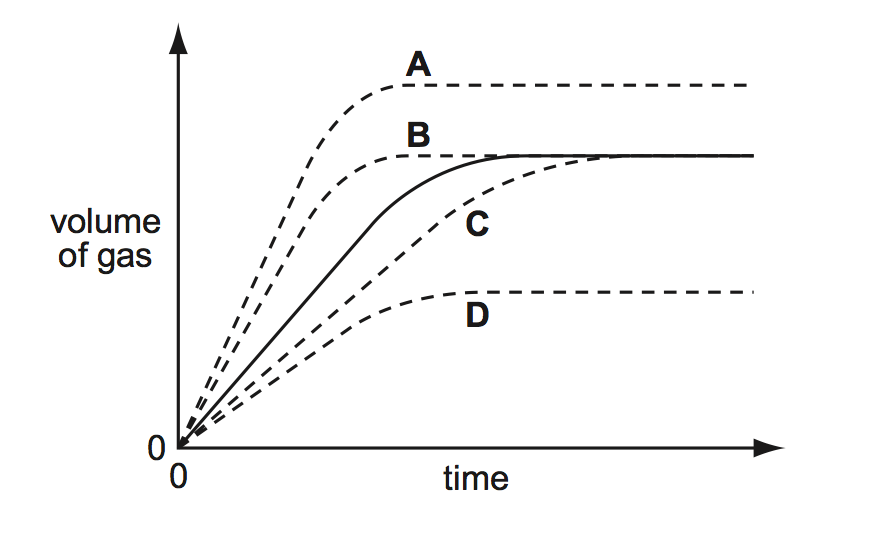
In an experiment, a 2 g lump of zinc and 2 g of powdered zinc are added separately to equal volumes of dilute sulphuric acid. The solid line on the graph shows the volume of gas given off when the 2 g lump is used. Which dotted line is obtained when the zinc is powdered? 
a)
A
b)
B
c)
C
d)
D
47.

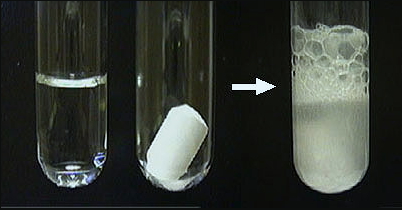
How could we make this reaction happen more quickly?

a)

Decrease the concentration of the acid

b)

crush the chalk to increase the surface area

c)

Put the test tube in an ice bath

48.
What is the rate of reaction?
a)
How fast a reaction is 
b)
How big a reaction is
c)
How loud a reaction is
d)
How much gas a reaction produces
49.
Which factors increase the rate of a reaction.
a)
increasing temperature
b)
increasing concentration
c)
increasing surface area
d)
all of these
50.
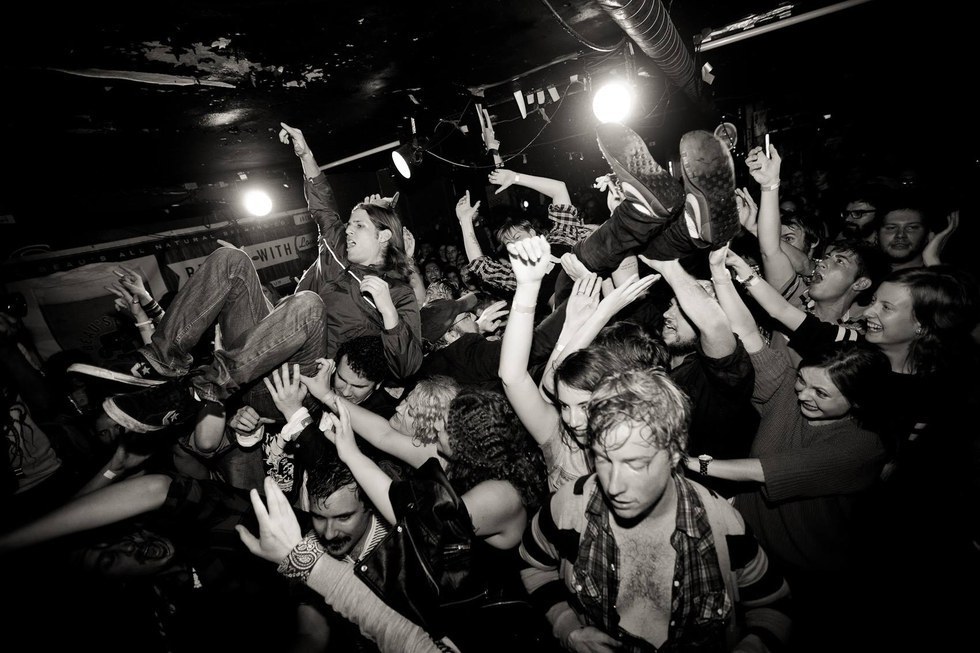
You add more bodies into a "mosh pit" to hope for more collisions.  You have increased-
a)
temperature
b)
concentration
c)
pressure
d)
catalyst
51.

The word for a substance that you react at the start of a chemical reaction...

a)

Reaction

b)

Reactant

c)

Product

d)

The result

52.

The word for a substance created in a chemical reaction...

a)

Reaction

b)

Reactant

c)

Product

d)

Mass

53.

Why does a higher concentration increase the rate of reaction?

a)

it increases the amount of reactants

b)

it lowers the activation energy

c)

it increases the energy of particle collisions

d)

it increases the frequency of particle collisions

54.

Increasing the temperature gives particles more __________.

a)

Time

b)

Energy

c)

Space

d)

Frequency

55.

The minimum amount of energy needed for colliding particles to react is called

a)

Chemical Energy

b)

Kinetic Energy

c)

Activation Energy

d)

Potential Energy

56.
A chemical reaction is balanced when
a)
both sides have the same elements
b)
Both sides have the same  number of atoms
c)
Same subscripts
d)
Same coefficients
57.
If reaction starts with 20g of reactants it should produce 
a)
a total of 40g of products
b)
a total of 10g of products
c)
a total of 80 g of products
d)
a total of 20g of products
58.
In a reaction A + B ----> C,  reactant A has 5g and product  C has 9g. How many grams does reactant B should have? 
a)
4g
b)
5g
c)
9g
d)
14g
59.

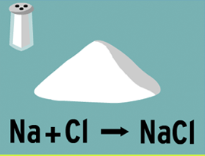
When sodium and chlorine combine to form sodium chloride, sodium chloride is the:

a)

Originator

b)

Reactant

c)

Product

d)

Produce

60.

Does the equation H2+O2 →H2O follow the Law of Conservation of Mass?

a)

Yes, because the atoms are equal.

b)

No, because more info is needed.

c)

No, because there are more atoms in the product.

d)

No, because there are more atoms in the reactant.