
Font size
 Worksheets
West Africa Culture and Kingdoms Review
Total questions: 56
Worksheet time: 34mins

Which is the largest desert in the world?
Gobi
Sahara
Kalahari
Mojave
______ is a group of people descended from the same ancestor.
A generation
A clan
A community
A team
Who made a pilgrimage to Mecca and showcased the Mali empire?
Mansa Musa
King Ezana
al-Kahina
Sundiata
What was the culture and language of East Africa?
Songhai
Islam
Christianity
Swahili
What were the two highly valuable resources of West Africa?
Salt and Gold
Salt and Pepper
Salt and Silver
Gold and Sugar

Which river gave rise to many West African civilizations?

Which city was the leading center of learning in West Africa?
Mohenjo-Daro
Gao
Kumbi-Saleh
Timbuktu
Which African kingdom developed the earliest?
Ghana
Mali
Songhai
Harrapa
Africa is the __________ largest continent in the world.
1st
2nd
3rd
4th
Most early African tribes were (check all that apply):
based around clans
nomadic
Muslims
This trading kingdom's capital was Timbuktu.
Ghana
Mali
Songhai
Great Zimbabwe

Who does this image depict?
Mansa Musa
Sundiata Keita
Sunni Ali
Ibn Battuta
__________ was the last of the wealthy West African kingdoms.
Ghana
Mali
Great Zimbabwe
Songhai
Which of the following do Sundiata and Mansa Musa have in common?
Profession of faith
5 daily prayers
Donation to charity
Fasting
Pilgrimage to Mecca
the same holy book
belief that Jesus was God's son
fasting during Ramadan

List the kingdoms from earliest to latest...
Mali,Songhai,Ghana
Songhai, Ghana, Mali
Bantu, Ghana, Songhai
Ghana, Mali, Songhai
The storyteller, historian, and poet-musicians of Africa are known as which?
Eloks
Bards
Galagos
Griots
Which North African group took over Ghana in 1076?
Almoravids
Berbers
Malians
Songhai
Great Zimbabwe traded with places as far away as?
Australia
China
Newfoundland
Yucatan
Which is the written language that was brought to West Africa by the Berbers?
Arabic
Ge'ez
Niger
Swahili
What language developed when Arabic and Bantu fused?
Andalusian
Ge'ez
Niger
Swahili
Who was the African queen who fought against the Portuguese over slavery?
A'isha
Nzinga
Dahia al-Kahina
Theodora

Which empire(s) were located in blue?
Aksum and Ethiopia
Ghana, Mali and Songhai
Ile-Ife
Kongo
What North African group destroyed the empire of Songhai?
Almoravids
English
Moroccans
Dutch
sailboats used by Arab traders
dhow
astrolabe
chisel
Tracing family descent through mothers rather than fathers
clan
extended family
matrilineal

Military or political leader who has absolute authority over a Muslim country.
Janissary
Rajput
Sultan
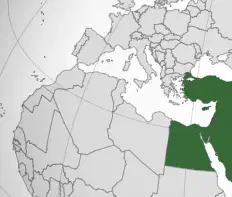
What ocean lies directly west of Africa
The Pacific Ocean
The Southern
Songhai ruler who overthrew Sunni Baru
Mali ruler who was overthrown by Sundiata
He stressed the importance of learning by setting up schools
He forbid non-Muslims from attending the schools he had built
Why was salt so valuable in Medieval Africa?
To flavor and to preserve food
To keep ants off of food
To use in making art
Nobody knew how to find it
Orally by Griots
Through books
In songs
Through the library in Timbuktu

What West Africa/European trade item created long lasting global problems?
gold
salt
slaves
silk

Which geographical feature was a barrier to African trade?
Mount Kilimanjaro
Amazon River
Hadrian's Wall
Sahara desert

Why is it difficult to study the laws of West Africa?
Very little information was written down
they had no laws
their laws were too difficult and complicated
all of the information was lost over time

As West Africans embraced Islam, how did this change their culture?
They started churches and practiced democracy.
They practiced matrilineal succession of property and leadership.
They practiced new religious devotions and embraced new ideas of government and law.
What are the three vegetation zones of West Africa?
desert, farmland, savannah
desert, rainforest, savannah
forest, mountains, desert
rivers, forests, desert
What happened along the banks of both the Niger and Nile Rivers?
forest fires
erosion
civilizations grew
people traveled
Who was the leader who conquered Mali and began Songhai, the largest of the 3 African empires that we studied?
Mansa Musa
Sundiata Keita
Sunni Ali

What made it possible to develop trade with cultures across the desert?
trading cities
The domesticated camel and saddle
The Niger River
Muslim merchants
The two main trade items of West Africa were gold and silver.
True
False
Sundiata was also known as the "_______ king".


Who was the founder of the religion of Islam?
Mansa Musa
Sundiata Kieta
Mohammad (Muhamad)
Judas
One of the significant long-term impacts of the trans-Saharan gold and salt trade was
the eventual depletion of gold in West African mines
the spread of Islam to western African kingdoms such as Songhai
the syncretic blend of Christianity and African relgions found in Ghana
the large conflicts that arose between Muslim merchants and African kingdoms
Most of what we know about the Mali emperor Sundiata (1217-1255) comes from
cuneiform tablets found in the desert
the Autobiography of Sundiata (1254)
Oral traditions passed down over generations
Marco Polo's My Travels with Sundiata (1321)
Why were griots important in African history?
They acted as diplomats on trading missions
They created new ways of planting and harvesting crops
They helped to unify all of the kingdoms under one empire
They helped to pass on their society's knowledge and history
Most of the religious ceremonies in ancient West Africa were performed to ________
Maintain harmony with the living and spiritual realms
Establish political power over neighboring rival tribes
Entertain the villagers after a day of hard work
Choose their political, spiritual, and military leaders

