
NEW
Font size
 Worksheets
Circular Flow Model alternate quiz
Total questions: 35
Worksheet time: 17mins
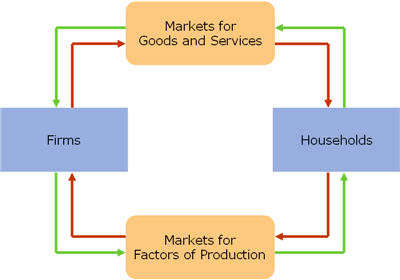
What do households provide to the resource market?
land, labor, capital, and entrepreneurship
money
people
income
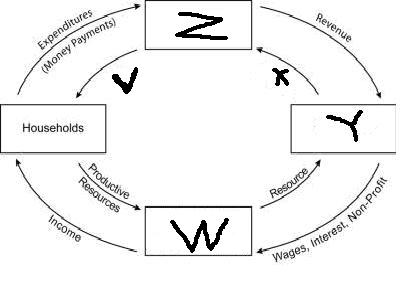
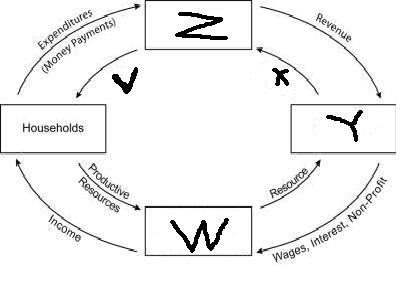
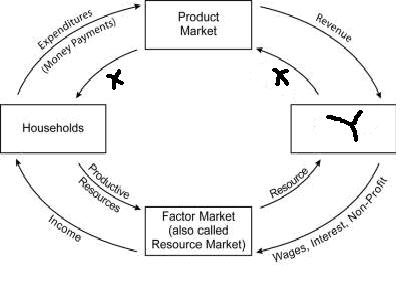
What are the four main parts of the circular flow diagram?
Product Market, Stock Market, Factor Market, Fish Market
Product Market, House Market, Factor Market, Good Market
Factor Market, Product Market, Households, Businesses
Factor Market, households, Stock Market, super market
Where do factors of production (land, labor, etc) come from in the circular flow model?
Factor Market
Product Market
Firms
Individuals/households
Someone buys a car in exchange for a large amount of money. They have completed an exchange in which part of the circuclar flow model?
Product Market
Factor Market
Firms
Individuals
Money exchanged between an individual and a store for a good or service.
Revenue
Wages
Rent
Donation
1. Which statement best explains the roles of businesses and households in the Resource (factor) market?
Households sell resources, while businesses buy resources.
Households buy resources, while businesses sell resources.
Both households and businesses buy resources.
Both households and businesses sell resources.
Who among the following are Consumers?
Firms
Households
Exporters
Banks
Which Market would this transaction take place in?
James bought a hamburger at McDonald's.
Factor Market
Product Market
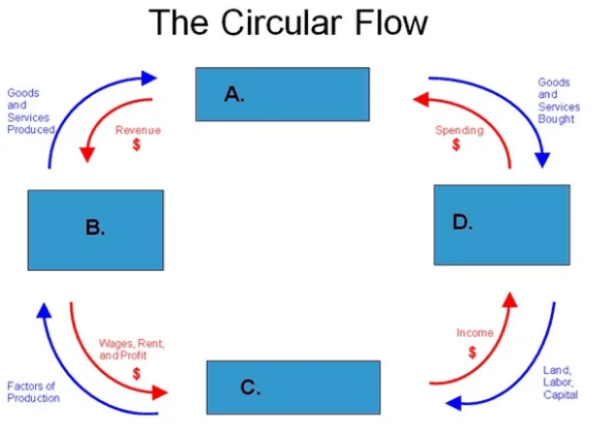
What does box A represent on this Circular flow diagram?
Households
Businesses
Factor Market
Product Market
What does Box D represent on this Circular flow diagram?
Households
Businesses
Factor Market
Product Market

What does box C represent on the Circular Flow diagram?
Firm
Factor Market
Individual
Product Market

Which arrows represent the production and purchasing of goods and services/products in the product market on this circular flow diagram?
1, 3, 4, and 2
3, 5 7, and 6
Arrows 5, 6, 7, and 8
Arrows 2, 5, 7, and 4

Which two arrows represent Goods and services/products to be sold (products being produced) and revenue being received on this Circular Flow Diagram?
3 and 4
5 and 7
1 and 2
8 and 5

In this Circular Flow Diagram, the Product Market is on top and the Factor Market is on the bottom. What is being represented by the "red flow line"?
The flow of money
The flow of goods and services and the factors of production.

What is being represented by the "red flow lines"?
the flow of money
the flow of products and the factors of production
In the circular flow model, which of the following flows in the opposite direction of the flow of factors of production?
wages, rent, interest, profit, and income

What do you earn from a business?
Taxes
Income
Savings
Investment
In the circular flow model, the payments firms make to households in exchange for the 4FOP's are:
goods and services.
Gross Domestic Product.
wages, interest, rent, and profits.
total revenue.
When individuals work for businesses, what resource are they providing?
Capital
Labor
Loans
Raw materials
Which arrows show wages being paid and households receiving income?
8 and 2
8 and 6
2 and 6
1 and 3
Which arrows show the flow of the factors of production? (This only shows movement of the factors of production. No money or products are involved.)
8 and 7
3 and 8
5 and 8
5 and 7
Which arrows represent the transactions in the factor market?
1, 2, 6, 5
1, 3, 4,2
7, 4, 3 and 8
5, 7, 8, and 6
Which of the following is NOT part of the product market?
chair
movie
chicken nuggets
workers
Where goods & services are sold in the circular flow model
Businesses
Households
Factor Market
Product Market

