
 Worksheets
Atoms & Elements Test Review
Total questions: 57
Worksheet time: 1hrs 5mins
Which of the following scientists did not propose an early atomic model?
Ernest Rutherford
John Dalton
Dmitri Mendeleev
Neils Bohr
What can be found in the nucleus of an atom?
Electrons
Neutrons and Electrons
Protons
Protons and Neutrons
How does the size of a proton compare to the size of an electron?
They are about the same
Electrons are larger
Protons are much larger
They have the same mass but different size
When an atom gains an electron, it becomes a
cation
anion
isotope
compound
How many protons does Tin (Sn) have?
50
119
69
22
How many electrons does Tin (Sn) have?
50
119
69
22
How many neutrons does Tin (Sn) have?
50
119
69
22
If an ion of Tin (Sn) has a charge of -2, how many electrons does it have?
50
52
48
117
How many neutrons are in an atom of Carbon-14?
6
14
8
10
How many electron shells (energy levels) would a Bohr Diagram of Tin (Sn) have?
3
4
5
6
A chemical bond formed when two atoms share electrons is called a(n)
ionic bond
covalent bond
crystal bond
metallic bond
A chemical bond formed when two atoms transfer electrons is called a(n)
ionic bond
covalent bond
crystal bond
metallic bond
Electrons involved in bonding between atoms are
valence electrons
inside the nucleus
closest to the nucleus
positively charged
Which of these statements about an element family on the periodic table is true?
The elements have a wide range of properties.
The elements have the same atomic number.
The elements have similar chemical properties.
The elements have the same atomic mass.
Which parts of the atom move around the nucleus?
atomic mass units
electrons
protons
neutrons
gases have
Molecules fixed in position, but free to move
Molecules with no fixed position and free to move
Molecules in a random position, spread out but not free to move
Molecules fixed in position, able to vibrate but not move
Which of these is an example of freezing?
Liquid wax becomes solid
Solid chocolate become liquid chocolate
ice becomes water vapor
water vapor becomes water
When a gas changes into a liquid, the process is called
Evaporation
Sublimation
Condensation
Melting
When a liquid changes into a gas, the process is called
Evaporation
Sublimation
Condensation
Melting
The components of solutions are
homogenous and cannot be separated
heterogenous and cannot be separated
homogenous and can be separated
heterogenous and can be separated
In a solution of salt water, what is the solute and what is the solvent?
salt is the solvent, water is the solute
salt is the solute, water is the solvent
the container is the solute, the solution is the solvent
sugar is the solute, salt is the solvent
To decrease the concentration of a solution, you can increase the
Temperature
Amount of solute
Pressure
Amount of solvent
To increase the concentration of a solution, you can increase the
Temperature
Amount of solute
Pressure
Amount of solvent

Which of the following substances is basic?
lemon
tomato
milk
blood
Which of the following substances is acidic?
baking soda
tomato
drain cleaner
blood
Which substance has the highest concentration of H+ ions in solution?
baking soda
tomato
drain cleaner
blood
Which of the following is NOT a common characteristic of an acid?
Sour taste
Turns litmus paper red
Burns the skin
Bitter taste
Which of the following is NOT a common characteristic of a base?
Sour taste
Turns litmus paper blue
feels slippery
Bitter taste
The pH scale measures
the color of an acid.
the charge of hydrogen ions.
the concentration of hydrogen or hydroxide ions.
the concentration of a salt.
Table salt is an example of a/an
atom
element
mixture
compound
The measurement of how much mass is contained in a given volume is called
weight
matter
volume
density
The amount of space something takes up is called
weight
matter
volume
density
The volume of an irregular object can be measured by
multiplying the object’s length, width, and height.
dividing the object’s density by its mass.
Using the water displacement method.
placing the object on a triple-beam balance.
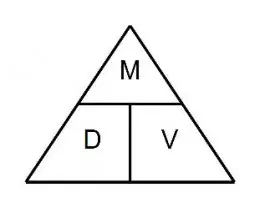
Calculate the density of a material that has a mass of 23.54 g and a volume of 12.18 cm3.
1.93 g/cm3
286.72 g/cm3
0.52 g/cm3
193 g/cm3
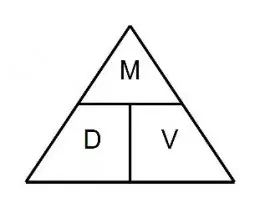
The density of silver is 10.49 g/cm3. If a sample of pure silver has a volume of 16.71 cm3, what would the mass be?
0.63 g
1.59 g
175.29 g
1.75 g
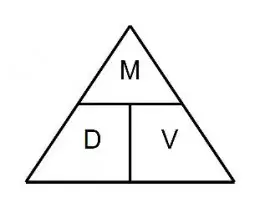
If the density of a rock is 8.12 g/cm3 and the mass is 12.35 g, how much space does the rock take up?
100.28 cm3
0.66 cm3
1.52 cm3
10.02 cm3

What is the volume of the fish?
6 cm3
0.6 cm3
8 cm3
4 cm3

What is the best way to classify this substance?
atom
element
compound
mixture
Which of the following would be a physical change?
meat cooking
rope burning
ice melting
sugar burning
Which of the following would be a chemical change?
ice melting
fireworks exploding
water evaporating
paper tearing
Which of the following would indicate a chemical change?
A change in the state of matter
something disolving
a color change (no dye involved)
a change in shape
Solutions are made of:
Oil and water
Solutes and solvents
Sodium and solutes
Solvents and solutions
Which of the following is an example of sublimation?
ice melting
water freezing
ice turning into ice
solid dry ice becoming gaseous CO2
Solubility is an example of a
Physical change
Physical property
Chemical change
Chemical property
When new substances are made and bonds are broken and reformed, this signifies that this has occurred:
Chemical reaction
Chemical property
Physical change
All of these
You decide to make lemonade one day. What would be considered to be the solutes in the lemonade?
Water and ice
Sugar and water
Sugar and lemon juice
Lemon juice and ice
The atomic number of an element tells you the:
Number of protons and electrons in an atom of that element
Number of protons and neutrons in an atom of that element
Number of protons only in an atom of the element
Number of electrons and neutrons in an atom of the element
Fruit salad, chocolate chip cookies, and trail mix are all examples of:
Solutions
Compounds
Heterogeneous mixtures
Homogeneous mixture
All of the known elements can be found:
On the periodic table
In nature as free elements
In a chemistry lab
Only as compounds in nature
When a substance changes state or phase but not its composition, this signifies that this has occurred:
Chemical change
Physical change
Chemical property
Physical property
Which is more dense, 50 g of solid carbon or 50 g of liquid carbon?
Liquid carbon
Solid carbon
Neither
Both
A substance has a pH of 6.7. This pH indicates that it is:
An acid
A base
Neutral
none of these
Reactions that release heat are called:
Endothermic
Chemical reactions
Exothermic
Physical changes
In the reaction CH4 + O2 🡪 CO2 + H2O, the reactants involved in this reaction are:
CH4 + O2
CO2 + H2O
Carbon, hydrogen and oxygen
CO2, H2O, CH4, O2
You perform a chemical reaction and you notice that a solid white powder forms at the bottom of your beaker. This solid is considered: (2 answers)
Evidence of a chemical change
Evidence of a physical change
A precipitate
not part of the experiment
The modern periodic table is organized by
size of an atom
atomic mass
number of neutrons
atomic number
The atom of what element is in Period 4, Group 13
Na
Ga
Al
K

