
 Worksheets
QUARTER 4 PRACTICE TEST
Total questions: 55
Worksheet time: 28mins
Which is an assumption of the Kinetic Molecular Theory (KMT) of gases?
Gases consist of closely spaced particles.
Collisions between gas particles are inelastic.
Gas particles move around in an orderly manner.
The temperature of a gas depends on the average kinetic energy of the gas particles.

Based on the illustration of KMT, which BEST describes the motion of gas particles?
Gas particles _____.
only move when temperature is increased
move in circular paths around a central point
stay in place unless acted upon by an external force
move randomly in straight-line motion until they collide
What assumption of the kinetic molecular theory of gases explain that gas molecules after colliding with one another simply bounce off in different directions?
Gases undergo elastic collisions.
Gases are made up of tiny particles.
Gas molecules show no attraction to one another.
Gas molecules move randomly in different directions.

When a hot balloon is heated, the temperature of the air inside increases, and the average kinetic energy of the particles in the air also increase. This creates the "lift" needed to take the balloon into the air. How does the Kinetic-Molecular Theory explain this?
The balloon expands due to gravitational force.
The heat creates more gas molecules inside the balloon.
The air molecules become heavier and push the balloon up.
Heating increases the speed of gas molecules, making the air inside the balloon less dense.
Ben sprays perfume one one side of the room, and after a short time, his friend on the other side smells it. Which KMT principle explains this?
Air molecules push the perfume in one direction.
The perfume molecules are carried by sound waves.
Gas particles move in random motion and spread out.
Perfume molecules become heavier and fall to the ground.
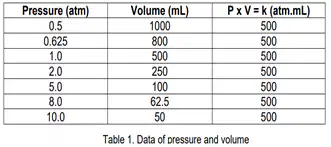
Study the data below, what relationship between pressure and volume of confined air can be drawn from the data?
Stays the same
Rises and then falls
Directly proportional
Inversely proportional
Karen decides to go SCUBA diving while on vacation in Boracay. As she swims deeper into the sea, the pressure pushing on her increases. As the diver goes deeper, what happens to the volume of the air in her lungs? The volume __________________because the pressure ______________.
increases; increases
decreases; increases
increases; decreases
remains the same; is constant
A sealed syringe is filled with a fixed amount of air. When the plunger is pushed in, what happens to the pressure and volume of the air inside?
Both volume and pressure increase.
Both volume and pressure decrease.
The volume increases, and the pressure decreases.
The volume decreases, and the pressure increases.
A gas has a volume of 4 liters at a pressure of 2 atm. The volume is changed to 16 liters. What must be the new pressure?
0.5 atm
2 atm
10 atm
12 atm
The pressure on a sample of gas has increased from 1.0 atm. To 3.0 atm. If the new volume is 0.52 L, find the original volume.
0.52 L
0.173 L
1.00 L
1.56 L
A sealed bag of chips contains 250 mL of air at sea level where the pressure is 101 kPa. When the plane reaches cruising altitude, the cabin pressure drops to 80 kPa. What is the new volume of the air inside the bag?
31 mL
198 mL
315 mL
351 mL
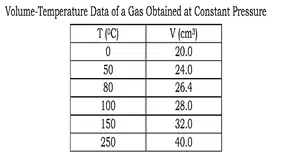
Study the data below, what relationship between volume (V) and temperature (t) of confined air can be drawn from the data?
The volume is directly proportional to temperature.
The volume is inversely proportional to temperature.
The volume is directly proportional to the square of its temperature.
Temperature and volume have no relationship since both are independent variables.
What happens to a helium balloon when it is left in a cold room?
Expands
Inflates
Shrinks
Remains the same
Last summer vacation, the Cruz family decided to go to Pagudpud, Ilocos Norte to have a beach party. On their way to Ilocos, all of them were surprised when the tire exploded. What is the possible explanation for the blown-out tire during a long summer drive?
High temperature causes a decrease in volume.
The amount of gas inside the tire has increased.
The mass of the gases inside the tire increases causing a blown-up tire.
The volume of gases increases as the temperature increases, causing a blown-up tire.
A gas syringe contains 56.05mL of gas at 315.1K. Determine the gas volume if the temperature is increased to 380.5K at the same pressure.
6.76 mL
67.68 mL
676.8 ml
6768 mL
If 15.0 L of He at 25 0C is heated at constant pressure, at what temperature will it occupy a volume of 4.50L?
7.5 0C
7.5 K
89.4 K
89.4 0C
A 420 mL of a sample of gas at 25.0 0C is compressed to 210 mL. What is the temperature of the gas after compression if the pressure remains constant?
12.5 K
50.0 K
149 K
626 K
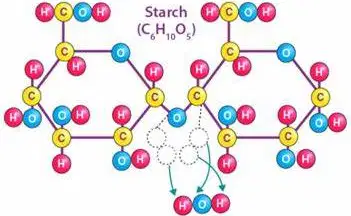
The image below shows starch grains (lightly stained with iodine) in the cells of the white potato. Rice, wheat, and corn are also major sources of starch in the human diet. What biomolecules is this?
Lipids
Proteins
Nucleic acid
Carbohydrates
Ethan drinks a glass of milk and experiences stomach discomfort because he is lactose intolerant. Lactose is a type of sugar found in milk. What kind of carbohydrate is lactose?
Protein, because milk is a protein source.
Monosaccharide, because it is a simple sugar.
Disaccharide, because it consists of glucose and galactose.
Polysaccharide, because it is a large carbohydrate molecule.
Emma is feeling tired and needs a quick source of energy before her workout. She eats a ripe banana, which contains glucose and fructose. Based on carbohydrate classification, which type of sugar is she consuming?
Proteins, because they provide long-term energy.
Polysaccharides, because bananas contain starch as an energy source.
Disaccharides, because bananas contain two sugar molecules linked together.
Monosaccharides, because glucose and fructose are the simplest carbohydrates.
Which is NOT true about lipids?
Act as thermal insulators.
More double bonds, increase in melting point.
Insoluble in water but soluble in organic solvent.
Solubility decreases with increasing carbon chain length.
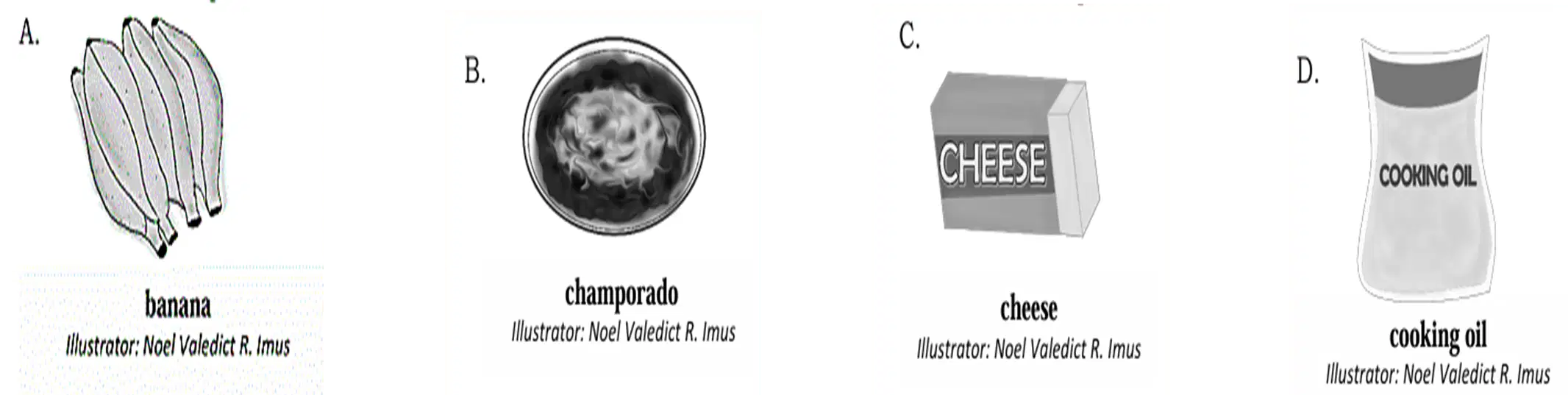
Which food items contain a greater amount of lipid?
A
B
C
D
Anna is looking for a healthy oil to use for cooking. She reads that olive oil contains mostly triglycerides and is good source of unsaturated fats. Based on lipid classification, olive oil is an example of a:
Protein, because it helps with body functions.
Carbohydrate, because it provides energy like sugar.
Simple lipid, because it is composed of glycerol and fatty acids.
Complex lipid, because it contains additional functional groups.
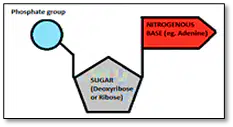
In science class, Luis is looking at a diagram of a DNA molecule. He notices that it is a double-stranded helix. Which is CORRECTLY describes the basic unit of DNA?
Amino acid, which forms proteins
Fatty acid, which is a building block of lipids
Monosaccharide, which makes up carbohydrates.
Nucleotide, made of sugar phosphate group, and nitrogenous base.
Sophia wants know why she has brown eyes like her father and curly hair like her mother. Her teacher explains that these traits are passed down through DNA. What is the main function of DNA in inheritance?
Acts as a hormone that control growth.
Provides energy for the body's activities.
Helps in digesting food and absorbing nutrients.
Contains genetic instructions that determine an organism's traits.

The Philippines is the first country in Southeast Asia to approve the commercial cultivation of a genetically modified crop for feed and food. BT-corn in the Philippines was designed to be resistant to the Asiatic corn borer (ACB), Ostrinia furnacalis (Guenee), one of the nation’s most destructive corn pests.
What part of the plant cell do they modify to achieve this?
Carbohydrates, because they provide energy.
Lipids, because they protect the cell membrane.
Proteins, because they provide structural support.
DNA, because it carries the genetic code for traits.
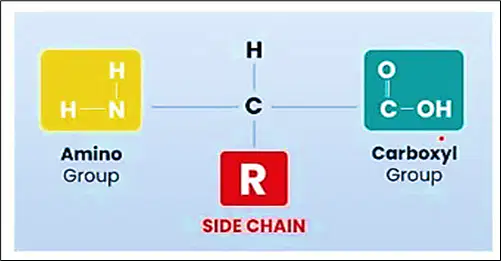
Based on the given structure, when we eat proteins it gets broken down into its monomers called ____.
Fatty acids
Nucleotides
Amino acids
Monosaccharides
Rey is a student-athlete who goes to the gym regularly. His trainer recommends that he eat foods rich in protein to help with muscle recovery. How does protein help in this process?
Provide the body's main source of energy.
Build and repair tissues, including muscles.
Store genetic information for future generations.
Speed up digestion by breaking down carbohydrates.
Britney is a vegetarian, so he does not eat meat. His nutritionist advises him to eat a variety of plant-based proteins to get all essential amino acids. Why is this important?
Proteins from plants are not used in muscle growth.
Only animal-based proteins can be used by the body.
Vegetarians need more carbohydrates to replace proteins.
Some plant-based proteins lack one or more essential amino acids, so combining different sources ensures complete nutrition.

Which of the unknown sample contains lipid?
1
2
3
4

What color indicates the presence of protein?
Blue
Violet
Blue-black
Red-orange
A student examines a biomolecule containing Carbon (C), Hydrogen (H), and Oxygen (O) in a 1:2:1 ratio. What type of biomolecule is this?
Lipid
Protein
Nucleic acid
Carbohydrates
During a laboratory experiment, Emily observes that a biomolecule sample contains Carbon, Hydrogen, Oxygen, Nitrogen, and Phosphorus. Based on this composition, which biomolecule is she analyzing?
Lipid
Protein
Nucleic acid
Carbohydrates
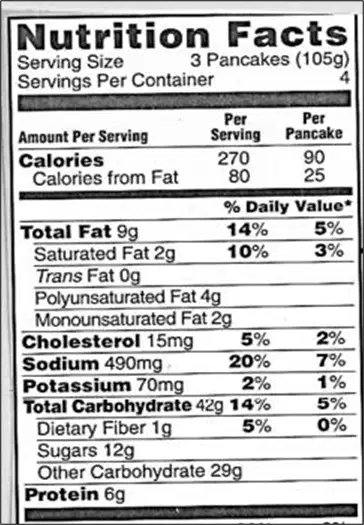
Which is a carbohydrate?
Protein
Dietary fiber
Trans fat
Saturated fat
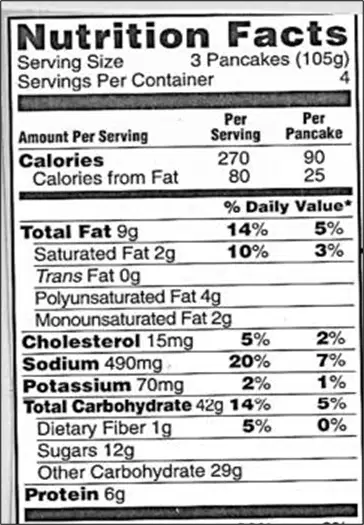
Based on the Nutrional facts the food product contains 10% of saturated fat. What biomolecule does saturated fat belongs?
Lipid
Nucleic acid
Protein
Carbohydrates

Anna sees that carbohydrates make up most of the calories. What is the primary function of carbohydrates in her diet?
Store genetic information.
Provide energy for daily activities.
Help build muscle and repair tissues.
Act as enzymes to speed up digestion.
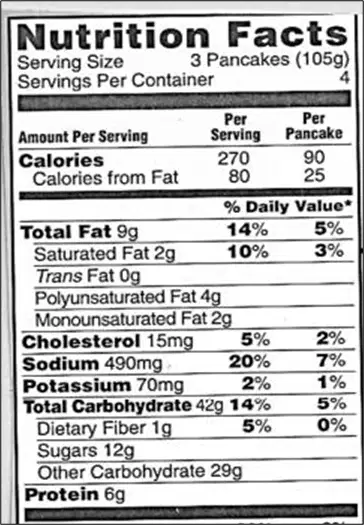
She notices that the sugar content per serving on the label is 42g, exceeding the daily recommended intake. What is a possible long-term effect of excessive sugar consumption?
Stronger muscles and bones
Reduced risk of heart disease
Improved immune system function
Increased risk of diabetes and obesity
Anna is on a strict low-protein diet on which the content per serving on the label is 6g. If she does not consume enough protein, what health issue might he experience?
Excessive weight gain.
Weaker bones due to calcium loss.
Increased risk of high blood pressure.
Muscle weakness and slower wound healing.
Be is the symbol for beryllium, which forms a +2 charge. Cl is the symbol for chlorine, which forms a -1 charge.To balance the charges, one beryllium ion (Be²⁺) pairs with two chloride ions (Cl⁻), resulting in the formula BeCl₂. Name the ionic compound: BeCl2
Beryllium chlorine
Beryllium II chloride
Beryllium chloride
Beryllium dichloride
What is the correct name of H2O2, a mild antiseptic used on the skin to prevent infection of minor cuts, scrapes, and burns?
Water
Sulfuric acid
Oxygen gas
Hydrogen peroxide
Epsom salt, used for relaxing baths and medicinal purposes, has the formula MgSO4. What is its CORRECT name?
Magnesium sulfate
Magnesium hydroxide
Magnesium chloride
Magnesium carbonate
Sophia is cooking dinner and uses table salt to season her food. She checks the label and sees the chemical formula NaCl. What is the CORRECT name of this compound?
Sodium nitrate
Sodium hydroxide
Sodium chloride
Sodium carbonate
James notices that his old bicycle chain has developed rust after being left in the rain. Rust has the chemical formula Fe2O3. What is the CORRECT name of this compound?
Iron (III) oxide
Iron (II) chloride
Iron (III) sulfate
Iron (II) carbonate
Sodium (Na) forms a Na⁺ ion (with a +1 charge). Oxygen (O) forms an O²⁻ ion (with a -2 charge).
What is the CORRECT formula for Sodium Oxide (Na1+ + O2-)?
NaO
NaO2
Na2O
Na2O2
Ethan opens a bottle of soda and notices bubbles forming. He knows this is caused by Carbon dioxide being released. Which chemical formula represents Carbon dioxide?
CH4
CO
CO2
C2O4
Sarah sees condensation forming on the outside of her cold drink. She knows this is due to water vapor turning into liquid water. What is the correct chemical formula for water?
CO2
HCl
H2O
O2
During a chemical reaction, 50 grams of substance A reacts with 30 grams of substance B to form products. After the reaction, the total mass of the products is measured to be 80 grams. Which statement BEST describes the outcome of this reaction according to the Law of Conservation of Mass?
The mass of the products is less than the mass of the reactants because some mass is lost during the reaction.
The mass of the products is greater than the mass of the reactants because some extra mass is gained during the reaction.
The total mass of the reactants is equal to the total mass of the products because mass cannot be created or destroyed.
The reaction does not obey the Law of Conservation of Mass because the total mass of the products is different from the total mass of the reactants.
How does the Law of Conservation of Mass apply to a burning candle?
The amount of wax before the reaction equals the amount of energy afterward.
The mass of the wick before the reaction equals the mass of the smoke afterward.
The mass of the molecules of the candle before the reaction equals the mass of the candle and burned wick after the reaction.
The mass of the wick, wax that burned, and the oxygen that helped the flame before the reaction equals the mass of the smoke and the gases released after the reaction.

Based on the plotted data above, which graph CORRECTLY represents the relationship between pressure and the volume of an ideal gas that is held at constant temperature?
A
B
C
D

Based on the plotted data above, which CORRECTLY represents the relationship between the volume and temperature of an ideal gas that is held at constant pressure?
A
B
C
D
Scenario: You are a scientist working in a high-tech laboratory. Your task is to study the behavior of a specific gas, Xenon (Xe), under various conditions. You have a sealed container filled with Xenon gas, and you can control the temperature and volume of the container. You also have instruments to measure the pressure and the speed of the gas particles. Your goal is to understand how changes in temperature and volume affect the behavior of Xenon gas particles.
Which of the following best describes the first assumption of the Kinetic Molecular Theory in the context of Xenon gas?
Xenon gas particles attract each other strongly.
Xenon gas particles are in constant, random motion.
Xenon gas particles move in a predictable, linear path.
Xenon gas particles are large and occupy significant volume.
Amanda is a 19-year-old college student who just started living on campus. She visits the dining hall daily and is trying to navigate healthy carbohydrate choices. Her total calorie needs are estimated to be 2000 per day. Yesterday, she ate:
Breakfast:
2 scrambled eggs and 2 sausage links; 1 cup orange juice; lots of black coffee
Snack:
2 oz of cashews and a can of soft drink
Lunch:
Tossed salad with 1 hard-cooked egg, 3 oz of sliced turkey, 2 oz of sliced cheese, 3 tbsp of Italian dressing; 1 can soft drink; 1 cup of gelatin
Snack:
2 oz of cheese and a can of soft drink
Dinner:
6 oz of fried chicken; 1 cup of French fries; ½ cup corn; ½ cup chocolate pudding with whipped cream; 1 can soft drink
Snack:
5 chicken wings with ¼ cup bleu cheese dressing
Which of Amanda's meals contains the highest amount of carbohydrates?
BREAKFAST
LUNCH
SNACK
DINNER
John is a 55-year-old man diagnosed with dyslipidemia. His recent blood test shows elevated levels of LDL cholesterol and triglycerides, and low levels of HDL cholesterol. His doctor advises him to make dietary changes and start medication to manage his lipid levels. John wants to understand more about the types of lipids in his body and how they affect his health.
Which is an example of a complex lipid?
Butter
Olive oil
Triglyceride
Phospholipid
Which of the following statements about the uses of nucleic acids is true?
RNA is used exclusively for energy storage.
DNA is used to store and transmit genetic information.
RNA is used to store genetic information in all organisms.
DNA and RNA are both used to catalyze metabolic reactions.
In what ways is RNA different from DNA?
DNA has uracil and ribose, whereas RNA has thymine and deoxyribose.
RNA has uracil and is double-stranded, but DNA has thymine and is single-stranded.
DNA has ribose sugar and is double-stranded, whereas RNA has deoxyribose sugar and is single-stranded.
RNA has ribose sugar and is single-stranded, whereas DNA has deoxyribose sugar and is double-stranded.

