
Ukuran huruf
 Lembar kerja
Term 1 Week 4 Topic 2.1
Total soal: 18
Worksheet time: 12mins
Grinding an effervescent tablet into powder increases the rate of reaction due to increase of
concentration
total surface area
temperature
size
Which factors affect the rate of a reaction?
temperature
concentration
size
pressure
catalyst
Increase in temperature causes the particles to
slow down
move faster
stay apart from each other
move in the correct order
Why does a higher concentration increase the rate of reaction?
it increases the amount of reactants
it lowers the activation energy
it increases the energy of reactant particles
it increases the frequency of collision
Why does a higher temperature increase the rate of a reaction?
It increases both the frequency collision and energy of reactant particles
It only increases the frequency of collision
It only increases the energy of reactant particles
It reduces the activation energy of the reaction
Increasing the temperature gives particles more __________.
time
energy
space
frequency
As the frequency of ________________ collision increases, the rate of reaction increases.
time
speed
effective
efficient
Why does breaking up a solid reactant increase the rate of reaction?
it creates more solid
it creates more energy
it increases the total surface area
it increases the concentration
Catalyst helps to
increase the amount of product obtained
to lower the activation energy
provide an alternative reaction route
decrease the frequency of collision

Diagram 12 shows an energy profile diagram. Ea is the activation energy for the decomposition of hydrogen peroxide.
P
Which of the following is the activation energy for the dissociation of hydrogen peroxide when manganese(IV) oxide (a catalyst) is added?
P
Q
R
S


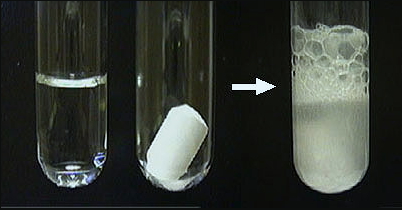
How could we make this reaction happen more quickly?
Decrease the concentration of the acid
crush the chalk to increase the surface area
Put the test tube in an ice bath
Why does a higher temperature increase the rate of a reaction?
it increases both the frequency and energy of particle collisions
it only increases the frequency of particle collisions
it only increases the energy of particle collisions
it reduces the activation energy of the reaction

