wayground logo

Free Printable Worksheets

NEW

Font size

S
M
L
XL
Worksheets

Kinetic and Potential Energy Review

Total questions: 38

Worksheet time: 25mins

Name
Class
Date
1.
Energy due to motion is ____________ energy. 
a)
Potential 
b)
Energy
c)
Kinetic
d)
Friction
2.
The faster an object moves, the ________ kinetic energy it has. 
a)
more
b)
less
c)
none of the above
d)
all of the above 
3.
__________ is stored energy. 
a)
Potential
b)
Kinetic
c)
None of the above 
d)
All of the above 
4.
What kind of energy is in a rock at the edge of a cliff?
a)
Potential
b)
Kinetic
c)
Both potential and kinetic energy
d)
none of the above
5.
Which is the best example that something has kinetic energy?
a)
a. a car parked on a steep hill 
b)
b. a tennis ball rolling across the court
c)
c. a picture hanging on the wall 
d)
d. a piece of coal before it's burned 
6.
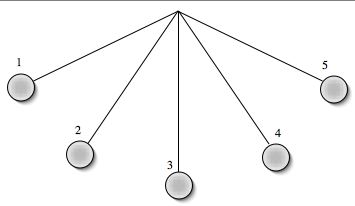
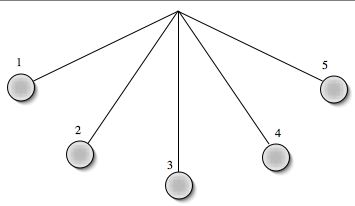
When a pendulum swings, at which point is kinetic energy highest?
a)
1
b)
2
c)
3
d)
4
7.
When a pendulum swings, at which point is potential energy at its greatest?
a)
1
b)
2
c)
3
d)
4
8.
Which is an example of potential energy?
a)
a roller coaster speeding down a hill
b)
the pulled back string on an archers's bow
c)
releasing the strings on a guitar
d)
an electric current lighting a light bulb
9.
At the top of a loop there is more of this type of energy?
a)
Potential
b)
Kinetic
10.
On a roller coaster, where is maximum potential energy?
a)
At the bottom of a big hill
b)
When going around a corner
c)
When going upside down
d)
At the top of a big hill
11.
On a roller coaster, where is maximum kinetic energy?
a)
At the bottom of a big hill
b)
When going around a corner
c)
When going upside down
d)
At the top of a big hill
12.
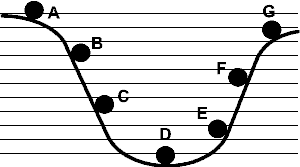
Which point has the most potential energy?
a)
G
b)
f
c)
b
d)
a
13.
How much potential energy is at the top of a hill on a rollar coaster ride
a)
100%
b)
50%
c)
0%
d)
20%
14.

Where would this tossed baseball have the least amount of kinetic energy?

a)

point W

b)

point X

c)

point y

d)

point z

15.

Where would this tossed baseball have the greatest amount of kinetic energy?

a)

point W

b)

point X

c)

point y

d)

point z

16.

Increasing an object's mass will increase its kinetic energy.

a)

true

b)

false

17.

Increasing an object's speed will increase its kinetic energy.

a)

false

b)

true

18.
Explain what happens to the potential energy of a rock as it falls off the side of a cliff.
a)
The kinetic energy decreases as the potential energy increases.
b)
The kinetic energy decreases as the potential energy decreases.
c)
The potential energy decreases as the kinetic energy increases.
d)
The potential energy decreases as the kinetic energy decreases. 
19.
When riding a roller coaster, you go up and down many hills. When do you have the maximum (most) kinetic energy?
a)
At the top of each hill.
b)
As you go down each hill.
c)
At the bottom of each hill.
d)
As you go up each hill.
20.
What kind of energy is in a person climbing a ladder?
a)
Potential
b)
Kinetic
c)
Both
21.

Which passenger has the most potential energy?

a)

A

b)

B

c)

C

d)

D

22.

Which of the following has the most kinetic energy?

a)

A car traveling at 80 mph

b)

A tractor-trailer traveling at 80 mph

c)

A cheetah running at 80 mph

d)

a motorcycle traveling at 80 mph

23.

What does the law of conservation of energy tell us?

a)

Energy is created and destroyed all of the time.

b)

Stars generate most of the energy on the earth.

c)

Energy can not be created or destroyed.

d)

Dark matter absorbs most of the energy in the universe.

24.

Which object has the most potential energy?

a)

A ball resting on the ground

b)

A ball thrown at 100 miles per hour

c)

A ball on top of the refrigerator

d)

A ball resting on the edge of cliff

25.

When does a yo-yo have the most potential energy?

a)

when it is at its highest point

b)

when it is at its lowest point

c)

when it is moving between its highest and lowest point

d)

when it is moving at its top speed

26.

When is potential energy transformed into kinetic energy?

a)

When an object at rest is lifted to a higher elevation.

b)

When an object at rest remains at rest.

c)

When an object at rest is put into motion.

d)

When an object in motion is stopped and put at rest.

27.

What do potential and kinetic energy have in common?

a)

They are both related to density.

b)

They are both unrelated to mass.

c)

The are both related to volume.

d)

They are moth related to motion.

28.
As a pendulum swings from its highest to lowest position, what happens to its kinetic and potential energy? 
a)
Both the potential energy and kinetic energy decrease
b)
The potential energy decreases while the kinetic energy increases 
c)
The kinetic energy decreases while the potential energy increases 
d)
Bothe the potential energy and kinetic energy increase 
29.

Complete the following sentence. The ________________ an object moves, the more ____________________ energy it has.

a)

slower ... potential

b)

faster .... kinetic

c)

faster ... potential

d)

slower ... kinetic

30.
What increases as the passengers in the coaster go up the hill?
a)
fear
b)
potential energy
c)
kinetic energy
31.
These passengers are just starting their descent. What is happening?
a)
potential energy is changing to kinetic energy
b)
  kinetic energy is changing to potential energy
32.
Which object on the shelf has the greatest potential energy?
a)
the red vase on the second shelf
b)
the blue vase on the top shelf
c)
the white box on the bottom shelf
33.

What is the unit for mass?

a)

kilogram (kg)

b)

meter (m)

c)

Newton (N)

d)

Joule (J)

34.

What is the unit for distance?

a)

kilogram (kg)

b)

meter (m)

c)

Newton (N)

d)

Joule (J)

35.

What is the unit for force?

a)

kilogram (kg)

b)

meter (m)

c)

Newton (N)

d)

Joule (J)

36.

What is the unit for energy?

a)

kilogram (kg)

b)

meter (m)

c)

Newton (N)

d)

Joule (J)

37.

What is the formula for kinetic energy?

a)

distance / time

b)

mass x acceleration

c)

velocity / time

d)

½(mass) x (velocity)2

e)

(mass) x (acceleration of gravity) x (height)

38.

What is the formula for gravitational potential energy?

a)

distance / time

b)

mass x acceleration

c)

velocity / time

d)

½(mass) x (velocity)2

e)

(mass) x (acceleration of gravity) x (height)