wayground logo

Free Printable Worksheets

Font size

S
M
L
XL
Worksheets

Forces

Total questions: 46

Worksheet time: 39mins

Name
Class
Date
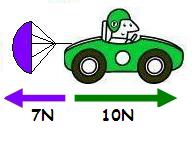
1.
Calculate the net force of the object in the image shown.
a)

20N left

b)

35N right

c)

5N left

d)

5N right

2.

What is the net force?

a)

3 N

b)

3 N, right

c)

17 N, right

d)

3 N, left

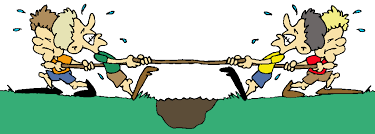
3.
If these teams are pulling with the same amount of force what will happen?
a)
The boy in blue will win.
b)
They will not move at all.
c)
The boy in red will win.
d)
Both will fall down.
4.

Forces that have a net force of zero Newtons

a)

Balanced force

b)

Unbalanced force

5.
The sum of all forces acting on an object.
a)
Contact Force
b)
Balanced Force
c)
Unbalanced Force
d)
Net Force
6.
What will cause an object to move?
a)
Applied forces
b)
Balanced forces
c)
Unbalanced forces
7.
If an object is not moving the forces acting upon it are _____________
a)
unbalanced
b)
weak
c)
balanced
d)
Hulk Smash!
8.
How does friction affect speed?
a)
more friction decreases speed
b)
more friction increases speed
c)
less friction decreases speed
d)
less friction doesn't affect speed
9.
Friction is a force that acts in an ___________ direction of movement.
a)
similar
b)
opposite
c)
parallel
d)
west
10.
A type of friction that occurs when air pushes against a moving object causing it to decelerate.
a)
surface area
b)
air resistance
c)
velocity
d)
gravity 
11.
Which of the following is an example of friction that is helpful?
a)
Brakes used on a bike
b)
Tires from a car on the road
c)
Tread on the bottom of your shoes
d)
All are examples that are helpful
12.
What type of friction is not moving?
a)
static
b)
sliding
c)
fluid
d)
rolling
13.
What does friction produce?
a)
light
b)
sound
c)
heat
d)
gravity
14.
 What is the unit called that measures force?
a)
weight
b)
meter
c)
Newton
d)
kilogram
15.

Friction is a

a)

non - contact force

b)

contact force

c)

electrostatic force

d)

magnetic force

16.

The factors on which friction depends

a)

nature of the surfaces

b)

how hard the objects are pressed together

c)

both (a) and (b)

d)

none of these

17.

A toy car released with the same initial speed will travel farthest on

a)

Muddy surface

b)

polished marble surface

c)

cement surface

d)

brick surface

18.

Friction can be increased by making the surface

a)

rough

b)

smooth

c)

does not depend on the nature of surface

d)

none of these

19.

Which of the following materials is likely to have least friction

a)

Wood

b)

Cardboard

c)

Glass

d)

Paper

20.

Which of the following statements is true?

a)

Friction pulls objects towards the centre of the earth

b)

Friction primarily affects the objects that contain iron

c)

Friction slows down or stops objects in motion

d)

Friction does not affect objects in motion

21.
Sally experiences-
a)
Rolling Friction
b)
Sliding Friction
c)
Fluid Friction
d)
Static Friction
22.
Swimming fish experience-
a)
Rolling Friction
b)
Sliding Friction
c)
Fluid Friction
d)
Static Friction
23.
The amount of friction depends on the weight of the objects pressing together.
a)
True
b)
False
24.
On which surface will a toy car travel the furthest?
a)
Carpet
b)
Polished Wood
c)
Ice
25.

What type of friction affects a moving car while driving?

a)

fluid friction

b)

sliding friction

c)

rolling friction

d)

fluid and rolling friction

26.

Walking is an example of which type of friction?

a)

fluid

b)

rolling

c)

static

d)

sliding

27.
As distance between two objects increase the pull of gravity 
a)
Increases
b)
Decreases
c)
Stays the same
28.
The amount of matter in an object is 
a)
pressure
b)
weight
c)
mass
d)
force
29.
Two factors effecting the magnitude of the force of gravity between 2 objects are...
a)
mass and distance 
b)
mass and matter
c)
distance and weight 
d)
weight and mass
30.
What is Newtons 1st law of motion?
a)
Force= Mass multiplied by acceleration 
b)
An object at rest stays at rest unless acted on an unbalanced force. (inertia)
c)
For every action there is a equal and opposite  re-action.
d)
law of gravity 
31.
What is Newtons 2nd law of motion?
a)
Pancakes 
b)
Force= Mass multiplied by acceleration
c)
For every action there is a equal and opposite  re-action.
d)
Law of gravity 
32.
What law of motion does this picture represent?
a)
Newtons 1st law
b)
Newtons 4th law 
c)
Newtons 3rd law 
d)
Newtons 2nd law
33.
A net force of 15 N is exerted on an encyclopedia to cause it to accelerate at a rate of 5 m/s2. Determine the mass of the encyclopedia?
a)
 m = 3.0 kg
b)
m = 4.0 kg 
c)
m = 3.0 ml 
d)
m = 30.0 g
34.
What Newtons law does this picture represent
a)
Newtons 2nd law 
b)
Law of gravity 
c)
Newtons 1st law
d)
Newtons 5th law
35.
For every action there is a equal and opposite...
a)
action
b)
movement 
c)
re-action 
d)
Newtons law of inertia 
36.
__________ is the sum of all forces acting on an object. It is capable of accelerating a mass. 
a)
velocity
b)
gravity
c)
net force
d)
distance
37.
What is the tendency of an object to resist a change in motion?
a)
coffee
b)
motion
c)
inertia
d)
gravity
38.
The force that opposes motion between two surfaces in contact with each other.
a)
inertia
b)
friction
c)
momentum
d)
gravity
39.
You push against a wall and the wall is pushing back on you.
a)
Newton's
1st
Law of Motion
b)
Newton's
2nd
Law of Motion
c)
Newton's
3rd
Law of Motion
40.
A sled sliding on a flat, icy surface with a constant velocity is best described by
a)
Newton’s first law of motion for objects at rest.
b)
Newton’s first law of motion for objects in motion.
c)
Newton’s second law of motion.
d)
Newton’s third law of motion.
41.
a)
1st
b)
2nd
c)
3rd
42.
Acceleration is due to a force put on an objects mass. 
a)
1st
b)
2nd
c)
3rd
43.
What force ultimately slows the roller coaster to a stop?
a)
Applied
b)
Normal
c)
Friction
d)
Magnetic
44.
What is the net force?
a)
5000 N right
b)
4000 N right
c)
40 N left
d)
4000 N left
45.
The momentum of an object depends upon the object's ___________&_____________.  
a)
size and shape
b)
mass and speed
c)
mass and veloctiy
d)
mass and energy
46.
The definition of momentum is
a)
Mass in Motion
b)
The size of an object
c)
The velocity of an object
d)
A comparison between two objects