wayground logo

Free Printable Worksheets

NEW

Font size

S
M
L
XL
Worksheets

PRE BENCH MARK-Q3

Total questions: 70

Worksheet time: 2hrs 37mins

Name
Class
Date
1.
all matter is made of what 
a)
energy 
b)
atoms 
c)
electrons 
d)
compounds 
2.
The positive particles of an atom are 
a)
electrons 
b)
positrons 
c)
neutrons 
d)
protons 
3.
the central region of an atom where its neutrons and protons are is its 
a)
nucleus 
b)
electron cloud
c)
core 
d)
center 
4.
an atom with atomic number 6 would have how many protons 
a)
6
b)
12
c)
3
d)
cannot be determined 
5.
Particles in an atom that are neutral and have no charge are 
a)
negatrons 
b)
electrons 
c)
neutrons 
d)
protons 
6.
A particle that moves around the nucleus is a(n)...
a)
Proton
b)
Neutron
c)
Electron
d)
Quark
7.

What does the 1.00794 stand for?

a)

mass number

b)

atomic number

c)

average atomic mass

d)

number of protons

8.
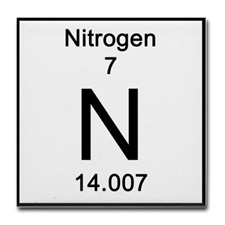
What is the number of protons that the element in this image contain?
a)
14
b)
7
c)
15
d)
18
9.

If an atom has 12 protons, which of the following must it also have to be considered a neutral atom?

a)

12 neutrons

b)

12 electrons

c)

12 protons

d)

24 protons and neutrons

10.
If an atom has 10 protons, 10 neutrons, and 10 electrons, what is the mass of the atom?
a)
10
b)
20
c)
30
11.

What charge does an atom have when it GAINS electrons?

a)

Positive

b)

Negative

c)

Neutral

12.

What two particles determine the mass number?

a)

Protons and electrons

b)

Electrons and neutrons

c)

Protons and neutrons

13.

When an atom loses an electron, it becomes a(n) _____________ ion.

a)

positive

b)

negative

c)

neutral

d)

polyatomic

14.

If the mass number of this chlorine atom is 36, how many neutrons does it have?

a)

17

b)

18

c)

19

d)

can't be determined

15.

What is the atomic number of this atom shown in the Bohr model?

a)

11

b)

12

c)

13

d)

can't be determined

16.

What is the mass number of the atom shown in the Bohr model?

a)

11

b)

12

c)

23

d)

Can't be determined

17.

Most of the mass of an atom is found in the ______.

a)

nucleus

b)

proton

c)

electron cloud

d)

isotope

18.
An atom with an unequal number of protons and electrons is said to have (a) ___.
a)
no charge
b)
balance
c)
charge
d)
unbalance
19.
What do we call a substance consisting of a single atom?
a)
coefficient
b)
element
c)
compound
d)
molecule
20.
Italian Salad Dressing is a . . .
a)
heterogeneous mixture
b)
homogeneous mixture
c)
Pure Substance
d)
Compound
21.
Pepsi is a . . .
a)
Heterogeneous mixture
b)
homogeneous mixture
c)
Element
d)
Compound
22.
Chicken noodle soup is a . . .
a)
heterogeneous mixture
b)
homogeneous mixture
c)
Pure Substance
23.
The image shown is an example of a ________.
a)
Homogeneous Mixture
b)
Heterogeneous mixture
c)
Pure Substance
d)
Element
24.
A mixture that appears to be evenly mixed throughout:
a)
an atom
b)
a compound
c)
a homogeneous mixture
d)
a heterogeneous mixture
25.
 mixture that does NOT appear to be evenly mixed throughout:
a)
an atom
b)
a compound
c)
a homogeneous mixture
d)
a heterogeneous mixture
26.
Which of the following substances is a compound? 
a)
oxygen
b)
salt
c)
helium
27.
Two or more materials that combine chemically form a(n) _____________. 
a)
mixture
b)
compound
c)
physical
28.
A combination of substances that are not chemically combined is called a(n)____________. 
a)
mixture
b)
compound
c)
physical
29.
What is water?
a)
element
b)
compound
c)
mixture
30.
What is sugar?
a)
element
b)
compound
c)
mixture
31.
What is gold?
a)
element
b)
compound
c)
mixture
32.
What is salad?
a)
element
b)
compound
c)
mixture
33.

.... are chemically the simplest substances and hence cannot be broken down using chemical reactions

a)

Compounds

b)

Elements

c)

Mixtures

d)

Molecules

34.

The most abundant Element in the air is

a)

Oxygen

b)

Nitrogen

c)

Sylicon

d)

Other Gases

35.

The most abundant elements in the Earth's crust

a)

First is Oxygen , second is Silicon

b)

Iron

c)

Aluminum

d)

Sodium

36.
Contains only one kind of atom.
a)
Element
b)
Compund
c)
Mixture
37.
What is the measuring unit for mass?
a)
centimeter 
b)
millimeter 
c)
grams 
d)
pounds
38.
In this image, what are the information to the right of the arrow (in black) is called the_______.
a)
Product
b)
Reactant
c)
Chemical Subscript
39.
In this image, what are the information in red is called the_______.
a)
Product
b)
Reactant
c)
Chemical Subscript
40.
Read the following chemical formula: C6H12O6. How many hydrogen atoms are in the formula?
a)
12
b)
6
c)
4
41.
The law of conservation of mass states that....
a)
Matter can be made
b)
Matter can be destroyed
c)
Matter can neither be made or destroyed
42.
H2O is the chemical formula for ______.
a)
Salt
b)
Water
c)
Vinegar
43.
NACL is the chemical formula for______.
a)
Salt
b)
Water
c)
Vinegar
44.
Is this balanced?...
Al + O2 --> 2Al2O3
a)
Yes!
b)
NO!
45.
In the equation,          2Mg + O2 ---> 2MgO, which are the reactants?
a)
Mg and O
b)
MgO
c)
Mg and MgO
d)
O and MgO
46.
Balance this equation...
HgO --> 2Hg + O2
a)
It is balanced 
b)
2HgO --> Hg + O2
c)
2HgO --> 2Hg + O2
47.
At the end of chemical reactions, what is the total mass of the reactants compared to the total mass of the products?
a)
the product is doubled
b)
the product is half the mass of the reactants
c)
the mass is the same
d)
the mass changes depending on the reaction
48.
Why is the following chemical equation not balanced?
H2 + O2 --> H2O
a)
each side of the equation has a different number of oxygen atoms
b)
each side of the equation has a different number of hydrogen atoms
c)
each side has the same mass
49.
What coefficient should be used to make the following equation balanced?
N2+O2--> _NO 
a)
1
b)
2
c)
3
d)
4
50.
What is a chemical equation?
a)
A short way to show a chemical reaction using symbols
b)
A way to explain a chemical reaction using words
51.
The substances at the beginning of a chemical reaction are called the ____
a)
product
b)
yield
c)
chemical symbol
d)
reactants
52.
How many atoms of aluminum are on each side of the following equation: 4Al + 3O--> 2AlO3
a)
2
b)
6
c)
1
d)
4
53.
What is a product?
a)
The new substances produced
b)
The beginning formulas.
54.
The substances at the end of a chemical reaction are called the ____
a)
products
b)
yield
c)
chemical symbol
d)
reactants
55.
When balancing equations a ____ can be placed to the left of a formula of a substance to make the equations balanced
a)
charge
b)
subscript
c)
random number
d)
coefficient
56.
What is the little number after an element in a chemical equation called.
Example: H2
a)
Coefficient 
b)
Subscript
c)
Atom
d)
Equation
57.
Is this equation balanced?
a)
yes
b)
no
c)
Not enough information
58.
Is this equation balanced?
a)
yes
b)
no
c)
Not enough information
59.
Is the equation balanced?: 2H2O + O2 --> 4MgO + 3Fe
a)
Yes
b)
No
60.
Balance this equation
_Al +_HCl --> _H+_AlCl3
a)
2, 6, 3, 2
b)
it is already balanced
c)
4, 12, 3, 4
d)
2, 1, 4, 5
61.
Balance this equation-
__P+ __O--> __P2O3
a)
it is already balanced
b)
2, 1, 3
c)
1, 2, 3
d)
1, 3, 2
62.
Balance this equation.
_CH4 + _O--> _CO+ _H2O
a)
1,2,1,1
b)
2,1,2,1
c)
1,2,1,2
d)
0,2,0,2
63.
Balance this equation.
_CF+ _Br-- _CBr+ _F2
a)
2,1,2,1
b)
1,2,2,1
c)
1,2,1,2
d)
2,2,2,2
64.
Balance this equation
_N+ _H--> _NH3
a)
1,2,3
b)
1,3,2
c)
1,1,2
d)
2,1,1
65.
Balance this equation.
_Mg + _Cl--> _MgCl2
a)
1, 2,1
b)
already balanced
c)
2,1,1
d)
1,1,2
66.
What is the arrow in a chemical equation...
H2 + O --> H2O
a)
Reactants
b)
Products 
c)
Yields 
d)
Chemical Equation 
67.
What is a coefficient?
a)
The small number on the right of the chemical symbol.
b)
The large number to the left of a formula.
68.
When balancing equations a ____ can be placed to the left of a formula of a substance to make the equations balanced
a)
charge
b)
subscript
c)
random number
d)
coefficient
69.
How many atoms of aluminum are on each side of the following equation: 4Al + 3O--> 2AlO3
a)
2
b)
6
c)
1
d)
4
70.

What are the units of Molecular mass?

a)

gm

b)

mole/litre

c)

amu

d)

kg