wayground logo

Free Printable Worksheets

NEW

Font size

S
M
L
XL
Worksheets

final study guide

Total questions: 54

Worksheet time: 2hrs 30mins

Name
Class
Date
1.
All stars begin their life in a
a)
Main Sequence
b)
Nebula
c)
Protostar
d)
Black Dwarf
2.
The brightness of a star as seen from earth is defined as:
a)
Apparent Brightness
b)
Absolute Brightness
c)
Brightness
d)
Candid Brightness
3.
What type of galaxy is pictured?
a)
eliptical
b)
irregular
c)
spiral
d)
round
4.
a)
#5 Chromosphere
b)
#5 Radiation zone
c)
#5 Convection zone
d)
#5 Photosphere
5.
What layer of the sun is visible during a solar eclipse?
a)
Core
b)
Convection Zone
c)
Corona
d)
Photosphere
6.
What happens when the area in which you live tilts away from the sun?
a)
It is summer.
b)
It is spring.
c)
It is winter.
d)
It is fall.
7.
Which of the following is NOT evidence of the Big Bang Theory?
a)
Abundance of Hydrogen and Helium
b)
CMBR everywhere
c)
Stars that are blue shifted
d)
the universe is getting bigger
8.
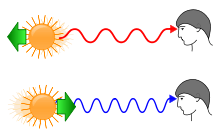
In ____shift, the galaxies appear _____ in color b/c they are moving away from us.
a)
blue; red
b)
red; red
c)
red; blue
d)
blue; blue
9.

Which star is the brightest?

a)

Sirius

b)

Alderban

c)

Rigel

d)

Sun

10.

Firs law of Kepler?

a)

None

b)

The orbit of planet is an ellipse with the Sun at one of the two foci

c)

The radius vector of a planet sweeps over equal areas in equal time intervals of time.

d)

The square of the orbital period of a planet is directly proportional to the cube of the semi-major axis of its orbit

11.

In each of the following cases, determine where the car has no acceleration?

a)

A car speeds up after a stoplight turns green.

b)

A car slows down as it approaches a red light

c)

A car with the cruise control set at 80 km/h going down a straight highway

d)

A car turning a curve at a constant speed

12.
What is the speed of an object that travels 60 meters in 4 seconds?
a)
240 m/s
b)
15 m/s
c)
0.067 m/s
d)
15 mph
13.

Match the description to the graph:

"The car is coming back."

a)
b)
c)
d)
14.
1000 grams = _____ kilograms
a)
0.0001
b)
1,000,000
c)
10
d)
1
15.

every proper hypothesis begins with what word?

a)

Does

b)

If

c)

Because

d)

Then

16.
Steve wanted to see if the type of fertilizer made sunflowers grow larger. What is the independent variable 
a)
Type of fertilizer
b)
Size of sunflower
c)
type of sun flower
17.
Steve wanted to see if the type of fertilizer made sunflowers grow larger. What is the dependent variable 
a)
Type of fertilizer
b)
Size of sunflower
c)
Type of sunflower
18.

Hard -- What mass does the object have?

a)

310.4

b)

311.4

c)

314

d)

300.4

19.
What is the volume of water in this illustration?
a)
0 mL
b)
10 mL
c)
14 mL
d)
16 mL
20.
A series of steps used by scientists to solve a problem or answer a question. 
a)
scientific method
b)
recipe
c)
data collection
d)
metric system
21.
Will a construction paper air plane fly faster than an airplane made from notebook paper? Choose the best hypothesis.
a)
If I make a paper airplane from notebook paper, then it will fly faster than construction paper.
b)
Yes.
c)
No.
d)
I think the construction paper air plane will fly faster.
22.

Which Student is the most Precise?

a)

Alex

b)

Shandra

c)

Luis

23.

when does is this object at rest? 

a)

0 -20 sec

b)

20-40 sec

c)

40 -60 sec

d)

60-100 sec

24.

Which of the following is an example of balancing forces?

a)

A Book resting on the table.

b)

A pencil is knocked off the desk.

25.

Which of the following is an example of an unbalanced force?

a)

A book resting on the table.

b)

A pencil that is knocked to the ground.

26.

What is Newton's 1st Law?

a)

For every action there is an equal and opposite reaction.

b)

An object at rest will stay at rest, an object in motion will stay in motion, unless an unbalanced force acts upon it.

27.

What would happen if a ball was kicked is space?

a)

It continues in the same direction, speeding up as it goes.

b)

It continues in the same direction, speeding up as it goes.

c)

It continues to move in the same direction unless it hits something or is affected by gravity or another force.

28.
Pushing a child on a swing is easier than pushing an adult on the same swing, because the adult has more inertia.
a)
Newton's 1st Law
b)
Newton's 2nd Law
c)
Newton's 3rd Law
d)
None of them
29.

What is the magnitude and direction of the force in the free body diagram shown?

a)

70 N right

b)

70 N left

c)

50 N right

d)

50 N left

30.
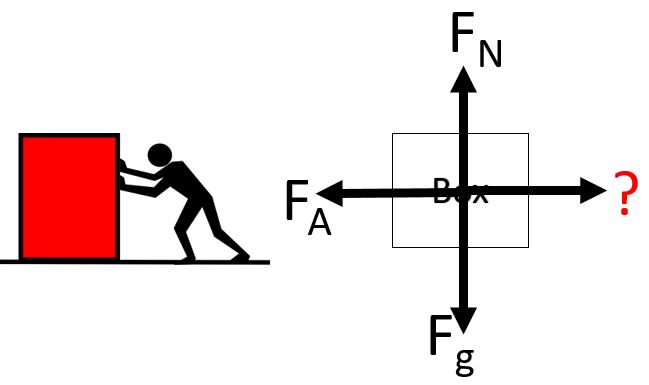
Name the missing force...
a)
weight force
b)
normal force
c)
applied force
d)
frictional force
31.
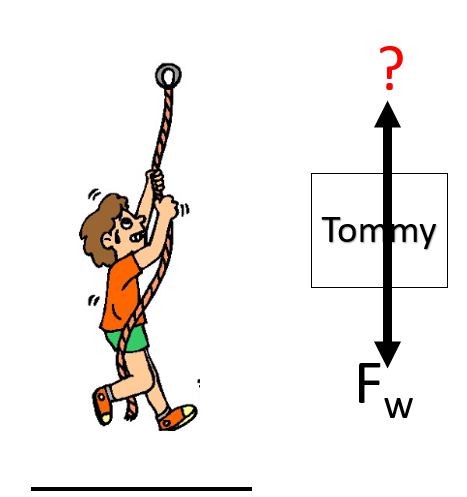
Name the missing force...
a)
frictional force
b)
weight force
c)
thrust
d)
buoyant force
32.
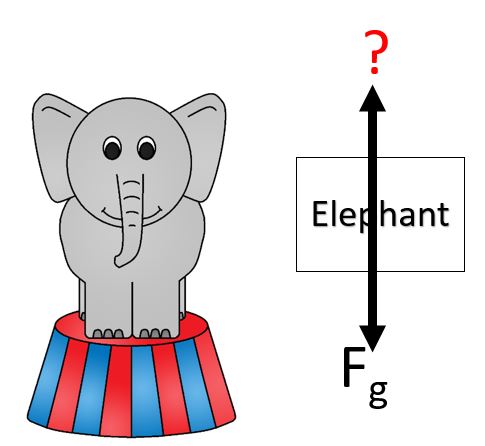
Name the missing force...
a)
tension force
b)
gravitational force
c)
normal force
d)
applied force
33.

An object travelling at terminal velocity moves at a steady speed.

a)

True

b)

False

34.
the tendency of an object to resist a change in its motion
a)
acceleration
b)
inertia
c)
mass
d)
frame of reference
35.
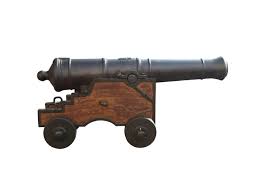
When a cannon fires a cannonball we observe Newton's third law. Which force is the reaction force?
a)
The cannon moving forward
b)
The cannonball moving forward
c)
The cannon moving backward
d)
The cannonball moving backward
36.

It is much more difficult to move a dresser full of clothes than an empty dresser.

a)

Newton's 1st Law of Motion

b)

Newton's 2nd Law of Motion

c)

Newton's 3rd Law of Motion

37.

The momentum of an object depends upon the object's ___________&_____________.

a)

size and shape

b)

mass and speed

c)

mass and veloctiy

d)

mass and energy

38.
A 0.250 kg cart moving at 0.400 m/s has how much momentum?
a)
0.1 kg-m/s
b)
1 kg-m/s
c)
10 kg-m/s
d)
100 kg-m/s
39.
The total momentum before a collision is _________ the total momentum after a collision.
a)
equal to 
b)
less than 
c)
more than
d)
It depends on the type of collision
40.
If a 10 kilogram object accelerates suddenly at 15 m/s^2, how much force was applied to the object?
a)
150 Newtons
b)
15 Newtons
c)
150 kilograms
d)
100 kilograms
41.

Collisions where objects BOUNCE apart.

a)

inelastic collisions

b)

elastic collisions

c)

explosions

d)

none of these

42.

Collision where objects collide, and stick together.

a)

inelastic collision

b)

elastic collision

c)

explosion

d)

none of these

43.

Where would an object have the most potential energy?

a)

The bottom of a hill

b)

The top of the hill

c)

On the way down the hill

d)

It never has potential energy

44.

If you have a battery in a device, what is the first energy transformation that must happen?

a)

Chemical to light

b)

Chemical to electrical

c)

Electrical to chemical

d)

Electrical to light

45.
The Ability to do work
a)
Soil 
b)
Energy 
c)
Matter
d)
Math
46.
Energy stored in atomic bonds that form molecules
a)
Thermal Energy
b)
Chemical Energy
c)
Electrical Energy
d)
Electromagnetic Energy
47.
Energy derived from sources that are continually replenished(* wind, solar, biomass, geothermal, hydropower)
a)
Nonrenewable Energy 
b)
Renewable Energy 
c)
Energy Transformation 
d)
Electromagnetic Energy 
48.
Energy harnessed from the sun ( radiant light and heat)
a)
Wind Energy 
b)
Hydropower
c)
Solar Energy 
d)
Nuclear Energy
49.
A girl on a motorbike passes by at a speed of 15 m/s. Her mass is 40 kg. What is her kinetic energy
a)
300 Joules
b)
600 Joules
c)
950 Joules
d)
4500 Joules
50.
Calculate the potential energy of a roller coaster at the top of a 72 m hill that has a mass of 112 kg.
a)
79,027 J
b)
790,720 J
c)
7,020 J
d)
790,700 J
51.

A crayon has a mass of 10.0 g and volume of 5.0 mL. What is the density?

a)

30 g/mL

b)

15 g/mL

c)

1.0 g/mL

d)

2.o g/mL

52.
What is the volume of the fish?
a)
18.0 cm3
b)
6.0 cm
c)
38.0 cm3
d)
32.0 mL
53.

The acceleration of objects falling on Earth due to gravity is

a)

9.8 m/s

b)

9.8 m/s2

c)

9.8 g/mL

d)

9.8 g/m/m

54.

Which diagram shows the forces acting on Peter when he is falling at Terminal Velocity?

a)

1

b)

2

c)

3